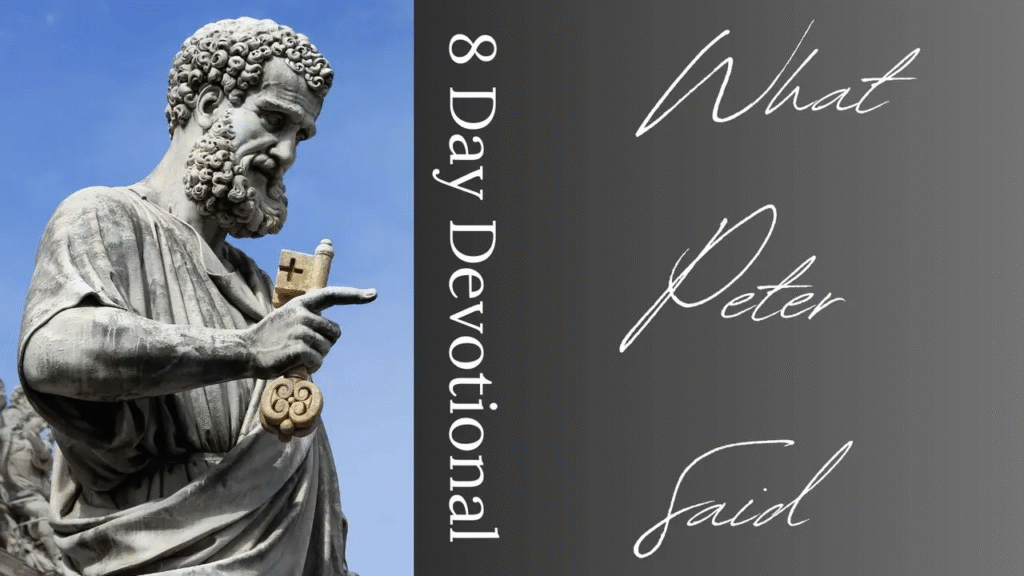
Written to early Christians facing cultural pressures and spiritual confusion in the first century A.D., the apostle Peter’s second epistle provides a framework for living a fruitful life in Christ. Second Peter 1:5-8, in particular, represents a call for believers to grow spiritually by strengthening the foundation of their faith through endurance, godliness, and the like. Over the next eight days, we will explore the virtues Peter identified as underpinning a Christ-centered life and why they still matter today. Mike Paalz
Day 1
Scriptures: 2 Peter 1:5-8, Hebrews 11:1, Genesis 12:1-4, Romans 10:17, James 2:17
Faith – The Foundation
Faith is the starting point for everything in our walk with Christ. In 2 Peter 1:5, Peter urges us to build on our faith, making it clear that faith isn’t just a concept—it’s the foundation. But what is faith, really? Hebrews 11:1 describes it as being confident in what we hope for and sure about things we cannot see. It’s trusting God even when the road ahead isn’t clear.
Think of Abraham. When God called him to leave his home and go to an unknown land, he obeyed without knowing the details. This is faith in action (Genesis 12:1-4). It’s not passive; such faith moves us to respond.
Faith comes by hearing the message of Christ (Romans 10:17). When we listen to God’s Word, it stirs belief in our hearts. But faith doesn’t stop there. James reminds us that faith without action is lifeless (James 2:17). Real faith changes how we live—it gives us the courage to step out, the strength to persevere, and the joy to worship even amidst trials.
Today, reflect on your faith. Are you trusting God in every area of your life? Are you listening to His Word daily and responding in obedience? Faith isn’t just believing God exists; it’s believing He is who He says He is and will do what He’s promised.
Start your journey by asking God to strengthen your faith. Trust Him, step out in obedience, and watch how He shows Himself to be faithful.
Day 2
Scriptures: 2 Peter 1:5-8, Philippians 4:8, Proverbs 4:23, 1 Peter 2:9, Galatians 5:22-23
Moral Excellence – Reflecting God’s Character
Peter said we must supplement our faith with moral excellence. This phrase, often translated as virtue, speaks of a life of integrity and goodness. It’s about living in a way that reflects God’s holy character.
Moral excellence means choosing what is right, pure, and honorable—even when it’s socially awkward or downright difficult. Philippians 4:8 encourages us to think about things that are true, noble, and praiseworthy. Why? Because our thoughts shape our actions. In this way, Proverbs 4:23 reminds us to guard our hearts, as everything we do flows from them.
As followers of Christ, we are called to be different. Peter described believers as a “chosen people” who display God’s goodness to the world (1 Peter 2:9). Our lives should stand out—not in arrogance, but in love, integrity, and kindness. When we pursue moral excellence, it points others to the One who makes us new.
This isn’t something we can achieve in our own strength. It’s the Holy Spirit working in us, producing fruit like love, patience, and self-control (Galatians 5:22-23). As we grow in faith, God helps us live lives that honor Him.
Do your choices and actions reflect God’s goodness? Strive for excellence, not perfection. Moral excellence is not about following rules but letting God’s character shine through you in every situation.
Pursue moral excellence by focusing on God’s Word, asking for His help, and being intentional in your daily choices.
Day 3
Scriptures: 2 Peter 1:5-8, Proverbs 2:6, Hosea 4:6, Colossians 1:9-10, James 1:5
Knowledge – Growing in Understanding
Along with moral excellence, Peter called us to add knowledge to our faith. This isn’t just about facts, mind you. It’s about understanding God’s truth and living by it. Proper knowledge is rooted in knowing God Himself, not merely knowing about Him.
Proverbs 2:6 tells us that the Lord gives wisdom, and from His mouth come knowledge and understanding. The more we seek Him, the more He reveals who He is and what He desires for our lives. However, a lack of such knowledge can lead to destruction, as Hosea 4:6 warned. When we neglect God’s Word, we risk wandering from His path.
Paul prayed for the Colossians to grow in their knowledge of God so they could live in a way that pleases Him (Colossians 1:9-10). Knowledge helps us discern what is right, avoid sin, and make choices that glorify God. We don’t have to figure this out alone! James 1:5 reminds us to ask God for wisdom, and He will generously provide it.
In today’s world, there are endless sources of information, but not all of them lead to truth. That’s why it is vital to root our knowledge in Scripture. The Bible helps us understand who God is, how He works, and how we can align our lives with His will.
Spend time in God’s Word daily, asking Him to deepen your understanding. Knowledge isn’t the end goal—it’s a means to grow closer to God and reflect His truth in how you live.
Day 4
Scriptures: 2 Peter 1:5-8, Galatians 5:22-23, 1 Corinthians 9:24-27, Proverbs 25:28, Titus 2:11-12
Self-Control – Mastering the Inner Battle
Peter recognized the importance of self-control. Self-control here means choosing God’s way over our impulses. It’s the Spirit-given ability to say “no” to what leads us away from God and “yes” to what draws us closer to Him.
Self-control is part of the fruit of the Spirit (Galatians 5:22-23). It’s evidence that the Holy Spirit is at work in us, helping us resist temptation and live a disciplined life. Paul compared the Christian life to an athlete training for a race. Just as an athlete exercises control to win the prize, we must exercise self-discipline to run our spiritual race well (1 Corinthians 9:24-27).
Without self-control, we’re like a city with broken walls—defenseless and vulnerable (Proverbs 25:28). God’s grace teaches us to say no to sin and live self-controlled lives in a world that encourages indulgence (Titus 2:11-12).
Self-control touches every area of human life—what we say, what we think, how we spend our time, and how we handle our emotions. It’s not about relying on willpower but, rather, surrendering to God’s Spirit. When we allow the Holy Spirit to guide us, He gives us strength to overcome temptation and pursue what is good.
Self-control begins with small, daily decisions to rely on God instead of your own strength. Invite Him into the areas where you struggle, and trust that He will equip you to live with discipline and purpose.
Day 5
Scriptures: 2 Peter 1:5-8, James 1:2-4, Romans 5:3-5, Isaiah 40:31
Patient Endurance – Pressing on Through Trials
Patient endurance is an integral part of our faith. What Peter meant by this is more than simply waiting around for things to change. He was describing the ability to remain steadfast, trusting God through life’s hardships and challenges. Patient endurance is faith that doesn’t quit, even when the journey is long and hard.
James reminds us, that life’s trials can grow our endurance. When we face difficulties and endure, it’s not for nothing; it produces spiritual maturity in us (James 1:2-4). Moreover, Paul explains in Romans 5:3-5 that endurance also develops character, and character strengthens hope—a hope that doesn’t disappoint because God’s love sustains us. Patient endurance isn’t about gritting our teeth and pushing through on our own. It’s about leaning on God’s power and trusting His plan, even when we don’t understand it.
Isaiah 40:31 reminds us that those who wait on the Lord will renew their strength. Endurance isn’t passive; it’s active trust in God. It’s choosing to keep going, believing, and obeying when the path is unclear or the burden feels too heavy.
When trials come – and they will – don’t give up! God is with you, shaping and preparing you for what’s ahead. Patient endurance is His gift, and it grows as you fix your eyes on Jesus and trust His timing.
Day 6
Scriptures: 2 Peter 1:5-8, 1 Timothy 4:7-8, Titus 2:11-13, Micah 6:8, 1 Peter 1:15-16
Godliness – Living to Please God
Peter instructed believers to supplement their self-control with godliness, which is to say, to live in a way that honors God and reflects His character. Godliness is about cultivating a deep reverence for Him and letting that devotion shape every part of our lives.
Paul encouraged Timothy to train himself for godliness because it held value both in this life and his eternal life to come (1 Timothy 4:7-8). Godliness isn’t just about outward behavior—it flows from a heart aligned with God’s will. It’s rooted in grace, as Titus 2:11-13 reminds us. God’s grace teaches us to say no to sin and to live upright, godly lives as we wait for Jesus’ return.
At its core, godliness is also about relationships. Micah 6:8 sums this up beautifully: God calls us to act justly, love mercy, and walk humbly with Him. Walking with God means seeking Him daily, loving what He loves, and letting His Word guide our actions.
God also calls us to be holy, as He is holy (1 Peter 1:15-16). This doesn’t mean perfection. Rather, it is a life set apart for His purposes. As we grow in godliness, we reflect His love, justice, and mercy to the world.
Godliness starts with your heart and overflows to your actions. Spend time with God in prayer and His Word, asking Him to shape your character to reflect His.
Day 7
Scriptures: 2 Peter 1:5-8, Romans 12:10, John 13:34-35, 1 John 3:16-18, Galatians 6:9-10
Brotherly Affection – Loving God’s Family
Brotherly affection is critical, according to Peter. This kind of love, called phileo in Greek, refers to having genuine, caring relationships with fellow believers. It’s a family-like bond wherein we treat one another as brothers and sisters in Christ.
In Romans 12:10, Paul encouraged believers to be devoted to one another in love and to honor others above themselves. Jesus Himself said that our love for one another would be the defining mark of His disciples (John 13:34-35). Brotherly affection is love in action—a commitment to care for and support the people God has placed in our lives.
This love isn’t just words; it’s practical. First John 3:16-18 challenges us to lay down our lives for one another and to help meet each other’s needs. When we show kindness, patience, and generosity to our spiritual family, we reflect God’s love in a tangible way.
Brotherly affection doesn’t come without effort. Paul reminds us in Galatians 6:9-10 not to grow weary in doing good, especially to those in the family of faith. Relationships can be messy, but God calls us to press on, offering forgiveness, grace, and encouragement to one another.
Brotherly affection means loving your church family with intentionality and care. Take time this week to check in with someone, pray for their needs, or offer help where you can.
Day 8
Scriptures: 2 Peter 1:5-8, Matthew 22:37-39, 1 Corinthians 13:4-7, Romans 13:8-10, 1 John 4:7-12
Love for Everyone – The Greatest Command
Peter concluded his list with love—the crowning virtue of a Christ-centered life. While brotherly affection focuses on loving fellow believers, this love (agape in Greek) extends to everyone, even those who are hard to love. It’s the selfless, sacrificial love that reflects God’s heart.
Jesus taught that loving God with all our hearts, souls, and minds is the greatest commandment, but loving our neighbors as ourselves is just as important (Matthew 22:37-39). This kind of love is more than a feeling; it’s a choice to seek the good of others, even when it’s inconvenient or undeserved.
Paul’s description of love in 1 Corinthians 13:4-7 paints a clear picture. Love is patient and kind. It doesn’t envy, boast, or keep a record of wrongs. It always protects, trusts, hopes, and perseveres. Love fulfills God’s law because it does no harm and seeks only what is good for others (Romans 13:8-10).
John reminds us that love originated with God. We love because He first loved us. When we love others, we make His love visible to the world (1 John 4:7-12). This love transcends race, culture, or status, reflecting God’s grace to all.
Love is the ultimate goal of spiritual growth. Everything we’ve learned—faith, self-control, endurance, and more—leads us to love like Christ. Ask God to fill your heart with His love so it overflows to everyone you encounter.