You’ve been disappointed, and you’ve disappointed someone else this year. We all experience disappointment, but disappointment doesn’t have to define us. In this plan, I’ll show you how to face your disappointment and watch God transform it. Healing is possible, and hope can be regained.Scott Savage
Day 1
Scriptures: Psalms 34:18, Matthew 5:4, Romans 8:24-25, Psalms 42:11

Disappointment often begins when we are very young.
For example, a video from a late-night comedy show in America went viral several years ago. The host showed several videos submitted by parents in which they stole or ate all their kids’ Halloween candy, filming their responses. Of course, the kids had very emotional reactions, threw tantrums, and otherwise made for entertaining moments.
While I felt terrible for the kids who were deceived by their parents in pursuit of a laugh, I did think to myself, “This sure prepares them for what life is like as an adult.” Consider the past week of your life, for instance. Weren’t there at least a few moments that didn’t go as you wanted or expected? I was able to count up four or five very quickly!
In life, we are all disappointed, and we all disappoint others. Sometimes, we feel crushed by disappointment, and others feel crushed by disappointment with us.
There are three main ways that people react to disappointment. First, some people deny that they were ever disappointed.
Denial is my most common response. Several years ago, I applied for a new job at the church I was serving. A few months later, the search team informed me they would move forward with a different candidate. When asked about it, I denied how much it hurt. I said things like, “Oh, I didn’t want it that much,” and, “It’s no big deal – I knew it was a long shot anyway.” If I denied the disappointment, I thought it would hurt less; truthfully, it stung deeply anyway.
Second, others get depressed as a result of disappointment. (Note – I’m not talking about clinical depression here). If this is your common response, you may find it hard to get motivated again. Maybe getting out of bed in the morning or doing basic tasks becomes difficult. The people around you may notice your sadness or check in with you because you seem down.
Third, others give up after disappointment. Unmet expectations can lead to despair. In this category, you hear a response like, “The best way to avoid disappointment is not to expect anything from anyone.” This third response embodies cynicism, where you build a cocoon for your heart so you don’t get hurt and wounded again.
What if those three paths weren’t your only options? What if you could exchange your disappointment for real hope? It’s normal to get disappointed, but you don’t have to stay there. We can exchange disappointment for hope because of what Jesus did for us. I often define hope as “a confident expectation in Christ in the face of reality.”
This kind of hope doesn’t deny reality. It is not about having a positive attitude while ignoring what’s happening. I’m not suggesting you unequivocally trust people, even as they’ve betrayed you.
The Scriptures invite us to hope—to put our confidence in Christ while facing the truth of reality. This hope looks ahead to something we haven’t yet achieved, and we are confident that God can bring it to life.
If you’re battling disappointment today, I want you to know that God is near you. Psalm 34 tells us God is close to us when life breaks our hearts. In Matthew 5, Jesus promised us the blessing of God’s comfort when we grieve. You may not recognize God’s presence, but He’s not far off.
In this plan, I want to help you understand how you can heal after disappointment. Over the next four days, you’ll see how hope can be sustained amid disappointment. As a recovering cynic, I can tell you that exchanging disappointment for hope and allowing God to heal this part of your heart will transform you. It will also transform those around you.
Disappointment and cynicism not only affect you, but they also impact those around you. I’m so glad you started this plan because of the power your healing can have on the people around you.
I look forward to seeing you back here for day two of this plan, when we’ll examine how our perspective on life can be healed and transformed.
Day 2
Scriptures: Romans 8:18, Romans 5:3-5, Romans 12:12, Romans 15:13
My mom got glasses for the first time in elementary school. She was moving through a new world as her parents drove her home. Large trees lined the streets in her neighborhood. As they pulled into the driveway in front of the house, she exclaimed, “The trees—they have leaves!” Until this point, her vision had been so weak that she’d been unable to discern the difference between the tree and its leaves. Eyeglasses enabled her to move from distorted to clear vision.
In the same way that near-sightedness distorted my mom’s vision, disappointment can distort how we see the world. If you’ve been let down, betrayed, or disappointed, you know how hard it can be to see others without a tainted perspective. If you were cheated on while dating or married, you may have a hard time trusting that gender again. If you were hurt or abused in a church context, you may have a hard time listening to or following a leader like that again.
The Apostle Paul spoke honestly about his sufferings and pain in his writings. In 2 Corinthians 11, he lists imprisonments, beatings, bites from poisonous snakes, shipwrecks, and countless dangers. Paul echoes the words of Jesus, who told his followers, “In this world, you will have trouble.” We will suffer if we are in Christ and follow Christ’s plans for our lives.
However, in Romans 8, Paul clarifies that we don’t have to see our suffering through the lens of disappointment. He states that our suffering does not compare with the glory we will experience one day. Paul challenges us to choose our perspective. Sure, disappointment distorts our perspective, but meditating on God’s glory and promises can clarify our point of view. Holding onto hope changes the way we see everything.
We must remember the difference between idealism, optimism, and hope. Hope is not the same as idealism. Idealism is a positive perspective based upon naivete. Idealism is natural for younger or inexperienced people, so idealism often gives way to cynicism when experience and age compound.
Hope is also different from optimism. Optimism is a positive perspective based on denial. To stay positive despite growing evidence to the contrary, you often have to deny or ignore available knowledge. A positive attitude is great, but not if you pretend to maintain it.
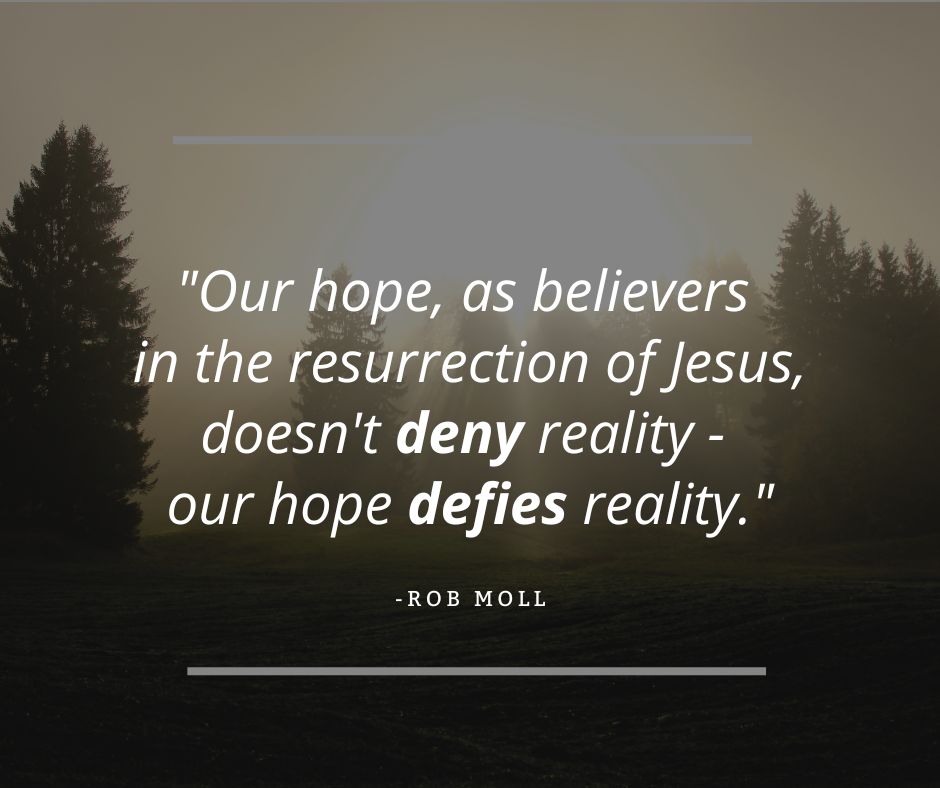
Hope is very different. As I mentioned on day one, hope is a confident expectation in Christ in the face of reality. Years ago, Rob Moll told me that “our hope, as believers in the resurrection of Jesus, doesn’t deny reality – our hope defies reality.”
As I listened to Rob share about how he stayed hopeful even as he reported on leadership scandals in local churches, I concluded that hope doesn’t change your experience; it changes your perspective of your experience. Hope didn’t undo the events Rob was learning about and reporting on as a journalist. Rob’s hope changed his perspective on his experience, enabling him to continue to see the power and character of God even as he spent countless hours focused on the disappointing and destructive actions of those acting in His name.
According to Jesus, in this world, we will have trouble. We will suffer and watch others suffer, too. It will be brutal. But we can see our adversity through God’s perspective, glory, and faithfulness.
Tomorrow, I look forward to sharing some surprising discoveries I made when I studied an often-overlooked section of Romans 8 about nature. You need to hear what I learned!
Day 3
Scripture: Romans 8:19-23
Kids think that adults have it all together. When I was a kid, I remember thinking that my parents had all of the answers, knew what they were doing all the time, and could solve any problem. How little did I know then!
I’d like to tell you that my naive thinking ended in my teenage years, but I had many illusions even in my twenties. I wanted to be the leader in charge, with all the power and authority to make the big decisions. How little did I know!
When I got into a senior leadership role in my thirties, I discovered how painful leadership could be. I deeply resonated with the words of an author named Samuel Chand. He wrote, “Reluctance to face pain is your greatest limitation. There is no growth without change, no change without loss, and no loss without pain.”
I read those words as I studied Romans 8 for the first time. I knew Paul experienced much suffering, but I was surprised to learn that creation suffered, too. In Romans 8:19-24, Paul describes how God’s creation feels pain, from humanity to animals to trees and rocks.
Growing up, I heard messages about how creation didn’t matter. “After all, when the end times happened, it was all going to burn anyway.” With my deficient view of creation, I was surprised to read Paul spent so much time talking about how creation felt the consequences of sin and how God would one day redeem and restore it. Reading Romans 8 led me to 1 Corinthians 15 and Revelation 21-22, where I saw how God intended to honor and restore all He made in the beginning.
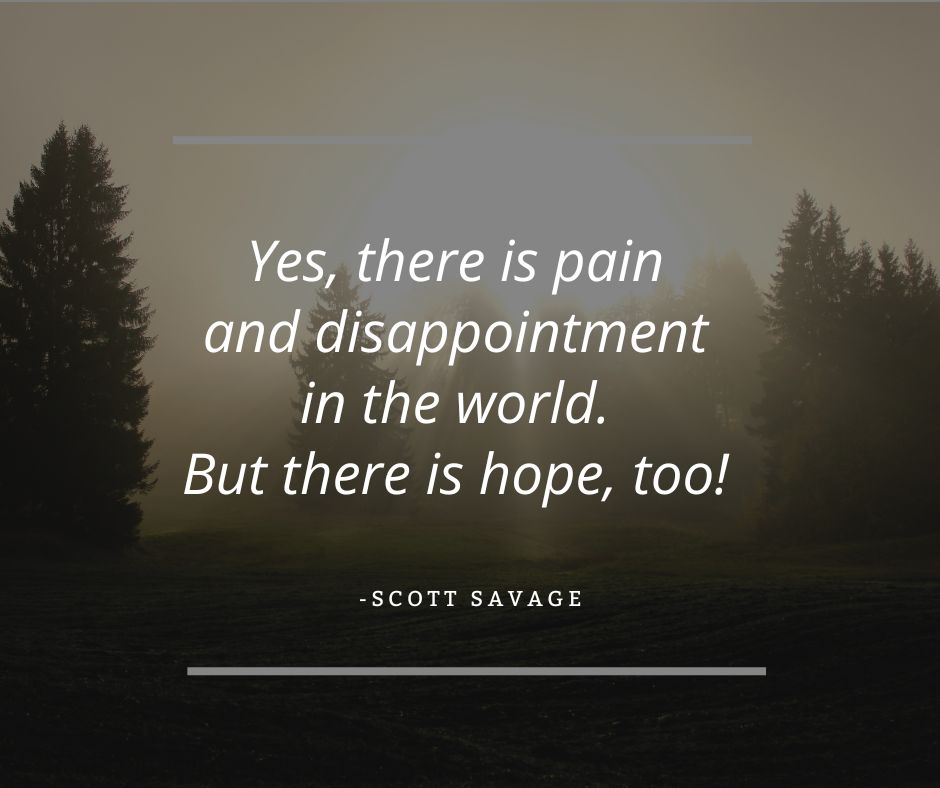
Paul talked about what happened with our salvation and how receiving the Holy Spirit was just a taste – the first fruits – of what God had in store for all of His creation. Yes, there is pain and disappointment in the world. But there is hope, too! We are experiencing suffering and pain in the world as we navigate one disappointment after another. But we will share in God’s glory one day and look forward with hope as we anticipate that day.
Paul wrote about our groanings and yearnings for the redemption of our bodies. No matter how many supplements you take, how rarely you miss a workout, and how much focus you give to your diet, your body eventually breaks down. Age catches up to us, and we remember that we live in a body subject to sin and death. On those days when we sleep wrong, and we feel terrible neck pain, or we get an update about a loved one fighting aggressive cancer, God reminds us that our hope is not in this world. Our hope is in the promise of what God will one day do in us and for us.
Pain reminds us that this life is not the end and that we cannot find true fulfillment in this world. When we lower our hopes to the level of this world, disappointment and pain remind us that God made us for more. Only God’s glory and our eternal life with Him can satisfy our souls.
Stay tuned for day four of this plan, where we will examine how we can live while waiting for our hopes to be fulfilled. Since very few of us would describe ourselves as “patient,” this is a message we need desperately!
Day 4
Scriptures: Romans 8:24-26, Galatians 5:22-23, 1 Corinthians 10:13, 2 Corinthians 12:8-10
Have you ever been impatient or rude with a customer service representative? Sadly, I have. Several years ago, I ordered a special jersey in the weeks leading up to the championship football game in America. I wanted to have the jersey in time for the big game. Thinking I ordered it in time, I became frustrated with shipping delays. I spent time on the phone, using an online chat feature, and sending emails.
Eventually, I received an email that stated the website had “oversold” its supply of jerseys, and mine was never shipped. Though they promised a refund and offered a 10% discount on a future purchase, I was livid. Previously, I had been told my jersey had shipped and would arrive very soon. My impatience led me to lose my temper, and I wasted an embarrassing amount of time, angry and disappointed.
Though I am embarrassed by my impatience and lack of self-control over something unimportant, you may have a similar experience. Our world does not build our patience. Businesses profit heavily by nurturing our impatience. At the same time, we serve a God who seeks to bring the fruit of patience into our lives and sustain us as we wait for Him with hope and patience.
In Romans 8, Paul discusses the essence of hope. He notes that we hope for what we do not have. In other words, having something and hoping for it is impossible. He goes on to say that if we look forward to something, we hope for it and wait for it with patience. To hope for something is not yet to see it and wait for it to become visible.
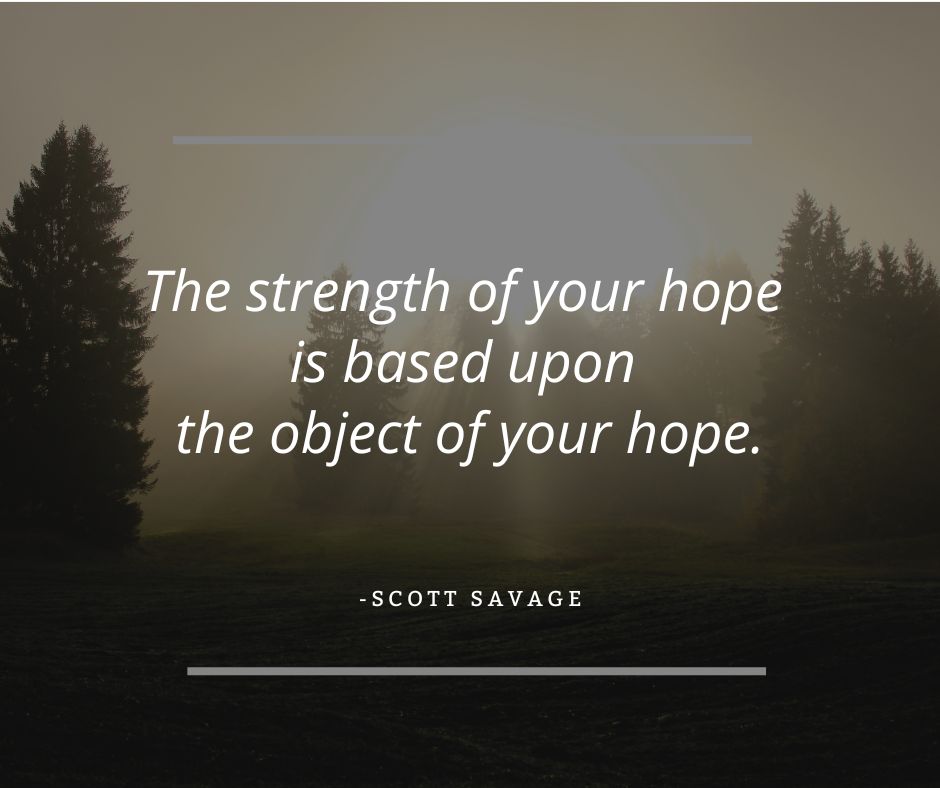
So, what happens when what you’re hoping for is delayed? Your answer depends on what the object of your hope is. If your hope rests on a person or an outcome, you may act unreasonably, as I did in the example above. No person, after all, is a worthy object of hope. Through failure, I’ve discovered that the strength of your hope is based upon the object of your hope. It’s easier to wait with steadfast endurance when your hope rests on something substantial, like the faithful character of Christ.
We can find the strength to patiently wait for our hope’s fulfillment as we lean into the Holy Spirit in our prayers. After describing patiently waiting for hope to be fulfilled, Paul spoke about how the Spirit helps us in our weakness. He indicated that the Holy Spirit intercedes for us with deep groanings when we pray. One commentator I read noted that the tense of the words in the original language here indicates that the Spirit continually helps us in our weakness through this intercession before God.
Why would the Holy Spirit need to intercede for us like this continually? We may need this kind of prayer because we perpetually find ourselves overwhelmed and faced with our weaknesses. In the American church, people often say, “God won’t give me more than I can handle.” While this is a widespread belief, it does not reflect the stories of the saints in the Bible or my own experience. I’ve found that God will always give us more than we can handle because He never intended us to handle life alone.
Life can be profoundly disappointing and overwhelming. We react in ways that often lack patience and bring regret. However, God’s grace is sufficient for us, and His power is made perfect in our weakness.
If you’re struggling with hope or patience today, I encourage you not to try to be strong but to embrace your weakness and lean into the Holy Spirit for strength. You don’t have to be strong because He is.
I’m excited to share the final day of this plan with you. We’re going to dive even deeper into praying through disappointment. If you’ve ever struggled with prayer or wondered if prayer really worked, then what’s coming has been written precisely for you!
Day 5
Scriptures: Genesis 32:24-26, Psalms 130:1, Romans 8:26-27

If you had to pick a picture to represent your prayers, what image would you choose?
Would you choose a formal dinner where everyone politely asks someone to pass the bread or sticks to superficial small talk?
Would you select a short text message that was quickly typed out and sent over a long distance?
Or would you pick a cage fight, where two people are wrestling with one another until one person surrenders the fight?
As a pastor, I interact with many people who inherited a polite, neat vision of prayer. Their prim and proper prayers function like a formal dinner where everyone dresses up and behaves well. They talk to God in a way they never talk to anyone else.
Other people I meet treat prayer like sending a text message to a friend. When they have a need, they write it as quickly as possible and keep it brief.
Those whose prayer habits have earned my respect and admiration pray as they fight for their lives. They wrestle with God. They’ve prayed through dark, intense, and difficult seasons. They speak with God honestly and directly. While their prayers might not always be welcome in a church’s liturgy, I admire the trust and honesty they feel before God.
What is your prayer life like? Your answer is incredibly important because prayer is one way we navigate disappointment with life and God. Throughout the Bible, we read about men and women who bring their disappointments to God rather than allowing their disappointments to drive a wedge between them and God.
In 1 Samuel 1, Hannah pours out her grief over her barren womb. In Esther 4-5, the Jews come together with prayer and fasting to ask God to spare Esther’s life as she seeks to save their people. The desperate, direct prayers that dominate the Psalms might shock you with their intensity. In Psalm 130, pilgrims headed to Jerusalem declared, “From the depths of despair, O Lord, I call for your help.” During a class on the spirituality of the Psalms, one of my seminary professors told us that 73 of the 150 chapters are laments. Laments express intense human struggles, such as deep sorrow, grief, and regret.
If you’ve ever witnessed someone lament, it’s nothing like a formal dinner. Prayer in the face of disappointment is often ugly and messy. But, the mess is often necessary if we’re going to be honest with God and ourselves. After all, God cannot heal what we do not confess. Like any other healthy relationship, honesty with God is a requirement. After all, God already knows what we’re thinking but not saying aloud. Psalm 44 tells us that God knows the secrets of our hearts.
This plan is entitled “Healing from Disappointment.” If you’re going to heal the wounded areas where disappointment has dominated you, you need to increase your honesty with God. The path from healing to hope runs straight through honesty. The honesty of King David after his sinful spiral with Bathsheba and Uriah led to genuine repentance and restoration of his relationship with God. In that confession, David said, a broken and contrite heart you, God, will not despise.”
As this plan concludes, I encourage you to walk outside or get in your car for a long drive. Without anyone around, speak the unsaid words you’ve been holding onto before God. Say them out loud. Scream, cry, say whatever it takes to be honest before the Lord. Draw near to God, and watch Him draw near to you! Disappointment is part of, but not the end of, your story with God. Hope and healing are available to you.