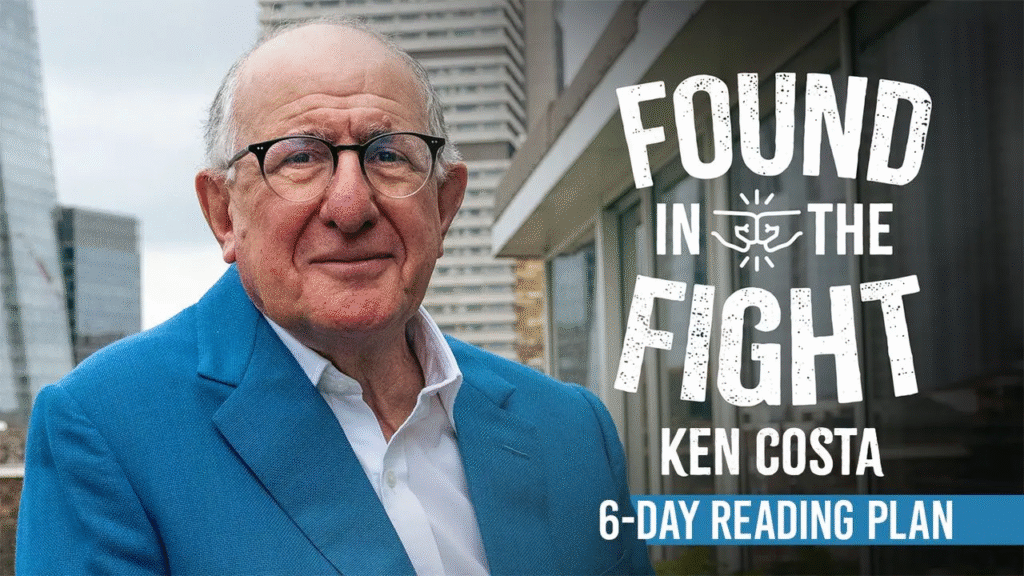
We can all be tempted to hide the truth about ourselves, or change our true identity, to get ahead in life. In this six-day plan, Ken Costa explores the far-from-perfect life of Jacob, who wrestled with God to discover his true identity. When we’re brave enough to stop deceiving ourselves and others, we’re free to know God, know ourselves, and be who He created us to be.
God At Work – Ken Costa (Alpha)
Day 1
Scriptures: Genesis 25:22-26, Romans 9:10-15
Finding Our Identity
If you Google yourself, you may even learn something. That’s because there are three people inside of you: the one you think you are, the one other people (and possibly Google) think you are, and the one God knows you are. The truth is, every one of our issues can be traced back to our attempts at constructing our identity around something other than who God has proclaimed us to be. So, to navigate life’s storms, it’s vital we get to grips with our true identity.
Jacob, whose story is found in Genesis 25-50, was weak, weary, insecure – and a lot like us. He ended up wrestling with God until he grasped who God was, and who he was. From the get-go, Jacob’s life was a complex fight to prove his worth by coming out on top. He and his twin brother Esau jostled for position in the womb, and even seemed to engage in an ongoing tussle as they were being born. Jacob allowed his name (meaning trickster, deceiver, schemer, or manipulator) to inform how he would operate. Yet despite Jacob’s flaws and failings, God said, ‘Jacob, I loved…’ (Romans 9:13). God didn’t love Jacob because of his behaviour, beliefs, or good decisions. Thankfully, He doesn’t love us for these reasons either.
God simply loved Jacob unconditionally, and his life journey was about discovering what God had already said about him. In the same way, when we receive the revelation of who we are in God, it quenches our thirst for acceptance, approval, and affirmation. We can release confidence, assurance, and security into the world around us. If you find yourself in a similar emotional or spiritual space to Jacob – unsure of your place in the world and who you’re meant to be, or uncertain of the future – it’s steadying to remember God’s love for you. You may also find that if you’re able to accept that you’re called and cherished by God, you’ll be less likely to play dress-up the way Jacob did – constructing various avatars and masks to cope with your uncertainty, to hide or change your true identity, or to pose as someone else to get ahead in life.
It took Jacob many years to discover who he was, and it happened as a result of an encounter with the living God. That same living God longs to meet with you. The only way you can counterbalance outside external pressures is to have an internal sense of satisfaction about who you are and who God made you to be. May you live from a place of identity, not activity, choosing to surrender all to Jesus and to give up the illusion of safety offered by the world, for the absolute assurance of security in Him.
Day 2
Scriptures: Genesis 25:29-33, 1 Peter 1:3-4
A Stolen Birthright
If you open your Instagram profile and scroll through reels you’ve posted over the past month or longer, you’ll probably be able to share something difficult that was really going on in your life at the time, that no one seeing the post could possibly have known about. We live in a curated world and we’re part of a culture that pushes us to portray perfection. Jacob’s story reminds us that we should rather pursue authenticity by remembering our true identity and trusting that God’s plans and purposes for us are far better than any cheap, counterfeit alternatives on offer from the world.
Jacob’s fight for identity becomes prevalent when he uses the delicious stew he’s cooking to persuade his (hungry) brother Esau to sell his birthright. He knows Isaac plans to pass on the inheritance to Esau and is compelled by insecurity to take matters into his own hands. When you’re not secure in who you are, you have no assurance that God has your best interests at heart, so you strive to make things happen in your own strength. Perhaps you’ve been tempted to curate your personal reality – on social media, in your career space, or elsewhere – in order to control others’ perceptions of you, and so get ahead.
Mesmerised by the aroma of the stew, Esau doesn’t recognise or value his true identity. It seems he sells his birthright to Jacob with hardly a thought. Both brothers have insatiable appetites for things not in their possession (an inheritance; a great meal). They desperately long to be filled – by the wrong means. They end up trading what they want most for what they want now. Esau is impulsive and impatient. Jacob is envious and manipulative. It’s helpful to ask yourself: do I see more of myself in Esau or in Jacob? What makes my metaphorical stomach grumble? What are the ‘bowls of stew’ offering me immediate but short-lived satisfaction? In which areas of my life do I most long for affirmation or recognition?
Perhaps, like Esau and Jacob, feeling inadequate has led you to embrace a false identity. You’ll likely be able to testify that this didn’t lead to greater peace and joy, but rather increased strife and heartache. Ultimately, living behind a mask will stop you from fulfilling your destiny. You have a spiritual inheritance in Christ. As a child of God, there are things with your name on them that God has set aside for you. You have a birthright that the devil can’t steal; it’s not in his power. Each day, you have a choice to show up and be who God created you to be, or to disguise your true self. The latter may feel temporarily rewarding, but in the process, you’ll fail to connect with God. He invites you to let go of who you think you’re supposed to be, so you can become who you already are, and have been, all along.
Day 3
Scriptures: Genesis 27, Proverbs 10:9
A Cheated Blessing
Jacob has already cheated his way into a new identity by convincing Esau to trade his birthright for supper, and in Genesis 27 we read about his next move to secure his desired position. Despite the prophecy of Genesis 25:23 indicating that the inheritance should pass to Jacob, Isaac plans to give it to Esau. Isaac hides this plan from Rebekah, knowing she favours Jacob. Perhaps Isaac thought Esau more suited to the role of successor. But God doesn’t call the qualified; He qualifies the called. God chose Jacob, and Isaac failed to recognise that human ingenuity could never qualify Esau for what God had already pre-ordained for Jacob.
Rebekah eavesdrops on the conversation between Isaac and Esau and sets in motion the scheme for Jacob to dupe his aging father. Jacob only seems concerned about getting caught. Rebekah’s response is effectively, ‘Trust me. I’ve got this. I’ll take one for the team.’ Jacob does everything his mother tells him to do – the goats, the clothes, the fake hairiness. It’s clear Rebekah is the main instigator of the deception. And once it’s all gone down, Rebekah’s final – and tragic – instruction to Jacob is, ‘Run away.’ It’s unlikely they’ll ever see each other again.
Perhaps Jacob justified his actions, thinking, ‘God wants this; I’m claiming what’s rightfully mine.’ But this was an attempt to fulfil God’s good plan, by the human means of greed, deception, blasphemy, and lies. Jacob and Rebekah refused to accept that you can only come to God in your own skin. Today, take time to do the necessary soul search to establish whether or not you’ve ever – consciously or unconsciously – wanted God to bless your ‘avatar’ – the version of yourself you present to the world to fit in, be admired, or gain influence. Your own skin fits you best – no one else’s.
Isaac’s family is blown apart because of Rebekah and Jacob’s conniving. Sadly, although Jacob did get what he wanted (the firstborn inheritance), he ended up losing his home, family, true identity, and peace of mind. In the end, he didn’t really win. Ironically, in Jacob’s quest for identity and security, he ended up losing both.
By circumventing God’s way and refusing to take responsibility for the consequences of his actions, Jacob missed out on seeing God’s faithfulness at work to achieve His purposes. Like Jacob, we need to learn to wait on God to see His purposes revealed. His ways and timing are perfect. He’s not into shortcuts, bartering, or haggling. He doesn’t need our help; He requires our patience. Though it may seem the harder choice in the moment, we’ll never regret trusting an unknown future to a known God. If you’re faced with a significant juncture in your journey, you’ll need to choose either to wrestle with who you are, or to run away – to respond in faith or in fear. Allow Jacob’s story to inspire you to trust God.
Day 4
Scriptures: Genesis 28:10-22, 2 Corinthians 3:18
Set Apart for an Encounter with God
Jacob was forced to flee after deceiving his father and stealing the first-born blessing from his brother. Alone, on the run, uprooted, unsettled, uncertain and uncomfortable, Jacob headed to Harran, but God had mercifully set up a divine encounter with him. He lay down to sleep, resting his head on a stone, and God met him there, in his hour of greatest distress. There was nothing special about the sleeping spot Jacob picked, or the stone upon which he rested his head, and yet God chose that exact place to bless Jacob with the promise of His presence, protection, and posterity.
The busy rhythms of our daily lives can render us unaware of God – so feeling unsettled may be the first sign of God’s action in our lives. Interruptions remind us we can’t rely on ourselves, and we must trust God wholeheartedly. God may not be using a dream to get your attention the way He did with Jacob, but He may be using a difficult – seminal – moment to build your trust and tweak the trajectory of your life forever. Like He did with Jacob, God will likely choose an unremarkable place to reveal Himself to you in a particularly significant way. And like Jacob’s encounter with God, yours will have both spiritual and practical implications.
Jacob’s response to God’s revelation was to build an altar. He didn’t want to miss the significance of this defining moment in his life. He decided to let the shaking shape him, and he made that decision before he even saw the fruit of his shaking. Think about what it would look like for you, this week, to surrender to God, trusting Him in the midst of the uncertainty or difficulty you face. How is God transforming you, using what looks like a threat to strengthen you? How is your perspective shifting from earthly to eternal? How is He turning your trial into a testimony?
Jacob encountered God for himself – something we all must do. In this encounter, God made a promise to Jacob, and he saw God with fresh eyes. Jacob said, ‘Surely the Lord is in this place, and I was not aware of it.’ (Genesis 28:16) Fresh revelation of God always sparks a revolution in us. Today, may you decide not to resent your difficulty but to treat it as a gift. You don’t have to enjoy it – but you can celebrate that it signifies God’s work in your life. He is totally committed to your eternal good, as He was committed to Jacob’s. Even the most confusing and painful things in your life will ultimately serve God’s purposes. May you live with a continual awareness of how God seeks you in your struggle and surrounds you with His kindness. May you be always expectant to encounter Him. And may you know that He shapes you for His glory and your good.
Day 5
Scriptures: Genesis 32, 1 Corinthians 9:27
The Great Confrontation
Let’s fast forward through the years Jacob serves his devious uncle, Laban, to the moment he discovers that Esau and four hundred men are chasing him. Understandably, Jacob is stressed out. He sends his family, servants, and possessions away in the night, then has a unique, enigmatic experience with a heavenly man – a representative of God who some scholars say may even be a pre-incarnate manifestation of Christ. The divine wrestler ends the tussle by dislocating Jacob’s hip.
By dislocating Jacob’s hip, God ensures that Jacob can’t run – which has always been his go-to coping strategy. What’s more, he can’t fall back on wealth or influence. He has no one to trick or manipulate in order to gain the advantage. God is deconstructing Jacob’s false identity in order to reconstruct his true identity. Don’t resist God when He wrestles with your schedule to secure some time alone with you – so that you can wrestle with the truth.
God always goes to the root issue – the source of our problems – as opposed to alleviating surface-level niggles. A deep operation was about to take place in Jacob’s heart. Stripped of all his usual tools of combat, he couldn’t come in another’s skin. He was now in a wrestling ring, with God himself. Jacob wasn’t looking for a fight with God, and the timing didn’t suit Jacob, given what else he had going on in his life at the time. If you’re anything like me, you’re frequently frustrated by God’s timing, which generally doesn’t line up with your expectations and preferences. That’s because God is less concerned about your itinerary, and more concerned about your identity.
Jacob, an elderly man, would’ve found this strenuous fight exhausting, overwhelming, and lonely.Do you perhaps find yourself at a critical juncture – exhausted, overwhelmed, and lonely – pinned down and without hope? What has the situation revealed to you about yourself, and about God? How has it subtly or dramatically reshaped you? As always, Jacob tries negotiating and bargaining with God. He gets in all his punches and demands a blessing before he will relent. But God soon makes it clear that His power, purposes and perspective are unmatched, and that Jacob must surrender to His sovereign control. God is bent on reshaping Jacob’s deceptive tendencies. This moment of defeat was actually Jacob’s greatest victory. He had reached the end of himself – as you probably have at some point too – and what he finds there is unfathomable love.
God gave Jacob a vivid reminder of his weakness in comparison to God’s supernatural strength. Daily, he would be encouraged to rely not on his deceptive inclinations but rather on his Almighty God. Jacob’s defeat in the wrestling match became an inner victory. Though his hip had been knocked out of place, he received the revelation of who he was and what he was called to do, and it transformed him. Let’s thank God that when we’re facing a spiritual identity crisis, He gets us alone, inviting us to grapple with Him until we’re wholly dependent on Him and we’ve discovered who we are.
Day 6
Scriptures: Genesis 32, 2 Corinthians 5:17, Colossians 3:3
A New Name
Jacob’s wrestling match with God goes on and on, until daybreak. Sagging in God’s grip, Jacob won’t let Him go. God wants Jacob to surrender to Him everything standing between him and true destiny. Finally, God asks Jacob, ‘What is your name?’
The contestants are usually announced at the start of a wrestling match, as they enter the arena to deafening music and applause. In the fight between God and Jacob, there’s no such spectacle, and the naming occurs at the end. God wants to get Jacob all alone to ensure Jacob’s absolute honesty and ultimate dependence on only Him. And God works this way with us too. To truly understand who we are in God’s eyes, we must be willing to wrestle with Him alone and in secret. We often don’t know it at the time, but after our wrestling we’re able to see that God was doing His greatest work during the struggle, orchestrating circumstances so we could mature and experience complete transformation.
God asks Jacob the same question his dad did, years before: ‘What is your name?’ That time, Jacob lied to get Isaac’s blessing. Now, he wants God’s blessing, and he answers honestly. God pinpoints the very lie that sealed Jacob’s past deceptive victories. But this time, Jacob, weak and tired, from both running and wrestling, strips off the façade. He answers, ‘Jacob,’ finally admitting to himself and to God who he is: a deceiver. He’s all out of schemes. God has overpowered and outmanoeuvred him. Perhaps you can relate because you’ve encountered the presence of God so powerfully that what was hidden in your life was suddenly laid bare. How did the experience transform your identity?
God’s response to Jacob is astonishing: ‘Your name will no longer be Jacob, but Israel, because you have struggled with God and with humans and have overcome.’ (Genesis 32:28) In this pivotal moment, Jacob breaks away from the old and enters the new. His past no longer defines him. He’s no longer Jacob – the one who grasps at the heel – but Israel – the one who grasps at God. If God has spoken a fresh word over your life as you’ve come honestly before Him, what did you need to lay down, or admit to, in order to receive that blessing?
In his renaming, God is saying to Jacob: ‘You only prevail in defeat. It’s when you’re weak that you are strong. It’s when you recognise your dependence on God that you will flourish after the fight.’ Jacob is now ready to inherit what’s coming to Him. As he cools off after the most strenuous fight of his life, Jacob renames the place where it happened as a testament to the staggering experience of seeing God and living to tell the tale. In a moment of cosmic poetic justice, the sun rises as he limps with newfound freedom, security, and joy towards reconciliation with Esau, and his future. For Jacob it’s quite literally a new day. He’s tasting true identity, and true satisfaction, through total surrender. If a weakened body has left you with a strengthened faith, thank God for that! Praise Him for how your physical suffering or spiritual wrestling has realigned your priorities. May you experience close encounters with God that mark you forever, and may you too be found in the fight.