Everyone has an opinion about Jesus. But who did he claim to be? Did he agree with all the things people said about him? Did he say he was the only way to God? Let’s go directly to the source and look at seven ways Jesus actually told us who he was when he walked among us. It might change what we think about him and that might change everything.
HeGetsUs.com
Day 1
Scripture: John 1:43-46

He wants us to get him.
When people first met Jesus, some were impressed; others were just curious. The manner of Jesus’ life was so different, no one would deny.
Some were open to what Jesus taught; others got angry or defensive. A few walked away.
Some followed him for the show. What’s your next trick, Jesus? He was doing something outside of traditional religion, that was for sure.
There were some honest skeptics among them, with real questions. Still, some were already convinced when his life matched his words.
This man walked a single path. He taught a revolutionary message. He loved like nobody else they had ever met.
It was the first century. If you asked anyone in Israel about Jesus, they had likely heard of him. In just three years he became the famous, next-door rabbi who captured the heart of a nation. Anyone would tell you Jesus did things a little radically, reason enough why he was both loved and hated.
Listen to what he taught—it’s like truth that they had heard their whole lives but now on a whole new level.
Watch how he treated people—some thought it was scandalous the way he invited just anyone and everyone to follow him. Some thought he lacked discretion on who he welcomed to the table, but if you were the one so lucky to sit next to him, you would say he changed your whole life.
And have you heard him pray? It was like he was right there talking face to face with his dad. No one had ever prayed like that before.
Nothing about Jesus was as people expected. To be honest, no one expected this hometown rabbi to pay attention to the fringe—the lost, the wounded, the one barely hanging on. But he did. No one expected him to serve anyone in need. Yet there he was, helping people everywhere he went.
Neither did anyone expect the wind to listen when he ordered it to hush. Or for thousands to be fed from a boy’s lunch of fish and bread. Or for bodies ravaged by severed spinal cords, detached retinas, and ovarian cancer to be made whole in a snap. No one dreamed their dead child would sit beside them again at the supper table. But all that happened.
Who is this guy? Who is Jesus? Maybe you’ve wondered that too. Sure, we’ve all heard stories, but once and for all, let’s get the truth right from the source.
In one book of the Bible, the Gospel of John, Jesus described himself seven different ways. Each time he painted a word picture. He said, “I am… bread, I am… a shepherd, I am… the vine.” Each picture is fascinating and bold, with plenty of room for questions and exploration.
He wants us to know him. The real Jesus invited those he met to “come and see” (John 1:39). He invites us to come and see also. And he invites us to follow him.
Not only does he get us. He wants us to get him.
Day 2
Scripture: John 6:35-40
He satisfies us.
Maybe I won’t have enough… We all fear it. Usually it’s about money, but it could also be about time, love, patience, or some other exhaustible resource. If we let it, this fear puts us in a box. It convinces us to hoard everything we have even when we have enough. Because, you know, what if?
Today we meet Jesus on a hillside in Galilee. It’s April a.d. 32. The clock is ticking down. This time next year, Jesus will be on the cross. Today he’s teaching a crowd seated on a slope overlooking a lake (John 6:1-14). Thousands have walked for miles to hear him. Some even farther. Everyone was hungry. Some have never not been hungry.
Maybe with a twinkle in his eye Jesus asked one of his students, “You’re from around here—where can we buy bread to feed these people?”
Philip, the exasperated student said, “A year’s salary wouldn’t be enough to buy bread for each person to get even a bite. We won’t ever have enough.”
With that Jesus tells his students to invite everyone to have a seat at his table. A generous little boy offered Jesus his lunch of some bread and fish—and with that, Jesus multiplied enough to feed five thousand hungry men and their families. And not just a bite—but a feast. Everyone ate till they were satisfied.
What happened? How?
“I am the Bread of Life.” Jesus told his students. More than the miracle of what he did is the miracle of the picture he paints of who he is. “Come to me and you’ll never be hungry again.”
We’re all hungry for something. We’re hungry for more than food and thirsty for more than drink. Even the best relationships and our dreams fulfilled fail to satisfy us completely. When Jesus tells us who he is, he says, I am the one who will satisfy you.
The claims Jesus made about himself transcend time. Which means even today we are invited to take a seat at his table and be filled. That’s what it means to follow Jesus–we believe what he said about himself and then act accordingly.
If you are anxious about not having enough, you can:
1. Ask him: What do you want to give me? How will you satisfy me?
2. Don’t hoard or withhold out of fear. This isn’t a lesson on how to get along with less or live more simply. It’s the opposite—ask Jesus to show you the amazing and full life you were created to live.
3. Turn the hunger into a journey to life. Let your hunger drive you past your wants and to your needs. What you really need is satisfaction, and Jesus said he’ll give it to you.
Jesus invites you to his table.
His food will satisfy every craving.
The meal is already made—you don’t have to work for it.
Your reservation is ready—Jesus has set a place for you.
Come empty; leave full.
Day 3
Scripture: John 8:12-16

He leads us out of the dark.
If you make a decision in the dark, it often takes you to a darker place. Later in the light of day, you see things more clearly. But in the night—when you’re off balance, frightened, alone, or in bad company—bad decisions can make good sense.
Just think if that decision you most regret making was made public. Imagine the worst thing about you being shared across social media. Feel the shame burning? The embarrassment heating your face?
That’s what was going on with the young woman who the religious leaders threw at Jesus’ feet when he was teaching in the temple (John 8:1-11).
…She was stuck—in the dark. Barely dressed, completely shamed. Her worst kept secret, an affair, was now public gossip. The wrecked woman was a pawn in the wicked plan the leaders were waging against Jesus. They didn’t care about her; they just wanted to trap Jesus. She was collateral damage.
Ironically, this tragic scene happened during a holiday week in September. The Jews were celebrating Sukkot, a time to remember when God rescued them from dark slavery in Egypt. Tradition called for Jerusalem to be lit up like a Christmas tree. Every home and garden in town was decorated with lights. Imagine the brightest and best Christmas lights display and that’s what it looked like across the city for a week. The whole light-fest celebrated when God led them in the wilderness as a cloud by day and with a flame of fire at night. He lit the way through the dark every night for 40 years straight.
Picture it—every night of the festival, Jerusalem glowed against the night sky. The next morning, even while the huge torches were still burning in the courtyard, the religious leaders launched their plot to trap Jesus.
But Jesus saw through their evil plans. Instead of being ambushed, he flipped the script. Turning to the people still listening to him teach, he told them, “I am the Light of the world. If you follow me, you won’t stumble through the darkness anymore. Living light will flood your path.”
Jesus turned the spotlight on who he was and why he came. He said, if you feel alone in this darkness, come to me. The one who said, “Let there be light,” said, “I am the light” and darkness will never extinguish it.
We all have been in a dark place at some time in our lives. We wonder, How did I get here? How can I get out? It feels heavy and hopeless.
If you’re there now, take a good look at Jesus. Notice who he loved in this account. We don’t know her name, but Jesus did. He knew the name of her lover, too, and all about the betrayal and the lies that brought her to this dark place.
Jesus loves the one in the dark. But rather than condemn her for her bad choices or judge her for her crime, he gives her a chance to turn her life around. Perhaps that was the first mercy she’s been shown her whole life.
He said two things all of us need to hear at some point. First, after her accusers left, he showed grace: “Neither do I condemn you.” Then, he called her to a new life in his light, “Go, and from now on sin no more.”
Step out of the dark, Jesus invited the woman. Turn around, he said. And begin again with me.
The invitation still stands. For anyone who believes Jesus is who he said he was. For anyone with just enough courage to take the first step out of the dark. He promises to light the way for the next step, then the next… to a whole beautiful life up ahead.
Day 4
Scripture: John 10:1-7
He knows your name.
Had any sleepless nights lately? Everyone else is snoozing but you lie awake in the strange stillness with all kinds of anxious thoughts in your head. Usually, nobody wakes up in those in-between hours with joy on their mind. It’s always the bad stuff that keeps us up.
Even in these moments—especially in these moments—Jesus comes close. He taught, “I am the door of the sheep” and his first-century crowd knew exactly what he meant. He was saying, “don’t worry, little lambs. I’ve got you.”
Shepherds guard their sheep. That’s their job. They put themselves between their flock and trouble. At night, shepherds lead their flocks into a safe space, either a walled enclosure or a cave or some place predators can’t easily get to them. And if he or she is a good shepherd, they will lay down across the entrance so neither harm can get in or sheep can get out.
Jesus said, I do that for the sheep in my flock. A shepherd will risk his life for his own flock. He’ll confront a wolf or fight a bear. He’ll provide for his flock. It doesn’t matter if he’s tired, he’ll make sure the sheep have green pastures to graze in and still waters to drink. He’ll take the time to anoint their scrapes and bruises with soothing oil. And even after a long, hot day, if he discovers one is missing, he’ll go back out and search until he finds it. This is what a shepherd does, Jesus says.
And the sheep know it. All the shepherd has to do is call his sheep and they come. They know what’s good for them. They know their shepherd’s voice.
To an outsider, the sheep all look alike, but their shepherd knows each by name. He watches out for “Wooly” who has been walking with a limp lately. And “Sweet Eyes” takes a little longer to eat. And “Davey and Micah” like to butt heads and will wander away if you don’t keep an eye on them. And “Worthy” will wait for others to leave and nuzzle up close for some special attention.
Jesus, this same good shepherd, knows your name, too. And he knows your quirky ways. He knows your history. He knows what you love and what worries you. He knows how you’ve been hurt. He even laid down his life for you, like a good shepherd lays down in front of the door.
Jesus sees you toss and turn in the midnight hours. He knows what’s keeping you up. He knows what you’re afraid of. And he’ll hear your whisper in the darkness—just talk with him.
He’ll stay up and guard the door. You can go back to sleep.
Day 5
Scripture: John 15:1-5
He’s about real life.
What does it take to live a great life?
Some say it takes money. A lot of it.
Some say it takes looking good. The younger, the fitter, the better.
Some say it’s having a sense of purpose—achieving your goals leads to a great life.
Or being comfortable in your own skin, or satisfied in your vocation. That’s real living.
Truth is, you can’t make a good life for yourself. Ask anyone who has the money… or the looks… or the prestige… or reputation. Ask them if they’re happy, if they’ve found the secret.
Sadly, the news is riddled with people we thought had it all, who gave it up in a heartbeat.
Jesus didn’t want his students to give up. And so on the night before he died, he gave them another picture of who he was. He said, “I am the true vine” and told them I came so you can live the most vibrant and fruitful life possible.
Life to the fullest–life full of fruit… In his short life, Jesus knew exactly what it was like. His personal purpose statement was, “I came to give life with joy and abundance.”
And he did. People loved to be with him and did whatever they could to be near him. They walked for miles just to hear what he had to say. They invited him to their parties. They laughed with him. Wherever Jesus went, he was all there. Sometimes fun. Sometimes compassionate. Always personal.
Jesus called people by name. He listened to their stories. He answered their questions. He visited their sick relatives and helped their sick friends. He fished with fishermen and ate lunch with the depressed. He talked and felt and worked right alongside people.
When he said, “I am the true vine,” he described life in all its fullness. Picture the wine being poured in the glass and whoa, whoa, it’s overflowing! He’s the true vine—not an artificial one. “You are the branches,” he added. Branches draw life off the vine and grow the fruit.
What does it mean to really live? We make it complicated, but it’s really not. It’s being attached to Jesus and drawing our life from his. Little by little, our life begins to look like his amazing life.
How does this happen? Jesus described the process in one word: abide. See the similarity to the word, “abode”? Abiding is making yourself at home in Jesus. It’s not a once in a while relationship—he’s now where you live.
He is the vinekeeper, coaxing the best out of the branches. He is the root of life, feeding health and abundance into the branches. People look at the fruit from our lives and ask, “who runs this vineyard?” Growing fruit is what leads to the most satisfying life. It’s what makes life overflow.
Sure you can try to grow fruit on your own, but aren’t you tired of it not working?
Instead, Jesus invites, be at home with me. Be comfortable with him. Be free to be your real self. Get to know his heart and his ways. Rest in him, find your nourishment at his table. Cling to him for all that’s good and beautiful. And grow.
And what will happen? An amazing life. He promised.
Day 6
Scriptures: John 10:14-16, Luke 19:10
He comes looking for us.
It happened again this morning at a traffic light. A frightened dog runs into the intersection. Her eyes dart frantically, searching for something familiar. She has a collar—someone loves her but at this moment, she’s on her own, running faster and farther in the wrong direction. The open gate she wanted so badly opened to a world she never expected.
We do the same thing. We think we want freedom. We push open the gate. We run. Sooner or later we all get lost.
About the time we realize we made a bad turn, we can’t find our way back. Or we think we won’t be welcomed back. What we’ve done is too much just to forgive and forget. We once followed Jesus but there’s no way he would take us back now.
The beautiful thing is that’s not true. One of Jesus’ favorite ways to describe himself was as a shepherd. He said he’ll come after us. His life’s purpose statement says he looks for and rescues those who are lost.
He’s the father who follows his runaway daughter’s trail on a Greyhound bus to the big city. He’s the mother who leaves the porch light on all night for her son and pleads for him on her knees. He’s the best friend who follows the clues until he finds you in a place you should never be.
When Jesus told a crowd of people his favorite stories, three had a similar theme. One was about a lady who tore up her house looking for a lost coin. Another was about a good shepherd who goes out looking for the one missing ewe and he doesn’t give up until he finds her. Where was she? Why didn’t she come back? Was she over a cliff? Down a ravine? Hurt? Confused? Distracted? No matter—he goes after her. And the final story was about a son who took off–and a father who waited for him at home. And when he catches a glimpse of his broken, beat down boy coming down the road, he runs with open arms to meet him.
It didn’t matter that the shepherd still had ninety-nine sheep when one went missing. Or that the woman had nine coins. Or that the father had a son who had stayed home and not run away. That one lost sheep had to be rescued. The single coin had to be found. The prodigal son had to be forgiven.
That’s the picture Jesus painted of his love… just in case anyone in the crowd was far from home and wondered what kind of reception they’d get if they showed up on his doorstep. He’s out there looking for you. He runs into traffic after you.
You’ve not run too far.
Whatever you’ve done, it’s not too much.
His love for you is deeper than the ravine you’ve fallen down. Wider than the gap between this life and the life he wants you to have, and longer than any time you’ve been away.
Just turn around.
Don’t be afraid of what you’ll find when you come back.
He’s calling your name.
Day 7
Scripture: John 11:21-26
He is our one true hope.
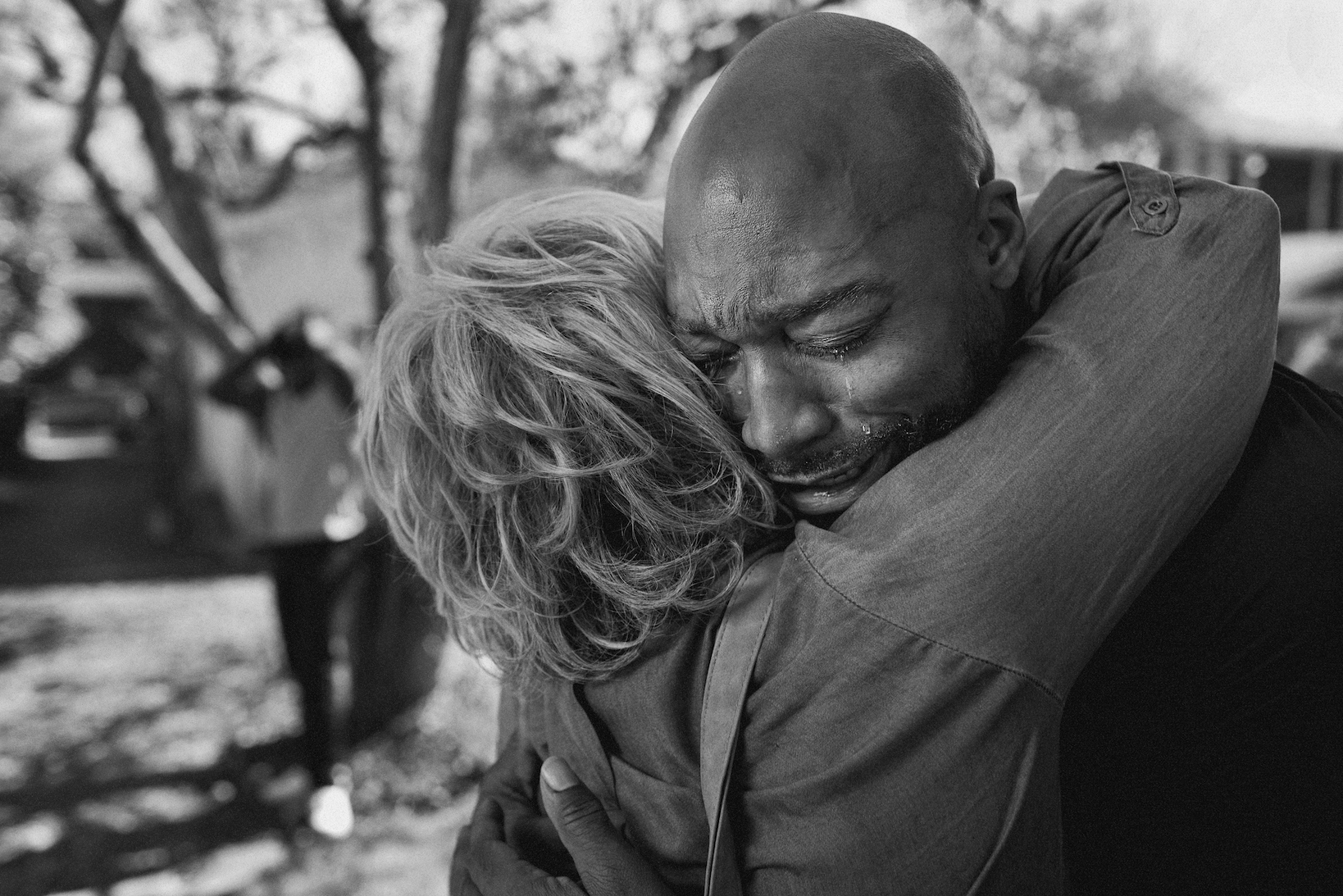
It’ll happen to everyone else, but it won’t happen to you. That’s what most people think about death. It happens to somebody else. When we hear the news, the grief overwhelms us but then we try not to think about it.
Jesus cried when he stood at the grave of his friend, Lazarus (John 11:35). Perhaps he knew that in only a few days, he would also be in a tomb, closed up with a rock, and dead—just as dead as Lazarus was at that moment. Or perhaps he was crying about something else.
When Martha, Lazarus’ sister and Jesus’ friend, said in her grief, “If only you had been here, our brother wouldn’t have died,” Jesus replied with his most startling description of himself. He said, “I am the resurrection and the life. The one who believes in me will live, even though they die.”
When you breathe your last breath on this earth, you will enter eternity. What you believe here and now about Jesus will determine what you encounter at that moment. You are becoming today the person you will be forever.
Are you ready for that moment? Your answer depends on what you do with Jesus’ claim to be “the resurrection and the life.” What do you think really happened when he died? What took place on the cross became the most important fact of his life—and history. The Bible says that Jesus, who had no sin of his own, died to pay the debt you owe to God.
The Bible tells us that our sins separate us from God, both now and in eternity. Sin is anything that falls short of how God intends for us to live. It’s how we think, it’s what we do, even the good we fail to do, that is contrary to God’s ways. Sin says, I’ll do it my way. Those failings are not just imperfections or poor choices, it’s what keeps us far from God, today and ultimately when we die.
Sin isn’t easy to talk about. It’s hard to hear that we’re a sinner, but it’s a reality we must each deal with. The Bible tells us we are all like sheep; all of us have gone our own way (Isaiah 53:6). Gratefully, Jesus makes a way for us to live through his death. He says boldly that he is the only way to be rescued from sin’s consequence (John 14:6).
We have talked often about the confounding love of Jesus, a love that goes beyond our normal understanding of the word. In Romans 5:8, we read that “God shows his love for us in that while we were still sinners, Christ died for us.”
Jesus’ body still carries the scars from the cross even today. His wrists and feet still have the gouge marks where nails pinned him to the wood and in his side you can feel where the spear pierced his heart, proving he was dead. Dying on the cross for humanity is the ultimate oxymoron, a blessed catastrophe. Because he is the resurrection and the life, he overcame sin and death.
Picture him extending his arms to you now, exposing his scars. This was the price I paid for your life, Go ahead, touch them. Let them remind you of the most horrible, most beautiful event in history. Absorb the gravity of what our sin cost him.
Yet these reminders of Jesus’ wounds mark a beautiful exchange (2 Corinthians 5:21): Jesus took your place. You were dead as dead could be. And God, seeing that Jesus paid for your sins, accepts his death as if it was yours. Jesus paid in full the price you couldn’t pay for yourself. How do we know God accepted Jesus’ payment?
Because Jesus didn’t stay dead. His resurrection shouted that the transaction was received and accepted; our sins can now be forgiven. This fact changed history and it can be what changes your life. The Bible says we are rescued from sin by God’s grace (God giving us what we don’t deserve) through faith, receiving “the gift of God” (Ephesians 2:8).
Imagine this: if you receive this gift, the moment you breathe your last breath on earth, you pass from this life to your real life and you’ll be more alive than you’ve ever been. And the next face you’ll see is Jesus himself. His arms outstretched just as they once were on a cross, tears coursing down his face, he runs in your direction, laughing and shouting with joy and smothers you in a hug. He welcomes you home at last.
This is why he came.
If you’re weary of searching the world for a love to heal your broken heart, look to him. There’s real life ahead of you and nothing but death behind you.
Don’t wait a moment longer.
If you’d like to talk to God about it, here’s something to prompt your conversation:
Dear God—Here I am. I have nothing to offer you to pay for how I’ve lived. Please forgive my sins. I know I don’t deserve it but I hear that you’re willing to give me everything because your son, Jesus, paid the price for my life. That’s so awesome. That’s so beyond what I can completely understand, how Jesus took the hell that I deserve. I put my confidence in that and believe it’s true. And I believe the beautiful truth that this guarantees me a life with you when I die. You give me a life where I’ll never die again. This is a gift from you and all I have to do is receive it.
Right now, I believe that Jesus paid for my sin on the cross and that you raised him again to life. I turn from my sins and ask for you to give me new life now and when I die. I ask this because I believe what Jesus said, amen.
Day 8
Scripture: John 14:4-7
He is the path forward.
Everyone wants to be good at life. It takes skill to choose the right path and to walk it consistently. Ultimately, the path you choose determines where you end up. You can walk down a career path or a path of healing or the path of life… Or, truth be told, it’s just as easy to stand in the path of a tornado.
Jesus knew we would choose our path. When he said goodbye to his students a few hours before he was arrested, he said, “I’m going away, but you know the way to where I’m going.” And they looked at him like deer in headlights—if we don’t know where you’re going, how can we know the way?
Like on cue, Jesus answered, “Follow me—I am the way.” Literally, he said, “I am the path.”
The path where? Certainly Jesus is the way to forgiveness, peace, direction, real life, victory, and the list could go on. But is this what he meant?
When he said, “I am the way,” he didn’t mean he was “a way” to God, one way among many ways. Instead, he clearly said, I am the one and only way. “No one comes to the Father, except through me.”
Some people may frown at the thought of there being one door… one shepherd… one true light… one way, one truth, one life… but Jesus Himself established that he was the one, exclusive way.
This exclusivity is the way much of our universe operates.
- Gravity is reality on earth. If you choose not to believe it and step off a thousand foot cliff, the truth of gravity won’t change.
- There’s no tolerance in the chemistry lab. Water is composed of two parts hydrogen and one part oxygen.
- The skilled conductor won’t allow an orchestra member to play anything other than the assigned notes.
- A mathematics equation is either right or wrong.
- On the athletic field, teams must play the game by the rules.
- If you put diesel fuel in a gasoline-powered automobile you will soon need a new car.
While we might see Jesus’ claim to be the only way to the Father as restrictive, his followers through the centuries have found following Jesus to be the way of life, hope, and love.
Everyone needs a new beginning with God. Here it is. Take the path that leads to him, and to the truth, and to life itself.
And then keep going—it’s a great life to walk with God and an even better life to come.
Day 9
Scripture: John 14:1-3
He is all we need.
Consider all we’ve learned about who Jesus said he is in this study of his seven “I am…” statements:
When Jesus said, “I am the bread of life,” he said that not only would he satisfy us with today’s needs, but he would satisfy every need we have.
When Jesus said, “I am the light of the world,”’ he promised to lead us out of darkness and be a light to rescue those whose sin keeps them in a dark place.
When Jesus said, “I am the door,” he proved he would protect us, keep us safe, and lead us down new paths.
When Jesus said, “I am the real vine,” he invited us to draw life from him—the filled up, overflowing kind of life.
When Jesus said, “I am the good shepherd,” he committed himself to take good care of his own.
When Jesus said, “I am the resurrection and the life,” he said he is our only hope for life after death.
When Jesus said, “I am the way, the truth, and the life,” he welcomed us to choose the path forward.
Notice what all these things say about Jesus? He brings life, light, health, food, and a way forward, but we must first come to him. We must believe he is who he says he is. In another place in the Bible, he says he rewards those who seek him. “For he who comes to God must believe that He is, and that He is a rewarder of those who diligently seek Him.” (Hebrews 11:6)
Believing what Jesus said about himself is the best decision of your life.