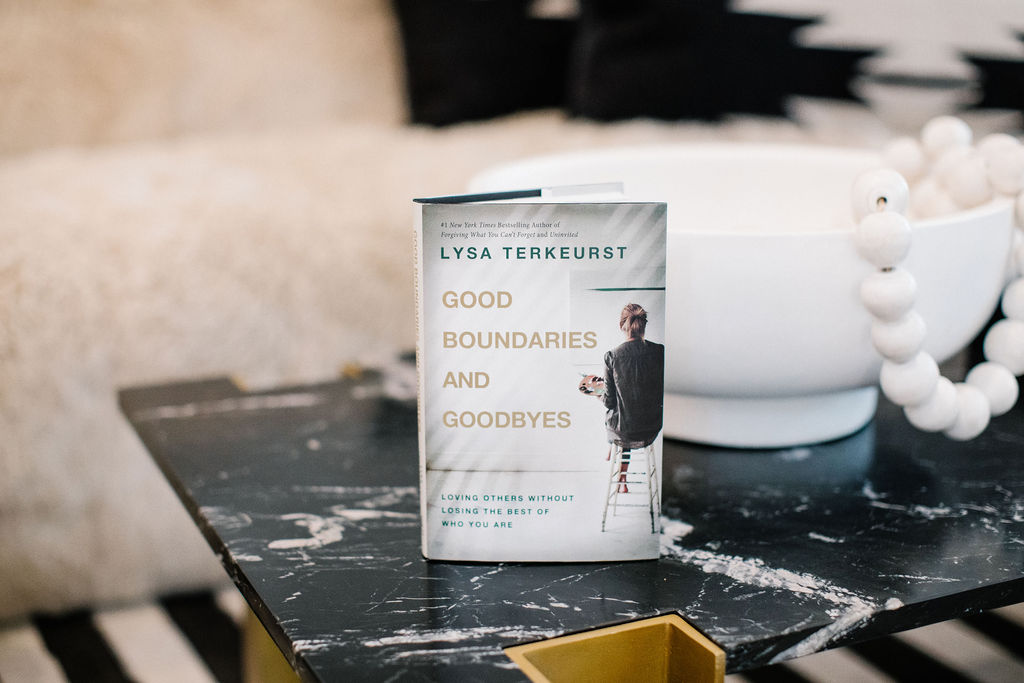
Is it unchristian to set a boundary or sometimes have to say a necessary goodbye? Lysa TerKeurst has asked these questions. But after countless hours of counseling intensives and theological research, Lysa is more committed than ever to loving people without losing the best of who she is. She wants to help you begin to do the same through this 5-day devotional.
HarperCollins/Zondervan/Thomas Nelson
Day 1
Scripture: Proverbs 25:28
I’ll never forget asking my counselor to help me process how I finally got to the place where I said, “No more. No more devastation. No more betrayal. No more.”
I wondered if that was the moment I became broken. He replied, “Lysa, I don’t think that was the moment you broke. I believe that was the moment you healed.”
I know what it feels like to be paralyzed by another person’s choices and not know what to do about it. In the past, I’ve been hesitant to draw boundaries both because it felt uncaring and I didn’t have the confidence to know how to implement and communicate healthy parameters.
Now I’ve discovered a better way to view boundaries. I don’t draw boundaries hoping to force another person to change in ways they may be unwilling or incapable of changing.
Instead, I place boundaries on myself to help me exercise self-control over what I will and will not tolerate. Self-control is crucial so that I regulate my reactions and direct my efforts toward staying in a healthy, healed place.
I’ve found that boundaries aren’t just a good idea; they are a God idea. And oftentimes, good boundaries are the only fighting chance I have for navigating relational challenges in a productive, biblical way.
If you’re in a “no more” kind of place today, consider these questions around boundaries. These questions aren’t meant to grant permission for selfishness or peacing out on responsibilities. They’re meant to help us identify where we are dancing with dysfunction and how appropriate boundaries can help (Proverbs 25:28).
- What are some areas of my life where I have the most limited capacity right now?
- Based on my realistic assessment of capacity, how does this relationship threaten to hyperextend what I can realistically and even generously give?
- Do I feel the freedom in this relationship to communicate what I can and cannot give without the fear of being punished or pushed away?
- What are some realistic restrictions I can place on myself to reduce the access this person has to my most limited emotional or physical resources?
- How am I suffering the consequences of their choices more than they are?
- What are their most realistic and unrealistic expectations of me? What are my most realistic and most unrealistic expectations of them?
- What boundaries do I need to put in place?
Remember: toxic realities in relationships will not tame themselves. We cannot ignore them into health. Nor can we badger them into a better place. We have to get honest about the hardships that are complicating and probably preventing the kind of health we not only want but need for some of our relationships to survive.
I’ve learned we can’t just “get over” our hurts; we have to work through them. And boundaries are a great way to start experiencing healing in your own life.
RESPOND: Is there a relationship in your life where boundaries may need to be implemented? As you begin to process all of this, remember: this may be hard, but you are not alone.
Day 2
Scripture: Proverbs 4:23

When my grandson Ryser was born, and my daughter was getting ready to take him home, his nurse said something I’ve never forgotten as she was giving her parting instructions: Trust is the oxygen of all human relationships.
Trust was easy with Ryser because as long as we were responsible to properly care for him, he was satisfied. But things are not so easy with relationships as we get older.
Here’s what I’ve realized: When we allow someone else access to us emotionally, physically, financially, mentally, etc., we need to require them to be responsible with that access. If I give someone level 10 access, but they are only willing or capable of level 3 responsibility, relational tension will exist. Trust will erode. And frustration will be ever increasing.
Level 10 access requires level 10 responsibility.
For example, if you trust someone with access to your Amazon Prime account, you would trust them not to use your debit card to pay for charges you didn’t approve of or put you in debt because of their irresponsible purchases. Sadly, this does happen. And not just with money—with our emotions, our capacity, and our time. If we’ve given them level-ten access, but they are only willing or capable of level-three responsibility, that’s the real source of the problem. The mistake we make is trying to get the other person to increase their responsibility. And if they refuse, we just feel stuck.
But, friend, there is hope. Instead of feeling stuck because we can’t control the choices of the other person, we can take control of reducing the access to the level of responsibility they are capable of. That solution is called a boundary.
Simply put, setting a boundary is being responsible enough to reduce the access we grant to others based on their ability to be responsible with that access.
Why is this important? Because people who are irresponsible with our hearts should not be granted great access to our hearts. Proverbs 4:23 speaks into this very thing as it instructs, “Above all else, guard your heart, for everything you do flows from it.”
We aren’t trying to protect ourselves from love. If we love, we will risk being hurt. But we are trying to protect ourselves for love. We don’t want to get so consumed with the pain and chaos of unhealthy relationship patterns that we become a carrier of human hurt rather than a conduit of God’s love.
Love can be unconditional, but relational access never should be. And boundaries help us protect this. Boundaries help us keep ourselves together so we can be the person God has called us to be. Boundaries help us protect trust. Boundaries help us cultivate the heart toward one another that God always intended for us to have—motivated toward real love and away from selfishness. And that is the way I’m determined to live.
I know this is heavy stuff. But after countless hours of studying and processing this topic of boundaries, I’m more convinced than ever that boundaries are the only fighting chance we have to live in the peace we all really long for inside our relationships.
RESPOND: Have you ever considered drawing boundaries may be a way to actually guard your heart? What might it look like if you were to require the level of responsibility from others that match the amount of access you’ve given them?
Day 3
Scripture: John 15:13
I’ve been studying the life of Jesus a lot, looking at how He reacted when people hurt Him deeply.
I want to live like Jesus. But if I’m honest, it can feel so challenging to apply biblical principles at the same time when I’m experiencing relational hurt. I’ve been bumping up against this as I’ve been learning about establishing boundaries in some of my relationships.
And here’s what I’ve realized: Just like spending that gets out of control can bankrupt a person’s finances, expending too much emotionally can bankrupt a person’s well-being. We have emotional limitations.
I’ve tried to work around this. I’ve thought things like the more I do for people, the more Christian I am. There is good intention behind this. And on the surface, this mindset has a noble sense of self-sacrifice and Christian character, even hinting closely at some well-known Bible verses. However, we must remember to look at verses in full context.
Let’s look at John 15:13, for example, today. “Greater love has no one than this: to lay down one’s life for one’s friends.”
In the past, I thought this verse meant the greatest act of love I could show is to lay down my own life for the good of others, even when it’s to my own detriment.
Yes, Jesus literally laid down His one glorious life one time, and it was for a high and holy purpose. But Jesus didn’t lay down His life to enable evil, perpetuate unholy or irresponsible behaviors, or to try and keep others happy.
When Jesus makes this statement, He is speaking within a context when friendship in the ancient world was truly valued and sought after. This type of “friendship involve(s) the sharing of confidences, [and] possessions.” Love expressed and experienced between friends is a beautiful thing and shouldn’t be dismissed or overlooked. In our daily lives, we should want to share, and, within reason, give to our loved ones and friends. But here’s the caution: we can be a resource for them when needed, but we should not become the source of what sustains them.
The instruction here isn’t so much about our willingness to literally lose our life or sacrifice our needs to the point of self-detriment. Rather, Jesus is reminding us to have a willing spirit to show and extend a type of love that is honorable and willing to be self-sacrificial when necessary.
And from that place, I’ve come to understand having boundaries in our relationships isn’t selfish. It’s taking a step, realizing only God is limitless in His capacity.
If you have struggled with wondering if setting boundaries is biblical, here’s what I want you to know:
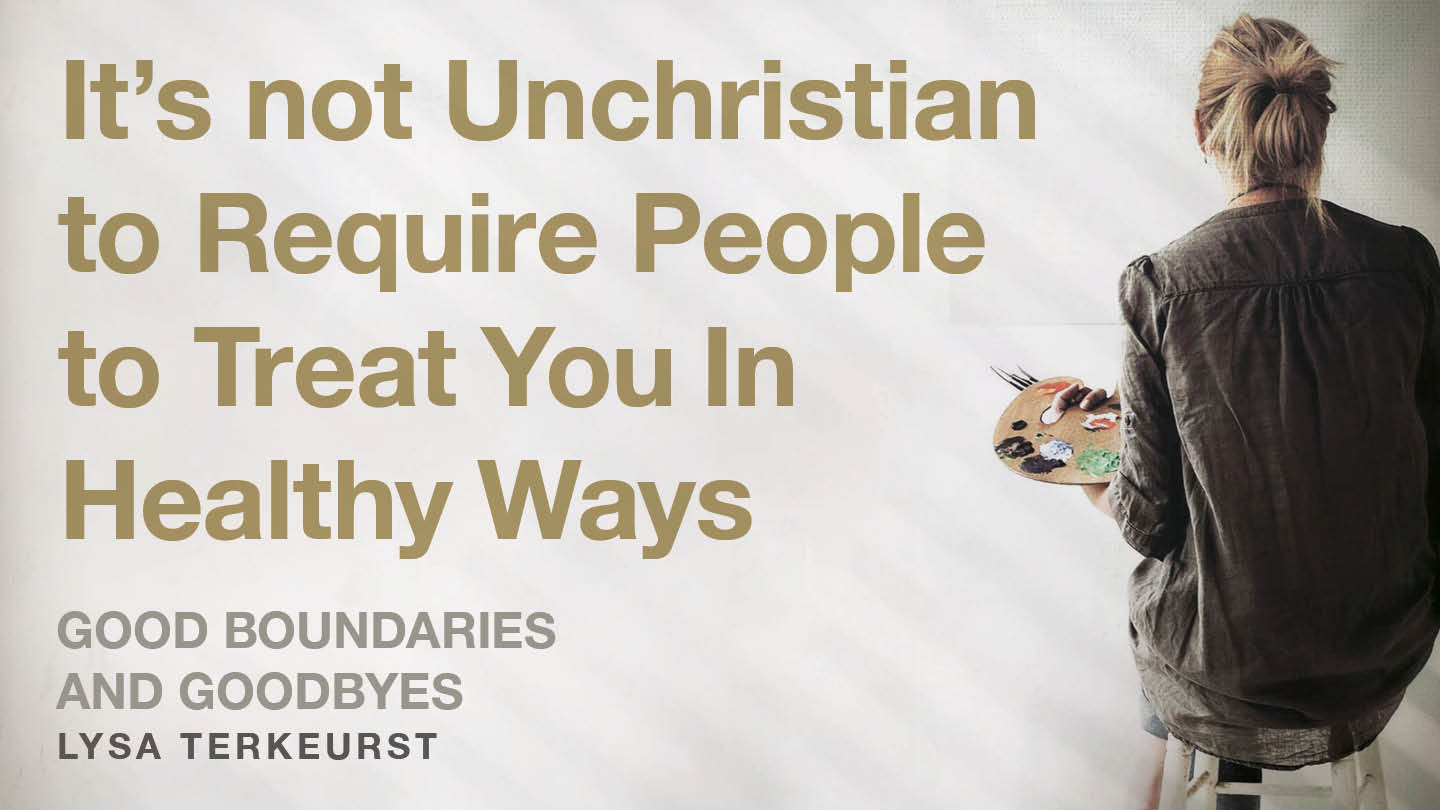
- It’s not unchristian to come to terms with our limited human capacity and set healthy parameters in our relationships.
- It’s not unchristian to require people to treat you in healthy ways. And for us to do the same for others.
- It’s not unchristian to call wrong things wrong and hurtful things hurtful.
We have to know how to spot dysfunction, what to do about it, and when to recognize it’s no longer reasonable or safe to stay in some relationships. But we can do all of this with honor and kindness, learning how to love others well without losing the best of who we are.
RESPOND: What verses have made you hesitant to set boundaries in your relationships? After what you’ve read today, how might your perspective have changed?
Day 4
Scriptures: Acts 15:36-41, 2 Timothy 4:11

When I travel to speaking engagements, the moment I dread the most is saying goodbye to the gal who has hosted me. I feel like I’ve made a new friend, and then suddenly, I have to leave. At the airport, I give my host a hug and say, “Let’s not say goodbye . . . let’s just say to be continued.”
It feels so much better to me.
However, other goodbyes I’ve faced have been much more painful. And permanent.
Maybe you’ve had to say goodbye to a major relationship in your life. Maybe you’ve had a friendship that just grew distant over time, and you never quite got closure. Or, maybe you are wrestling through a relationship right now that you aren’t sure is sustainable. Whatever the case, at some point in all our lives, we’ll face hard and heartbreaking goodbyes.
Thankfully, the Bible doesn’t leave us to figure this out by ourselves and gives us several examples of goodbyes. Today, let’s look at Acts 15:36-41 where Paul and Barnabas part ways.
The situation between Paul and Barnabas gets tricky because it involves a difference of opinion over a cousin of Barnabas. Barnabas wants to take his cousin, John Mark, with him on a missionary journey with Paul. However, Paul had a bad experience where John Mark abandoned them on a previous journey, so Paul doesn’t want to go through that again. In a way, Paul is setting a boundary, and it seems like he has a good reason for it. But at the same time, Barnabas has a conviction to keep his cousin with him and give him a second chance, which is understandable as well.
This sharp disagreement (Acts 15:39) led to a goodbye. However, this didn’t mean they were bad people. Quite the opposite. There is no label of right or wrong on either of these two men. Both are commended, they both have reasons for the parting of ways that make sense, and they both act out of personal conviction and the boundaries they needed to establish. This is such an important example to look at because both men loved God and loved people. They both had the desire to do the right thing. But still, they had to part ways.
Now, the end result is a major lesson for all of us: There’s no evidence that either of them bashed or slandered the other for the choice they made. There’s also no indication that either of them discredited the other in ministry. Their goodbye allowed the gospel to go farther than if they had stayed together.
Years later, when Paul writes to Timothy, he asks for John Mark to be brought to him because he is useful to him in ministry (2 Timothy 4:11). So, though they had a rough season, they still had respect for each other and eventually reconciled.
This is the beauty of good boundaries and goodbyes . . . when done appropriately, it gives relationships the space necessary to possibly heal and get better over time. Reconciliation isn’t always possible. But in some cases, boundaries and goodbyes help prevent the total destruction of a relationship.
With God’s help, no matter the outcome, we can find a way forward. Jesus is working in me, in you, and healing our hearts through all of this.
RESPOND: How does it help you to know that saying goodbye can be biblical?
Day 5
Scriptures: Romans 12:18, Psalms 6:9

I’m long-suffering. I’m loyal to a fault. I want to be strong enough and mature enough to live at peace with all people.
But this isn’t always possible.
That’s why I’m so thankful for two really key words found in Romans 12:18, which says, “If possible, so far as it depends on you, live peaceably with all.” Pay attention to those first two keywords: if possible. This implies that sometimes you can draw boundaries and do what’s necessary to have peace, but if another person isn’t willing or capable of working toward peace, it may not be possible to live at peace with them.
Unless two people in a relationship are willing to humbly come together and do the work, sometimes we have to learn to move on when a relationship doesn’t.
This is so incredibly hard. And my heart is so sensitive to people who want with all their hearts for relationships to work. I understand this pain on such a deeply personal level. So, if that’s you today, I want to encourage you with a perspective shift that I think will really help you no matter what you’re facing:
We can still experience redemption with God even when unhealthy or unsustainable relationships with others have to end.
This is what I’ve gotten mixed up in the past. We have to be careful to not confuse redemption with reconciliation. Reconciliation requires the cooperation of both people who are individually willing to put in the healing work. Redemption, though, can be just between you and God.
This means even if your situation doesn’t allow for relationship reconciliation and you find yourself saying a necessary goodbye, redemption with God is still yours for the choosing.
God can redeem your life, even if damaged human relationships don’t come back together. And we can still forgive even if the relationship never gets restored. I’ve found it to be so incredibly freeing to forgive and not have to wait on the other person who may or may not ever be willing to talk all of this through. Forgiveness isn’t always about doing something for a human relationship but rather about being obedient to what God has instructed us to do. And I’m convinced those who cooperate most fully with forgiveness are those who will dance most freely in the beauty of redemption.
I don’t know how this speaks to you personally today. But here’s what I do know: This is all a process. Healing is a long journey. If you find yourself in a situation right now where you feel like you have nothing else to give, a goodbye is probable, and your heart is deeply hurting, I want to close today with these honest words from David: “The LORD has heard my plea; the LORD accepts my prayer” (Psalm 6:9 ESV).
Oh, friend . . . God hears your plea. God accepts your prayer.
Reconciliation or not, God will breathe redemption into the shattered pieces of your story and create something new and more beautiful than ever before. In His way. In His timing.
RESPOND: What has your experience been like with necessary goodbyes? What was good and what was difficult about these experiences? How does it encourage you to know that redemption is always possible whether reconciliation occurs or not?
We can love people, but we can’t change them. While we can’t control others’ behavior, we can draw godly boundaries that will actually lead to progress for the relationship.