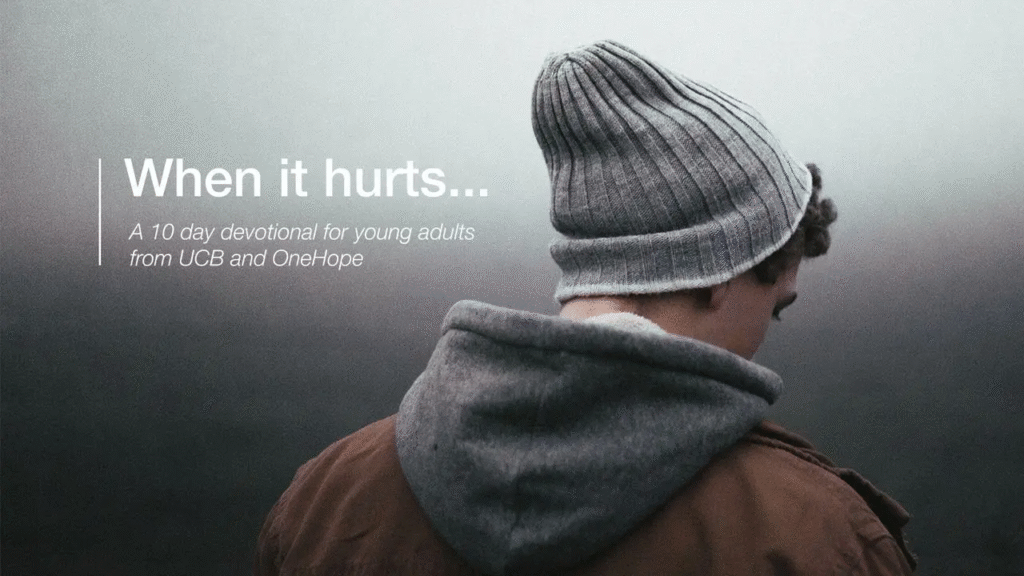
When we’re going through difficult times, feeling overwhelmed by things, or just having a bad day, we can often feel that we’re alone and that nobody understands what we’re going through. But God understands, and He’s promised to never leave us. This 10-day devotional features readings taken from UCB’s daily devotional Word For You, to help you draw closer to God through difficult and desperate times, and reassuring you that He’s beside you whatever you’re facing.
UCB and OneHope
Day 1
Scripture: 2 Corinthians 4:7
Jars of Clay
If someone called you a “jar of clay,” what would you think? It probably wouldn’t be the best compliment you’d ever received, especially as jars may be chipped, flawed or broken. We can all feel that way, though. None of us are perfect. But the truth is that Jesus changed that: “For by one sacrifice he has made perfect forever those who are being made holy” (Hebrews 10:14 NIV). We may feel like we have nothing to offer and that we’re too broken to be used by God, but that’s simply not true. God has a habit of using the most unlikely people. Throughout the Bible, we see God choosing people who had problems, issues and flaws. From Moses’ struggle with public speaking, to Sarah’s refusal to believe that God would give her a child, to Jonah’s stubbornness…the list could go on. We can’t use our brokenness as an excuse to avoid what God’s calling us to do. God wants to use us now. When we’re struggling, we can still inspire others because they can see God’s grace working through us even though we’re as broken as they are. There’s a Japanese tradition of mending broken pottery with gold. The cracks are still visible but now they’re filled with something beautiful. That’s what God does with us. As the potter (see Jeremiah 18:1-4), He takes us, the cracked jars of clay, and puts us back together again to create something even more beautiful than before. He’s healing all our broken places, but He’s also calling us to partner with Him while that process takes place.
What Now?
The next time something breaks, try to fix it rather than just throwing it out. Use it as a reminder that God’s fixing your brokenness, too.
Day 2
Scripture: Romans 8:1
God is Our Comforter
Everyone has different ways of coping with things. When life becomes overwhelming and we feel out of control, our natural response is to want to try and take control back. Or when we’re feeling hurt beyond what we feel we can bear, we tend to try to make the pain go away ourselves. We can attempt to justify it by arguing that it helps us to cope or that our actions aren’t affecting anyone other than ourselves. But the truth is that the only way we can truly deal with overwhelming situations and intense hurt is by turning to God. He is the One who provides our healing, our restoration and our comfort. Other things may feel like they help for a short amount of time, but they can’t actually fix anything. Only God can do that. Throughout the Bible we see people struggling with pain, circumstances and emotions, and then trying to find ways to deal with it. Jacob ripped his clothes when he was told Joseph was dead (Genesis 37:34). Job’s friends threw dust over themselves and wept (Job 2:12). Job even inflicted more pain on himself (Job 2:8). But we have a God who is our comforter. We can turn to Him with anything we’re facing. Nothing is too big for Him. No matter how overwhelming our feelings are, they’re never too much for Him. He can handle it all. We just need to let Him. If we’ve found other ways to cope in the past, He doesn’t condemn us. “Therefore, there is now no condemnation for those who are in Christ Jesus” (Romans 8:1 NIV). He simply holds out His hands and asks us to choose to start giving everything over to Him.
What Now?
Is there something in your life you want freedom from? Find someone who you trust and respect to talk to about it.
Day 3
Scripture: Hebrews 12:1
Baggage
We all have things in our lives that we hold onto. Things that slow us down and sometimes prevent us from moving forward at all. Whether it’s fear, insecurity, perfectionism, past hurts or something else, if we never let them go, then we start to have so much baggage that we can’t carry it all. The baggage can even become something we use to justify why we can’t do what God’s calling us to do. When Saul was to be proclaimed king, the people couldn’t find him. “So they inquired again of the Lord, ‘Is there a man still to come?’ and the Lord said, ‘Behold, he has hidden himself among the baggage’” (1 Samuel 10:22 ESV). We can hide ourselves among our baggage, too. But Jesus came so that we “may have life, and have it to the full” (John 10:10 NIV). And we can’t experience this fullness of life if we’re dragging around all our baggage and using it to hide from things God’s calling us to do. So how can we get rid of the baggage we’re holding onto? Well, sometimes it might mean that we need to spend some time handing things over to God. Other times, we might need to work through the process of forgiveness. Still other times, we need other people to help us out. When Saul was hiding, it took other people to bring him out from behind the baggage. And when they had, “he took his place before everyone, standing tall—head and shoulders above them” (1 Samuel 10:23 MSG). When we leave our baggage behind, we can step into all that God has for us, and we’re able to “run with endurance the race God has set before us” (Hebrews 12:1 NLT).
What Now?
Write down five things that are holding you back (on separate pieces of paper). Put them in your purse/wallet/bag. Then later tonight, unpack them one by one and ask God to help you remove them from your life.
Day 4
Scripture: 1 Corinthians 2:16
Good Thinking
Our thoughts are so powerful; our mind can control our actions, emotions and character. The Bible tells that “we have the mind of Christ.” Yet our thoughts don’t always add up to this. Negative thoughts can enter our minds and influence how we feel and act. But we have the ability to stop this from happening. Romans 12:2 tells us that we can be transformed by the renewing of our minds, and in 2 Corinthians 10:5 we are told to take captive every thought and make it obedient to Christ. Negative thoughts will still enter our minds, but we can choose to not let them control or change us. Each thought needs to be weighed: Does it fit with Scripture? With what God says about us? With what we know to be true? This isn’t an easy task. Some thoughts are so consuming, so real, that we can struggle to take them captive and not be emotionally affected by them. The more we practice taking smaller negative thoughts captive, the easier it will be to automatically dismiss these thoughts and we’ll have a better chance of taking those bigger, more intense, thoughts captive, too. So, to be stronger in controlling our minds, we need to be aware of what God says is true. And the way to do that is to get into our Bibles and read God’s truth about our identity and His promises to us. Once we start knowing these truths, we can use them to counteract those negative thoughts that come into our minds. We don’t need to be controlled by our negative thoughts. We have the authority to keep our mind on track with the truth.
What Now?
Find five truths in the Bible about your identity. Write them out and stick them somewhere you’ll read them every day.
Day 5
Scripture: Colossians 3:14
Spring Cleaning
We’ve probably all been in that place where we’ve let the past dictate our future. When someone hurts us, we can hold a grudge. And when grudges build up, we carry all that hurt, pain, anger and bitterness around with us. That’s a pretty heavy load—a load that stops us from moving forward into all that God has in store for us and a load that can damage other relationships. When we’ve been hurt, we may expect it to happen again. When we’ve been let down, we may find it hard to trust someone else. And when we’re tied down with bitterness and resentment, we may find it hard to experience the joy of cultivating relationships with others. God doesn’t want us to hold on to grudges. The Bible says, “Don’t stay angry. Don’t go to bed angry” (Ephesians 4:26 MSG). Every year, lots of people decide to do a spring cleaning of their house. They get rid of things they no longer need. They tidy everything up. They purge things that just collect dust. We need to do the same thing in our lives. We need to keep our mental, emotional and spiritual house clean and in order. God wants us to let Him into those places in our lives where we’re hurting and where we’ve allowed dust to settle. He wants to replace those dark, hurting places with His love, comfort and joy. The Bible says, “Be gentle, kind…meek, and patient. Put up with each other, and forgive anyone who does you wrong, just as Christ has forgiven you. Love… ties everything completely together” (Colossians 3:12-14 CEV). Let’s clean out the grudges, anger and bitterness and replace them with love, forgiveness and gentleness.
What Now?
Clean up a room of your house. As you’re sorting and cleaning, pray that God would help you do the same with your mental, emotional and spiritual house.
Day 6
Scripture: Proverbs 14:12
God Wants to Set You Free
When we’re hurting, we can end up isolating ourselves. People try to help, but our pain is all we can think about. So, we push them away. We may be hurting so much that we feel like we can’t trust anyone anymore. We may feel that we can’t even trust God. But if we believe God caused our pain, we won’t turn to Him. Instead, we’ll turn away. We avoid reading His Word to find an answer. We don’t pray or allow anyone to pray for us. We try and find other ways of coping with or numbing the pain. But those ways will never give us freedom in the end. The Bible says, “There is a way that appears to be right, but in the end it leads to death.” The only right way to find freedom is to turn to God. “Cast all your anxiety on him because he cares for you” (1 Peter 5:7 NIV). We can hand over all that pain to Him. Throughout the Psalms, we see David crying out to God through tough times. In Psalm 25, David says, “My eyes are ever on the Lord, for only he will release my feet from the snare…Relieve the troubles of my heart and free me from my anguish” (vv.15; 17 NIV). David chose to keep his eyes on God and to turn to God for the comfort and freedom he needed. When we choose to let God into the pain, He shows us how to find freedom through forgiving others. Forgiveness breaks the chains and sets us free. We may be able to find ways to temporarily alleviate the pain, but God can get right to the root of it and set us completely free.
What Now?
Invite God into all the places in your life that are causing you pain and hurt. Hand them over to Him and let God help you find true freedom.
Day 7
Scripture: Jeremiah 31:4
Responding to Shame
When we’ve been hurt, abused or lied to, our self-worth can be undermined. We begin to think, “If someone did that to me, there must be something wrong with me.” We can feel like we’re damaged goods, like we’re not good enough and that we’re the sort of person who just gets used by others. But this isn’t the truth. What happens to us doesn’t determine our identity. Our identity determines how we respond to what happens to us. When we’re secure in who God says we are, we’ll refuse to let negative things like shame and guilt become our go-to responses. Bad experiences don’t have to change the way we think about ourselves or change the way we live. The Bible says, “Do not fear, for I have redeemed you; I have summoned you by name; you are mine. When you pass through the waters, I will be with you; and when you pass through the rivers, they will not sweep over you. When you walk through the fire, you will not be burned; the flames will not set you ablaze. For I am the Lord your God” (Isaiah 43:1-3 NIV). God promises to be with us, whatever we go through. And He promises that the things we go through will not defeat us. When we feel knocked down, God says, “I have loved you with an everlasting love; I have drawn you with unfailing kindness. I will build you up again and you…will be rebuilt” (Jeremiah 31:3-4 NIV). So, whatever we’ve experienced, let’s rise up! Let’s choose to let go of shame and live knowing our true identity as loved, accepted children of God.
What Now?
Spend some time thinking about what your go-to responses to bad situations are. If these are negative responses, ask God to help you respond positively in future.
Day 8
Scripture: Isaiah 26:3
Living in a Peaceful State of Mind
How peaceful we feel can be dependent on what we’re focusing on. If we’re constantly focusing on our problems, things going on in the world and our own thoughts, it’s much harder to feel at peace. The Bible says, “You will keep in perfect peace all who trust in you…whose thoughts are fixed on you…for those who are righteous, the way is not steep and rough. You are a God who does what is right, and you smooth out the path ahead of them” (vv. 3, 7 NLT). If our thoughts are fixed on God and we trust Him through everything we’re facing, He promises us His “perfect peace.” When we’re in really tough times and we have problems that seem overwhelming, we need to stop relying on our own abilities to solve things and trust God to bring us through. We can then be at peace, rather than fearful and stressed during the chaos of the situation because we’re focused on God—not what’s going on. Paul says, “Do not be anxious about anything, but in every situation, by prayer and petition, with thanksgiving, present your requests to God. And the peace of God, which transcends all understanding, will guard your hearts and your minds in Christ Jesus” (Philippians 4:6-7 NIV). We don’t have to face things on our own. We can hand everything over to God. By trusting God completely, our levels of peace are no longer controlled by circumstances, other people, our emotions or our limitations. Instead, we’ve got God’s “perfect peace.”
What Now?
Where do you find yourself getting the most fearful and anxious? Write out “You will keep in perfect peace all who trust in you” and leave it in that specific place so you can read it when you feel the fear and anxiety rising up.
Day 9
Scripture: 1 Peter 5:7
God’s Help for Stress
Stress seems to be something we all experience during our lives. Sometimes our worries, responsibilities and problems become so overwhelming that we think we’ll crack under the stress of it all. But, unsurprisingly, God doesn’t want us to be living this way. He wants to calm us and take away our stress. He wants us to experience life to the full, not a stress-burn out-stress cycle of life. In fact, He wants us to “cast all…anxiety on him.” So, how can we actually do that? The Bible is packed with verses that tell us we don’t need to fear and that God is our protector, comforter and restorer. Here are some examples: “I am with you and will watch over you wherever you go” (Genesis 28:15 NIV). “The eternal God is your refuge, and underneath are the everlasting arms” (Deuteronomy 33:27 NIV). “Do not fear, for I am with you; do not be dismayed, for I am your God. I will strengthen you and help you; I will uphold you with my righteous right hand” (Isaiah 41:10 NIV). These show us that God really does care about each of us. He knows when we’re struggling and He promises to carry us through. And He’ll give us wisdom, so we can work out what to practically do when we’re feeling overloaded. When the problem we’re facing is too big for us to handle, we can give it to Him—and then avoid taking it back. If we let Him think His thoughts through us and allow His peace, power, and patience to take charge of our minds, we’ll be much better prepared to deal with anything that comes our way and live a life that’s not controlled by overwhelming stress.
What Now?
What’s making you feel the most stressed right now? Imagine yourself putting it in a box and handing it over to God. Every time you want to reclaim the box, ask God to give you His peace instead.
Day 10
Scripture: James 3:2
Loved. Accepted. Forgiven.
When we make a mistake, we can end up beating ourselves up about it for ages. We overthink it, worry about it, think we’ve failed and anticipate that we’ll just fail again. Once we’re in this mindset, it’s dangerous. Our self-esteem evaporates and we can label ourselves as failures. But this isn’t our identity. It’s true that we’ll make mistakes. James wrote, “We all stumble in many ways” and Solomon said, “There’s not one totally good person on earth, Not one who is truly pure and sinless” (Ecclesiastes 7:20 MSG). We will fail. But we aren’t failures. It’s good to recognize where we’re going wrong, so that we can try and avoid making the same mistakes again. But when we start living out of a place of guilt and shame, we’ve let God’s truth about who we are become drowned out. The truth is that we’re loved by God and accepted by Him. He doesn’t see all our mistakes and condemn us. Instead, He sees the mistakes, forgives us and continues to love and accept us. The Bible says, “There is now no condemnation for those who are in Christ Jesus” (Romans 8:1 NIV). God isn’t condemning us, so we need to stop condemning ourselves. We’re all works in progress. In Philippians 1, it says, “God, who began the good work within you, will continue his work until it is finally finished on the day when Christ Jesus returns” (v.6 NLT). God’s working on us, and He’ll finish what He’s started. He’s not a harsh God who’s angry when we make mistakes. He’s gentle with us. So, let’s be gentle with ourselves, too.
What Now?
The next time you find yourself focusing on your mistakes, declare out loud “I am accepted and forgiven by God.”