
In this plan, we’ll explore the often misunderstood word joy, and we’ll look at how Jesus viewed and prioritized it in his own life. In a culture driven by frenzied productivity, Jesus embraced frequent moments of rest and connection. In particularly hard times, it was moments of joyful respite that got him through rough patches.
HeGetsUs.com
Day 1
Scripture: John 2:1-12
The Work of Joy
The story of the Wedding at Cana has been popularized as the place where Jesus performed his first documented miracle – the place where he turned water into wine.
A few things are often overlooked when this story is told or a sermon is preached. First, Jesus and some of his friends were invited to a wedding. The sheer fact that he went to a wedding is remarkable, not because there’s anything incredible about going to a wedding. Weddings were as normal of an occurrence then as they are now. But the fact we see Jesus doing something that many of us do for fun is a beautiful reminder for all of us.
Weddings during Jesus’ day were not the one or two day affairs we’re accustomed to in America. They often took place over the course of several days and were filled with joyous celebration. It’s likely that Jesus was having a joyous time as people usually do when they’re at weddings. He let his hair down, too.
But the real joyous moment at this celebration was not the wedding itself, but is revealed in the way Jesus responds to his mother.
Imagine – you are at a wedding having an incredible time. The music is going. The people are dancing. The mood is right. And then, right when the wedding vibes are at their peak, the wine runs out. You see the host go into a panic because there is not another bottle in sight. People might leave. Their reputation is on the line.
Jesus’ mom, knowing that her son had the ability to keep the celebration going, heads over to him and asks him to provide more wine. At first, he refuses. He’s not interested in people knowing who he is and what he can do just yet. But, it was his mom. Who can say no to their mother, right?
Jesus doesn’t lose his cool. He doesn’t make a fuss, doesn’t bring attention to himself, doesn’t lash out at his mother. He maintains his calm and responds to her request.
This is the work of joy.
The Greek word for joy is chara. It means “calm delight.” Joy sits right smack dab in the middle of a person and helps them to ride the storm when the waters are choppy and when life makes the demands that you’d rather reject. It’s something deep inside and constant. Joy isn’t a reactionary feeling, it’s more like a way of life or a reserve inside of us.
There’s a way that joy works inside of you, and there’s a way that you acquire it, too. It’s not something that Jesus just got by accident. It’s probably something that he worked on. That he cultivated. How was this man, who constantly came up against people who were threatened by him, able to live a life so filled with joy?
In this plan, we’re going to explore how Jesus lived and cultivated a life of joy. We will look at the stories he learned and the stories he told that gave him the strength to endure tough times. We’ll look at how he found joy in rest, and how he rejoiced when people’s lives changed for the better.
Consider this:
- Think of a time when you were most joyful. What were you doing? Who was with you? What was it that made it so joyful?
- Are there things that rob you of being joyful?
Day 2
Scripture: Luke 10:27-37
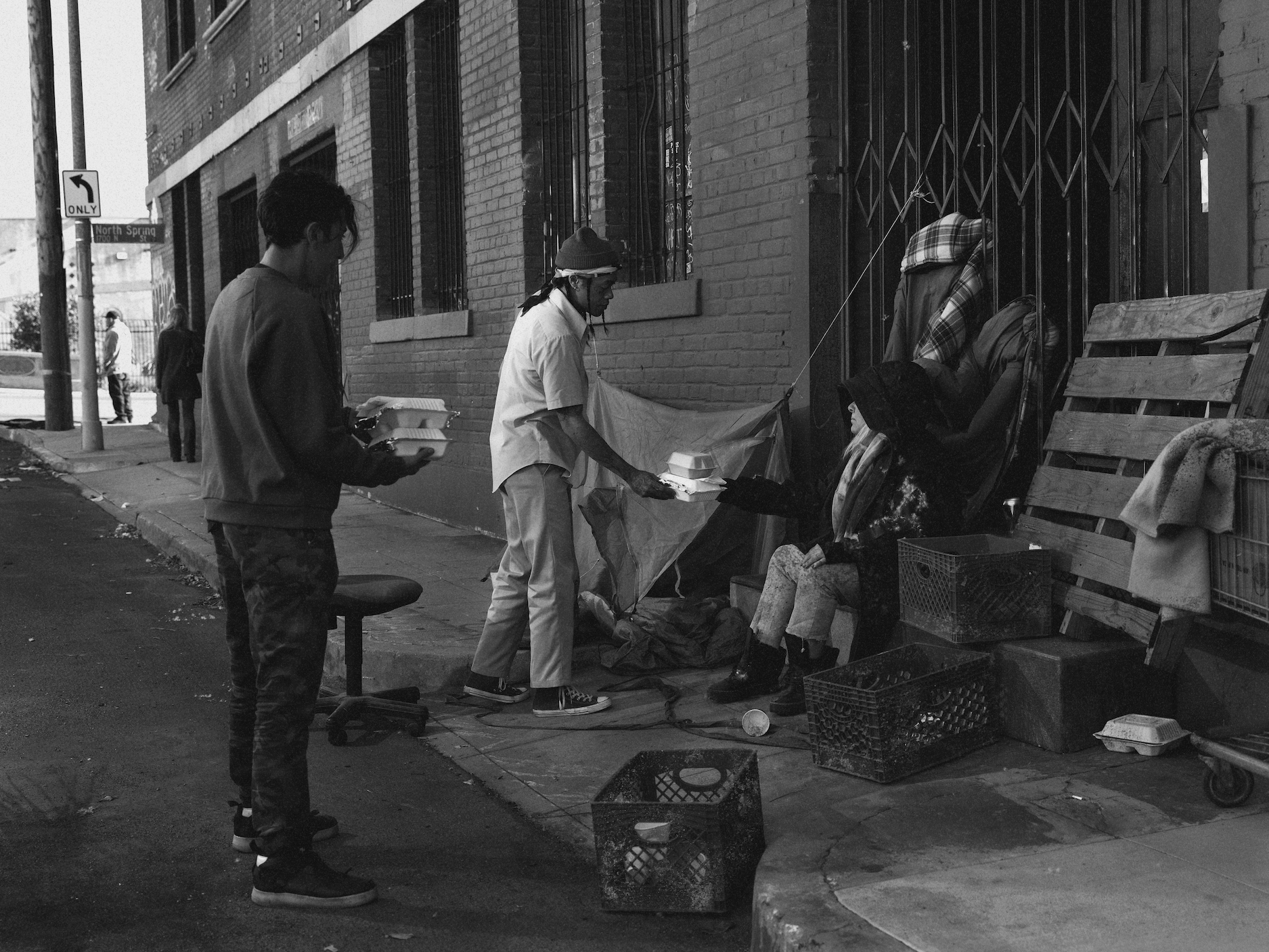
Joy from Serving Others
Religious guys seemed to love following Jesus around town.
Could you imagine being the popular guy in a town that stirred up the kind of noise that very religious people hated? That was Jesus.
In the book of Luke, we see a curious religious man who tries to trap Jesus in his words.
“Teacher,” he said. “What can I do to have a life that lasts forever?”
This man thought he already knew the answer as eternal life was a part of the promise for doing all things mandated by his religious tradition – keeping the Law. The Law was important to Jesus, too. He was a student and follower of it and held it in high regard.
Jesus asked for the man’s thoughts on the subject first.
“You must love [God] with all your strength…You must love your neighbor as yourself,” the religious man continued. Jesus replied, “You have said the right thing. Do this and you will have life.”
Seems straightforward, right? The man answered the question according to what the law said. But then, when the religious man asked Jesus who his neighbor was, Jesus taught a lesson that put emphasis not only on loving God, but on serving others. And that was disruptive.
Loving others, according to Jesus, was the way to joy and a full life.
Jesus then told the story of a good neighbor who was in a foreign land– a place that had a bad reputation– called Samaria. On his journey, he saw a man on the side of the road who was naked, had been beaten, robbed and left for dead. The rich and the religious all passed by him. But the neighbor from a foreign land stopped to take care of him. He didn’t ask the man’s name, never pressed him to explain what had happened. He got his hands dirty, touched his wounds and took care of him, no questions asked.
Joy and eternal life are not just about living forever. They are also about serving in a way that will outlive you. How many people do we pass by every day that could use our help? The joy we are lacking could live within the unmet needs of those we ignore.
We may never know of the impact that good neighbor had on the dying man on the side of the road. But what we do know is that this story is still being told – 2000 years later.
Consider this:
- Have you ever felt the kind of joy that comes from serving others?
- What is something you could do or plan to do today that would bring you this kind of joy?
Day 3
Scripture: Luke 15:11-24

Joy in Being There for Others
In the story of the prodigal son, the younger of the two sons asked his dad for his share of their inheritance. Now, the dad is not dying, but the younger son makes his cashout request so that he can leave home and get to enjoying his job-free-turned-up life. The father, knowing his son, agrees to his request. Eager to experience it all, he takes the money his dad gives to him, and he blows it. The kid lived it up until he had absolutely nothing left.
In all of his desperation and literal poverty, the son still manages to do something rather profound. He swallows his pride, gathers himself and returns home to his safe place.
Do you know what the father does? He doesn’t tell him off, doesn’t put him to work, doesn’t embarrass him in front of the family. That father was so joyful that his son had returned that he THREW. HIM. A. PARTY. His son found his way back—nothing brought his father more joy than that.
Jesus spent a lot of time with people who were finding their way in life. Jesus loved to learn about others, so people loved to learn about him. He tried to understand them. He celebrated people that many would have pushed away. Jesus was often accused of spending time with tax collectors (who were seen as traitors) or people who were just thought to be sinners.
But Jesus’ presence made a difference in the lives of those who stayed close to him. Nothing brought him more joy than really getting close to and understanding the people who were perhaps the least understood and most distraught and then helping them find their way.
“I didn’t come for the righteous,” he’d explain.
Jesus devoted his life to being available for every wayward son looking in need of a gracious friend.
Consider this:
- Whose presence has made a difference in your life? How has their presence impacted you?
- Who can you be present for today?
Day 4
Scripture: Mark 6:30-34

Joy in Rest
It’s hard to find joy when your body and mind are craving solace. No amount of fun or surrounding yourself with the ones you love could ever compensate for an empty tank.
Jesus knew about the need for rest. And he didn’t wait till he had enough paid time off saved up to take a break.
As a devout follower of the Jewish tradition, Jesus practiced the Sabbath, which means that every week, he dedicated one day to rest. Sabbath, or Shabbat in Hebrew, simply means to “rest” or to “stop.”
Most of our Sabbath days are probably filled with work catch-up, Little League, and laundry. This is not the Sabbath of Jesus. This is the Sabbath of modern society. Turning a day of rest into another day of work can zap the joy out of a moment that was intended for, well, enjoyment.
After completing especially hard tasks, Jesus got away to recharge. He got away to the water, the countryside, and gardens for solace and rest. He required it of his followers, too.
Rest didn’t begin and end on the Sabbath.
In the Gospel of Mark, one of Jesus’ disciples recounts a time that he and his friends were so busy working that they hadn’t taken the time to stop and have a meal. How many lunch breaks or even whole days have you not eaten because you were busy? In the middle of a very busy time on the job, Jesus pulls his guys aside and tells them to sit down and eat. The rest of the day was sure to be filled with plenty to do.
Could you imagine exhausted, hungry disciples? How effective would they be for Jesus’ mission if they didn’t find time to rest after being on their feet for days at a time? Jesus knew that they’d be better at their work if they took time to rest, so he made space for his people to pause, just as he did for himself.
That’s part of what Jesus wants for those he loved (read: everyone), he wanted them to get the rest he knew they needed so they could access joy.
Consider this:
- How can you create space to “get away to a deserted place” as the scripture says?
- When or where do you get the most joy from rest?