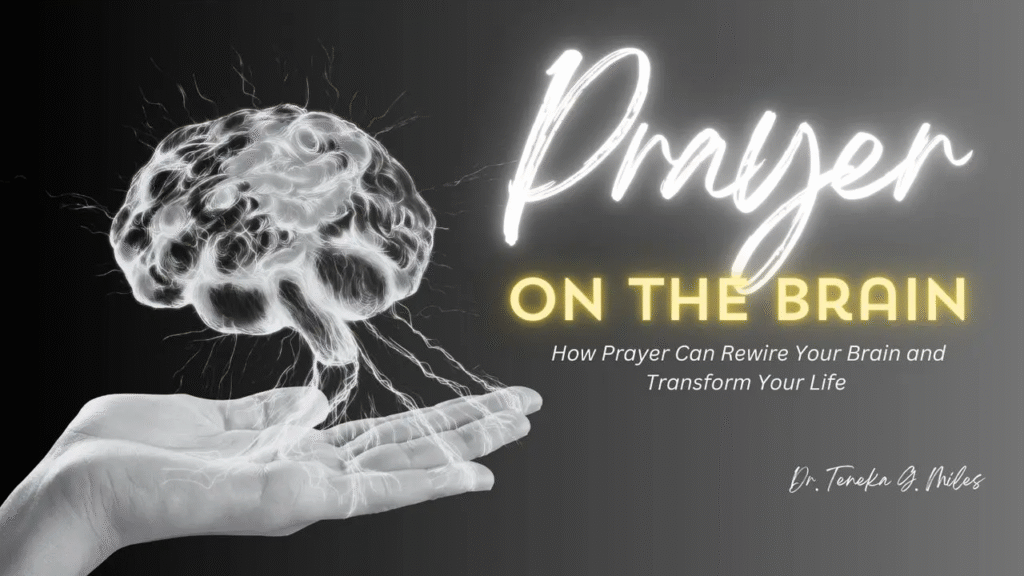
Scientific research confirms what Scripture has long taught: consistent prayer can rewire our neural pathways, reduce stress, and strengthen our ability to trust in God. This five-day devotional explores the profound connection between prayer and the brain, showing how prayer can break negative thought patterns, increase resilience, and promote emotional and physical well-being.Covenant Counseling Services, LLC
Day 1
Scriptures: Romans 12:2, Philippians 4:6-7
Day 1: The Power of Prayer to Rewire the Brain
Scientific research shows that prayer can significantly alter the brain’s structure, improving emotional regulation, reducing stress, and increasing feelings of peace and hope. When we pray, our brain forms new neural pathways that align with God’s truth rather than fear, anxiety, or past trauma. Dr. Caroline Leaf, a cognitive neuroscientist, states that consistent prayer can detox our minds, renewing our thought patterns. The Bible affirms this by calling us to renew our minds (Romans 12:2). Through prayer, we train our brains to trust in God’s sovereignty, replacing worry with faith.
Scriptures
- Romans 12:2 NIV – “Do not conform to the pattern of this world, but be transformed by the renewing of your mind…”
- Philippians 4:6-7 NIV – “Do not be anxious about anything, but in every situation, by prayer and petition, with thanksgiving, present your requests to God. And the peace of God, which transcends all understanding, will guard your hearts and your minds in Christ Jesus.”
Thought-Provoking Question
How have past experiences shaped your thoughts, and how can prayer help you reshape them to align with God’s truth?
Application
- Spend 10 minutes in prayer, asking God to help you renew your mind.
- Identify a negative thought pattern and find a scripture to counteract it.
- Write a short prayer declaring God’s truth over your mind.
Points to Remember
Prayer transforms neural pathways.God’s Word renews our minds.Worry can be replaced with faith through prayer.
Day 2
Scriptures: Isaiah 26:3, James 1:2-4
Day 2: How Prayer Strengthens the Brain’s Resilience
Prayer has been shown to increase gray matter density in the prefrontal cortex, the part of the brain responsible for decision-making, emotional regulation, and resilience. When we engage in consistent prayer, we activate the brain’s ability to manage stress, reducing the impact of negative emotions. Studies also reveal that people who pray consistently experience lower levels of cortisol, the stress hormone. God designed our brains to thrive when we engage with Him through prayer, making us more resilient in difficult times.
Scriptures
- Isaiah 26:3 NIV – “You will keep in perfect peace those whose minds are steadfast, because they trust in you.”
- James 1:2-3 NIV – “Consider it pure joy, my brothers and sisters, whenever you face trials of many kinds, because you know that the testing of your faith produces perseverance.”
Thought-Provoking Question
How do you currently handle stress, and how can prayer help you build resilience in challenging times?
Application
- Reflect on a stressful situation and pray for God’s peace.
- Meditate on Isaiah 26:3, repeating it throughout the day when stress arises.
- Journal about a past trial and how God sustained you, reinforcing trust in Him.
Points to Remember
Prayer strengthens emotional regulation.Trust in God increases mental resilience.Repeated prayer reduces stress hormones.
Day 3
Scriptures: 2 Corinthians 10:5, Colossians 3:2
Day 3: Breaking Negative Thought Patterns Through Prayer
Neuroscience shows that negative thoughts create strong neural pathways in the brain, making it easier to fall into patterns of fear, doubt, and discouragement. However, prayer helps break these cycles by shifting our focus to God’s promises rather than our problems. The Bible teaches us to take every thought captive (2 Corinthians 10:5) and renew our minds through prayer and meditation on God’s Word. By consistently aligning our thoughts with Scripture, we can rewire our brains for faith instead of fear.
Scriptures
- 2 Corinthians 10:5 NIV – “We demolish arguments and every pretension that sets itself up against the knowledge of God, and we take captive every thought to make it obedient to Christ.”
- Colossians 3:2 NIV– “Set your minds on things above, not on earthly things.”
Thought-Provoking Question
What negative thought patterns do you struggle with, and how can you intentionally replace them with God’s truth through prayer?
Application
- Identify a recurring negative thought and find a corresponding scripture.
- Pray and declare that scripture over your life daily.
- Create a “thought replacement” list, swapping negative thoughts for biblical truths.
Points to Remember
Negative thoughts can be rewired.Prayer redirects the focus to God’s truth.Scripture is a powerful tool for transformation.
Day 4
Scriptures: Proverbs 17:22, Jeremiah 17:14
Day 4: The Healing Power of Prayer on the Brain and Body
Prayer does more than impact the brain—it also affects the body. Studies show that prayer can lower blood pressure, improve immune function, and increase overall well-being. This aligns with Scripture, which teaches that a joyful heart is good medicine (Proverbs 17:22). When we pray, we invite God’s healing presence into our minds and bodies, reducing stress and promoting holistic health.
Scriptures
- Proverbs 17:22 NIV – “A cheerful heart is good medicine, but a crushed spirit dries up the bones.”
- Jeremiah 17:14 NIV – “Heal me, Lord, and I will be healed; save me and I will be saved, for you are the one I praise.”
Thought-Provoking Question
Have you noticed any physical effects of stress or anxiety in your body? How can prayer become a tool for healing?
Application
- Pray for healing in areas where stress has impacted your body.
- Practice deep breathing while praying, allowing God’s peace to settle over you.
- Write a declaration of healing and speak it over yourself daily.
Points to Remember
Prayer improves physical health.A joyful heart leads to healing.God’s peace combats stress-related illness.
Day 5
Scriptures: 1 Thessalonians 5:16-18, Psalms 143:8
Day 5: Building a Daily Prayer Habit for Lasting Transformation
Prayer must become a lifestyle, not just a reaction to problems. Consistently engaging in prayer reshapes our brains to expect God’s presence and guidance daily. The more we pray, the stronger the neural connections for faith, peace, and trust in God become. Developing a prayer habit can be transformative, leading to deeper intimacy with God and lasting spiritual and neurological change.
Scriptures
- 1 Thessalonians 5:16-18 NIV – “Rejoice always, pray continually, give thanks in all circumstances; for this is God’s will for you in Christ Jesus.”
- Psalm 143:8 – “Let the morning bring me word of your unfailing love, for I have put my trust in you. Show me the way I should go, for to you I entrust my life.”
Thought-Provoking Question
What practical steps can you take to develop a consistent prayer habit that will lead to lasting transformation?
Application
- Set a designated time for daily prayer.
- Use a prayer journal to track prayers and answered prayers.
- Incorporate scripture into daily prayer to reinforce biblical truth in your brain.
Points to Remember
Consistency in prayer strengthens faith.Neural pathways for trust in God grow with regular prayer.A prayer habit leads to lasting transformation.