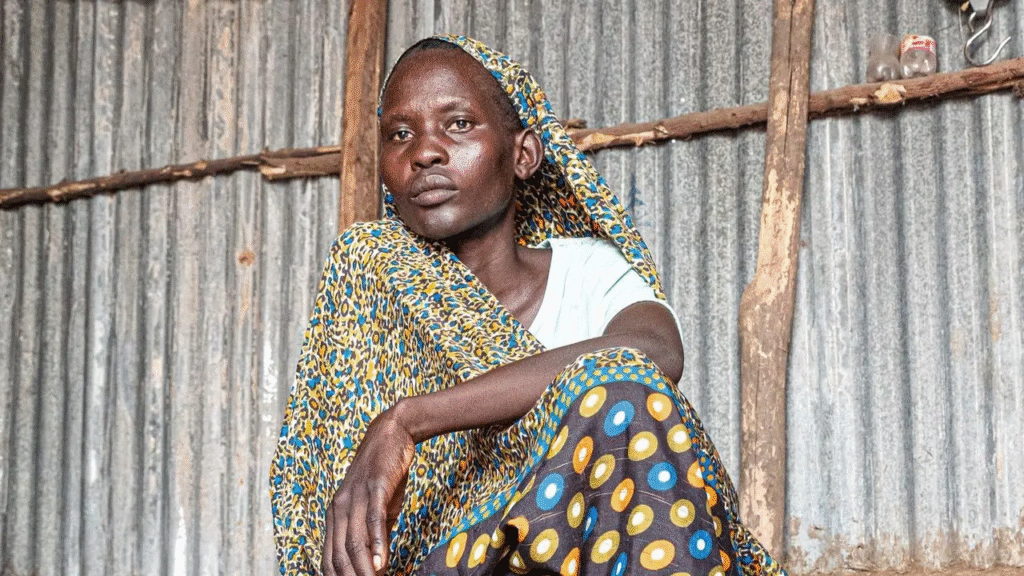
Every year, millions of people are forced to flee from their homes. These people end up in horrible situations that require a tremendous amount of strength and courage to face. We want to reflect on what the Bible tells us about refugees. Let this devotional series be a reminder that all of us are, ultimately, on our way home.
Medair
Day 1
Scripture: Genesis 3
Out of the Garden – Adam and Eve
What is a refugee?
The story of the Bible begins with a family forced to leave the only place they’ve ever known. It’s the story of Adam and Eve, and how they suddenly became exiles on earth.
Of course, they carry a large part of the responsibility for what happened, and it’s because of their own actions that they had to leave the Garden of Eden. We don’t want to push the example too far; there was no war or famine in the Garden that pushed them to seek refuge elsewhere.
Still, this departure from paradise to a strange and hostile world is the first in a long series of displacements that have marked the history of humanity. Eden was their home, and Adam and Eve were meant to live in the comfort and security God had given them, where they were happy and well provided for. If the Fall had not upheaved the life they had in the Garden, they could have lived in peace. Instead, they became exiles, a family seeking refuge away from their home. In this sense, Adam and Eve were the first to experience this kind of rupture.
Perhaps we tend to overlook the suffering the first man and woman went through.
But today, millions of people are displaced from their homes. Because of war, persecution, or natural disaster, they are forced to leave what they know behind and seek refuge elsewhere. Against their will, they say goodbye to what was supposed to be the safety and security of their homes and embark into the unknown. They are internally displaced people, asylum seekers and refugees. Perhaps they understand better than most the hardships that Adam and Eve went through, and that they, as the first to walk this path, represent us all.
After all, we are all of us refugees, strangers and exiles on earth, seeking the paradise we lost. Thankfully, the story doesn’t end there. Although God made Adam and Eve leave the Garden, His love for them never stopped. When He provided clothes for them, He showed that He understood their vulnerable state. Though they were no longer in the Garden, God continued to care for them. Even though humankind had taken a different path than the one God wanted for them, He never abandoned those He loved.
So today, as so many millions face the same rupture that the first man and woman faced, let us remember that a refugee, a displaced person, is one who has suffered, and has been driven from their home. But even more, let us remember that a refugee is one who is loved and cared for by a God who will never abandon them.
Day 2
Scripture: Genesis 12:1-9
Enduring Through Faith – Abraham
When we talk about refugees, or the displaced in general, we refer to people who were forced from their homes due to war, persecution, or natural disasters. Abraham does not fit this definition.
Living in the land of Haran, Abraham acquired wealth and built up his property. We don’t read about any war or famine, and it seems like Abraham could have lived in Haran for the rest of his life, surrounded by friends and family and enjoying life. However, one day he left with his family, bringing what they had with them, and led by God’s word.
He was not a refugee, but by leaving his land, he embarked on a journey that would test his faith through hardship, heartache, and seemingly impossible odds. He would face famine and prejudice, be tossed from place to place, and have to grapple with the fact that his children would grow up as foreigners, victims of discrimination and injustice. In other words, he went through many of the same struggles that displaced people go through today.
And through all of this, the father of faith endured by his faith. He persevered by never losing sight of the hope he had in God to protect him, provide for him, and lead him to a home – to a promised land.
Abraham’s descendants were called to this same hope. Liberated from slavery and fleeing oppression and persecution, they were a nation of refugees. They were compelled by God’s promise to provide them with a home, to protect them, and to be faithful to them. Though they stumbled, God upheld them. Through trials and the wilderness, confronted by their own weakness and that of others, they were guided, nourished, and protected on their way to the promised land.
So, God’s Chosen People, from the very beginning, were those who left behind what they knew, putting their faith in God to take care of them and provide them with a home. Through hardships and heartaches, they endured by their hope in God, and trusted in Him to see them through their trials.
Just like the displaced peoples of today who, like Abraham and the Israelites, show incredible strength and deep faith as they carry on through their journey.
Day 3
Scriptures: Ruth 1, Ruth 2
Loving the Foreigner – Ruth
The People of God were a nation of refugees. This was far more than just a detail; it penetrated deep into their identity. Their past was embedded into their DNA, defining their present as well as their future. The way God cared for Israel when they were refugees set the basis for the way they were to treat foreigners and the displaced themselves. God had told them, “And you are to love those who are foreigners, for you yourselves were foreigners in Egypt” (Deuteronomy 10:19).
And so it was that the ancestry of Jesus Christ was marked by the powerful story of God’s kindness towards a refugee.
Because Ruth was a refugee, a childless widow from an enemy country across the Jordan. She had married into a family of Israelites (refugees themselves, driven to the land of Moab by a famine), but had lost her husband. She was caught without protector or provider, in extreme vulnerability, and without options. But she was faithful and strong, she loved her mother-in-law, Naomi, and knew the God of her late husband.
And so, when the famine in Israel subsided and Naomi turned to return home, Ruth determined to stay with her. She took up the mantel of refugee herself, daring to leave her home, and together they sought refuge under God’s wings.
There, based on Israel’s past and God’s commandments, she was met with mercy and kindness. God took care of Ruth, and brought her to Boaz, who in obedience to God’s heart ensured that Ruth was provided for. He sprung to action, refusing to leave this refugee without an ounce of what God wanted for her. Boaz became her protector and provider, and later, her husband.
Ruth put her faith in God, and sought refuge from Him among His people. Boaz was faithful to the Law, and was used by the Lord to take care of someone in need. Together, they became the great grandparents to King David, and ancestors to the Lord Jesus Christ.
Refugees are central to the Biblical story. They are in the DNA of God’s people, they are key to the Gospel, and the mercy shown to them is the very love of God in action.
Day 4
Scripture: Hebrews 11:8-16
Strangers and Exiles – The Body of Christ
The story of salvation is one that binds us all together. It’s the story of the displaced and their hope for the future.
It begins with Adam and Eve, who because of their sin were cast out of Eden. Having lost paradise, they step out into a strange and hostile world. Through this tragic rupture, they set in motion a series of displacements that would resound through history and impact the course of the human race.
For example, Abraham and his descendants, who were defined by the journey they embarked on and their faith in a God who had promised them a country, a home. They encountered hardships and suffering, but they endured by their faith and persevered by their hope. They were sojourners and refugees, and the love God showed for them set the stage for stories such as Ruth’s, who sought refuge under God’s wings, and joined the family tree of the Lord Jesus Christ.
And the list goes on, with stories like Noah, Joseph, King David, and a multitude of prophets, all of whom put their faith in God at one point or another to seek refuge. Throughout the scripture, God is revealed as the God of the humble, the miserable, the afflicted, the oppressed, the desperate; the Lord who walks faithfully with those who have been displaced and the Saviour who is calling His people to a heavenly home.
But in the Bible, the People of God are not set apart by the fact that they are refugees, but by the fact that they acknowledge that they are refugees. Because, from the beginning, humanity has been a race of refugees who were displaced from the Garden of Eden. We were created for paradise, but we’re walking through the wilderness. It’s the story of salvation, the story of the displaced, and it’s a story that continues today.
That’s where you and I come in. The People of God are those who have sought refuge in Christ. We walk as “strangers and exiles on the earth”. Refugees who, having lost paradise, are fleeing from the consequences of sin and “desiring a better country, a heavenly one”. Many of us, like Ruth, have been grafted into the family of God through our faith in Christ. We walk, following God’s call, through a life that so often resembles a desert, full of trials, for the hope of a home.
But, if we are all refugees, there are some among us who experience that reality more concretely, in their day to day lives. They see the worst effects of the fall all around them, they yearn for a home even when we take it for granted, and they physically walk the same path as the heroes in the Bible, in ways we could only imagine.
Today, millions of people, like Adam and Eve, are displaced from their homes due to the brokenness of the world. They, like Abraham and other children of God, are in search of a home. They are often confronted with huge obstacles, taken advantage of, and left heartbroken and suffering. Along with Ruth, they look for mercy, but often they find prejudice and fear by those who view them as strangers, and who cannot relate to their struggles.
But shouldn’t the displaced remind us that we, too, are refugees?
Shouldn’t our status as strangers and exiles, and the hope we have in Christ, change the way we view them?
Day 5
Scriptures: Matthew 2:13-18, Matthew 8:20, Philippians 2:5-11
A Refugee, and a Refuge – Jesus
The course of history, and the fate of the world, was changed by a refugee.
When God became flesh, He intentionally became a refugee. Leaving heaven behind, He emptied Himself of His rights and privileges. Stepping into a hostile world that saw Him as a stranger, He entered a life of suffering and humility.
His physical life embodied that of the refugee. When Jesus was born, His parents were forced to search for accommodation in awful circumstances, in a barn, under Roman occupation. As a small child, He had to flee with His family to Egypt while Herod persecuted His people and tried to put Him to death. Even when He returned home, Jesus had “no place to lay His head”, travelling from place to place, facing rejection, discrimination and persecution. Throughout His life, he identified with the displaced in every aspect and endured until death.
Jesus knows what it means to leave home behind, to embark on a journey of hardship and heartbreak and to have to trust in God for the strength to continue on a daily basis. He knows loss, disappointment and loneliness. He Himself lived it in order to provide us with a home.
Adam and Eve, and all of humanity with them, had been driven from the Garden of Eden, but God’s love for us never stopped. He understands our vulnerability and, although we are no longer in paradise, He continues to care for us. We took a different path than the one God wanted for us, but He never abandoned us.
And so God became flesh, becoming one of the displaced. Jesus identified with humanity in every way, but even more, He identified with the most vulnerable members of humanity. He entered the shoes of the humble, the miserable, the afflicted, the oppressed, the desperate. Jesus became a refugee. Christ left His home in heaven in order that, one day, we may no longer be “foreigners and strangers, but fellow citizens with God’s people and also members of his household” (Ephesians 2:19).
For those who believe in Him, Christ is our refuge. As members of His family, He cares for us and urges us to do the same for those in need. That is why we seek, with joy and thanksgiving, to go the extra mile to meet those who suffer where they are. For Jesus, acts of compassion and helping those who are struggling are the benchmark for the Last Judgement.
So, we join in His calling to provide and care for those in need, knowing they are our fellow human beings, made in the image of God and worthy of dignity and respect. By following the example of Jesus, we shine His light until the day that Christ will return, and bring us all home.