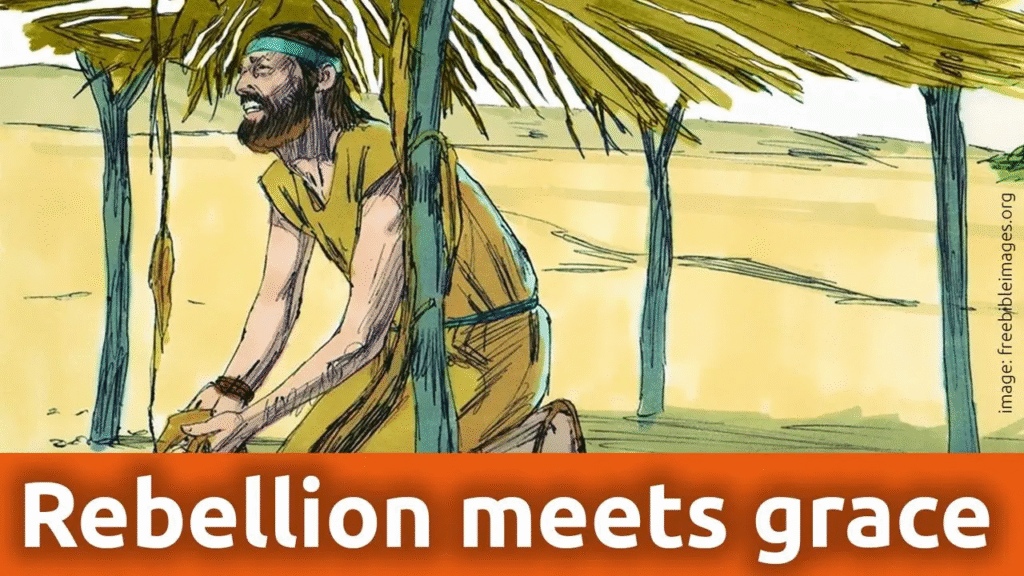
The book of Jonah is a special Bible book. It is about a prophet who does not want to obey his commission. Jonah knows that God is gracious to people who don’t deserve it, and he does not want God to show mercy to his enemies. This reading plan follows the story about Jonah’s rebellion and God’s undeserved mercy, and searches how these themes are relevant to our lives too.GlobalRize
Day 1
Scriptures: Jonah 1:1, 2 Kings 14:23-28
Jonah
The book of Jonah starts with a very short introduction: “the word of the LORD came to Jonah the son of Amittai”. Immediately after, the book records what God said and how Jonah responded to God’s words. We will read the whole story over the next few days. But before we start, let’s see who Jonah was.
In 2 Kings 14:23-28, this same Jonah is mentioned. He was a prophet of God and communicated His messages to the Israelites. Jonah was living in a difficult time: both the king and the people of Israel “did what was evil in the sight of the Lord”. Various prophets warned the people that God would punish them for their sins. But Jonah had a different message to announce! Not because the other prophets were wrong, but because God showed mercy and gave the Israelites one more opportunity to learn how good He was to them. When “the Lord saw that the affliction of Israel was very bitter”, He promised through his servant Jonah that Israel’s political situation would be improved. They regained the territory that had been taken from them by their enemies.
Jonah thus was a prophet who proclaimed God’s undeserved mercy, and saw it at work among his own people. But as we will see, Jonah did not at all like the idea that God’s grace could be extended to other peoples as well! This undeserved mercy of God is the major theme of the book of Jonah. Do read with us over the next few days to see what lessons it contains for us.
Day 2
Scriptures: Jonah 1:2, Amos 3:1-8
Judgment on Nineveh?
God commissioned Jonah to go to Nineveh and call out against it. Nineveh was the capital city of Assyria, which was the greatest empire of that time. Although Assyria was not at war with Israel in Jonah’s days, it was a continuous threat ‘in the background’. Combined with God’s warnings that Israel would be invaded by a foreign army as a judgment of their sins, the Israelites did not expect anything good from the Assyrians.
Initially, God’s commission was to announce Nineveh’s downfall. That would actually be good news for Israel… But Jonah knew the Lord. He knew that God is merciful. He knew that God does not take delight in the death of the wicked, but wants them to repent and to be saved. Jonah had seen that often enough when his colleagues announced God’s judgments over Israel, with the goal to warn them. Therefore, Jonah was not happy with his commission. He did not want to warn his enemies of the destruction to come; he just wanted God to execute it!
Do you have ‘enemies’ for whom you resent or deny God’s mercy?
Day 3
Scriptures: Jonah 1:3, Psalms 139
Jonah tried to flee from the presence of the Lord
Jonah feared God. He was a prophet who had preached to the people of Israel and told them about the Lord’s will. He was a religious expert. His problem was not that he did not know God or did not understand what He wanted him to do.
And yet, Jonah disobeyed God’s commandment to go to Nineveh. He did not even respond to God’s words or start an ‘argument’ with the Lord as to why he did not like his commission. He simply went west instead of east to take a ship that would bring him as far from Nineveh as he could reasonably go.
Jonah 1:3 explicitly states that Jonah tried to flee “from the presence of the Lord”. That is really strange behavior for a prophet who knew God personally. Given the fact that he lived long after king David, he might even have known Psalm 139, which states so clearly that God is everywhere.
It is impossible to flee from God. Jonah knew that. And yet he rebelled, he tried to flee from his mission, no matter how irrational his attempt.
Perhaps we are like Jonah sometimes. Could it be that we also rebel against God, that we prefer to have things our own way, even if we know that we can’t really flee from Him?
Day 4
Scriptures: Jeremiah 1:1-10, Proverbs 3:5-8
The cost of rebellion
Obeying God is hard sometimes. The Bible records numerous examples of people who felt completely overwhelmed when God called them for a specific task.
Moses, for example, was called to go to Pharaoh and to bring the Israelites out of Egypt. But he objected: “Who am I that I should go to Pharaoh and bring the children of Israel out of Egypt?”. He had a whole list of objections: the Israelites would not believe him, he was not eloquent enough, and so on. But in the end, Moses did what God commanded him to do. And he experienced God’s help.
Prophets like Isaiah and Jeremiah also objected to their callings; they felt too young or too sinful to be God’s messengers. But God dealt with their objections, and they were prepared to obey Him: “Here I am! Send me” (Isaiah 6:8).
These people initially did not like their commission, but they submitted to God’s will and trusted in His care. Jonah decided otherwise. Through his disobedience, he withdrew himself from God’s love and presence (or at least, he tried to).
Rebellion against God comes at a huge cost. If we turn away from the Lord, we will face His wrath. Separation from God leads to eternal death. Only when we submit ourselves completely to Him, can we receive forgiveness, peace, and joy.
Do you live in obedience to God, even when it is hard?
Day 5
Scriptures: Ezekiel 33:10-11, Hebrews 12:5-11, Jonah 1:4
God hurled a storm upon the sea to discipline Jonah
God had spoken to Jonah, but he did not listen. Now God ‘spoke’ in a different way, by hurling a storm upon the sea where Jonah’s ship was sailing away from the Lord’s presence. Sometimes it is necessary for God to intervene in the lives of his children if they don’t listen to His voice. That might hurt. But it is actually God’s grace at work! God could have let Jonah continue on his disastrous way, but He chose to bring him back. He did not bring this storm upon Jonah and the sailors – and probably upon other ships too, – because He enjoyed showing his wrath, but because He wanted Jonah to turn from his evil ways.
Similarly, God speaks about the royal line of David: “I will be to him a father, and he shall be to me a son. When he commits iniquity, I will discipline him with the rod of men, with the stripes of the sons of men, but my steadfast love will not depart from him” (2 Samuel 7:14-15). God disciplines His rebellious children, because He wants them to walk the way of life.
Are you paying attention to God’s will? Or do you also need discipline to get you ‘back on track’?
Day 6
Scriptures: Jonah 1:4-5, Psalms 46
Where do you seek help?
The wind that God hurled upon the sea was so great that the ship threatened to break up. That would mean the death of its crew and passengers. No wonder that the mariners were afraid! The Bible text tells us how they did whatever they could to ward off the disaster. They hurled the cargo overboard, which was a wise thing to do since it would make the ship lighter. But it was clear that practical wisdom alone could not save them. Therefore “each cried out to his god”. After all, the more gods were called to the rescue, the better their chances of survival!
Christians know another source of help.
“I lift up my eyes to the hills. From where does my help come?
My help comes from the Lord, who made heaven and earth.” (Psalm 121:1-2, ESV).
It is remarkable that Jonah uses a similar description of God some verses later: “I fear the Lord, the God of heaven, who made the sea and the dry land.” The God who created the sea and the winds, is also able to calm them. If only Jonah would cry out to Him, like the mariners cried out to their gods…
When you are in danger, where do you seek help?
Day 7
Scriptures: Jonah 1:5-6, 1 Thessalonians 5:1-11, 1 Peter 5:8
Sleeping or waking
Given the mighty storm and the mariners panicking, it is almost unbelievable to read how Jonah responded to the turmoil: he was fast asleep! He had not listened to God’s voice speaking to him, and now he did not even notice God’s supernatural intervention. The captain of the ship had to wake him. This man, who did not even know the true God, urged Jonah to call out to the Lord.
The text does not say whether Jonah took this advice to heart. Probably not, given the rest of the story. But it is a reminder for us: are we ‘awake’, or are we ‘asleep’? Are we spiritually alert? The apostle Paul exhorts his readers: “let us not sleep, as others do, but let us keep awake and be sober” (1 Thessalonians 5:6). This is important both to resist the devil (see 1 Peter 5:8) and to be prepared for Jesus’ second coming (see 1 Thessalonians 5:2-4).
Being prepared for Jesus’ return first of all means that our sins are forgiven and our relationship with God is restored. If that’s not the case, we will wake up in hell! If we are still ‘asleep’ in our sins, it is vitally important to arise and call out to God. The captain only hoped that “perhaps” God would listen. We can be certain that He will.
Are your sins forgiven? And are you spiritually awake?
Day 8
Scriptures: Jonah 1:7-10, Psalms 32:1-7
Confessing your sins
Jonah had run away from God, and once the captain had woken him he probably realized that this storm could have something to do with his behavior. But he did not say anything until the crew cast lots and the lot fell on Jonah. Only when the crew pushed him to tell what was going on, he told them: “I am a Hebrew, and I fear the Lord, the God of heaven, who made the sea and the dry land.” He also confessed that he was fleeing from the presence of this mighty God, which of course made the crew “exceedingly afraid”.
It is ironic that a prophet of the Lord, whose task it was to call people to confession and repentance, kept quiet about his own sins. But God did not accept his stubborn behavior. His hand was heavy on Jonah. He used a storm, a crew, and even the casting of lots to bring Jonah to the point where he could no longer hide his sins.
Committing a sin is a serious problem. Persisting in sin is even worse. Jonah’s refusal to repent brought the whole crew into serious danger. His stubbornness also prevented him from seeking forgiveness, and thus his relationship with the Lord remained unresolved.
All through the Bible, God calls sinners to repentance. E.g. in Acts 3:19 “Repent therefore, and turn back, that your sins may be blotted out”.
If you are persisting in sin, please take this exhortation to heart!
Day 9
Scriptures: Jonah 1:11-16, Judges 2:11-19
Confession without repentance?
Once it was clear that Jonah’s behavior was the cause of the storm, the crew asked him for a solution. His answer was remarkable: “Pick me up and hurl me into the sea”. The mariners were shocked by this proposal, and they tried all they could to find an alternative solution. But their efforts were in vain, and eventually they did hurl Jonah into the sea.
On the surface, Jonah’s words seem to be of ultimate self-sacrifice. He was prepared to die, in order that the crew survived. But if we take a closer look, we do not read anywhere that this was God’s will! Right from the beginning of the book, it was clear what God wanted. He had told His prophet to go to Nineveh and to preach there. But even now, Jonah did not want to obey his commission. He did not surrender to God. Instead, his proposal to be hurled overboard might be his ultimate attempt to flee from God’s presence…
Jonah had confessed he was running away from the Lord, but he did not change his behavior. If we confess our sins, we should also repent and “bear fruits in keeping with repentance”. Otherwise, our behavior shows that our confession was just empty words. We need a change of heart, which will show outwardly.
Are there patterns of sin in your life that you need to break with?
Day 10
Scriptures: Jonah 1:17, Matthew 12:38-40, Luke 24:45-48
The sign of the prophet Jonah
As soon as Jonah was hurled into the sea, “the sea ceased from its raging”. His solution had worked. But Jonah did not drown. God intervened again in a supernatural way: He appointed a great fish that swallowed Jonah. Three days and three nights he was in the belly of this fish, “in the heart of the seas”. There was no way out. But, as we read in the next chapter, after these three days, the fish vomited Jonah out upon the beach!
Jesus Christ uses this miraculous story as a metaphor for his own death and resurrection. When Jesus was crucified, He was buried in a tomb “in the heart of the earth” (Matthew 12:40). Death had triumphed. There was no way out. But three days later, He rose again! The grave had to let Him go, He came back to life.
Jonah’s story is a miracle, a sign that God is stronger than natural forces, stronger than the sea and the winds, stronger even than death. Jesus’ resurrection is God’s ultimate triumph. Death could not hold Him. Nothing can hinder Him from fulfilling His plans!
Day 11
Scriptures: Jonah 2, Psalms 107:10-22
The greatest miracle thus far
There have been a lot of miracles in the story of Jonah. The storm was a miracle, its abrupt end was a miracle, the great fish was a miracle, Jonah surviving three days and nights in the belly of the fish was a miracle… But maybe chapter 2 records the greatest miracle of all. In the heart of the seas, Jonah “remembered the LORD” and called out to Him. He even said:
“I am driven away from your sight;yet I shall again look upon your holy temple.”
With these words, he referred to the common practice to pray facing the temple in Jerusalem. This was an expression of seeking God’s presence, since the temple was His special dwelling place. After running away from God for so long, Jonah finally turned around and longed to be in God’s presence again.
And God did not push him away. Jonah marvels: “You heard my voice”!
Jonah is not the only one who was running away from God, but finally had to surrender. The apostle Paul, for example, was persecuting Christians before Jesus saved him and appointed him as a missionary. We humans tend to be very stubborn. We don’t like to submit ourselves to God. It can take much time and many struggles before we surrender. But if we do, we can be sure that God will not reject our call for mercy. “He will surely be gracious to you at the sound of your cry. As soon as he hears it, he answers you” (Isaiah 30:19).
Day 12
Scriptures: Jonah 3:1-4, Matthew 28:16-20
“Go and preach”
When the big fish had vomited Jonah out upon the beach, God repeated his commission to go to Nineveh and tell the people there that God’s judgment would come. Although Jonah had been extremely rebellious, God did not give up on him as a prophet. Neither did He give up on his plan to warn the Ninevites. He just told Jonah for the second time to go there. This time, Jonah obeyed. He called out: “Yet forty days, and Nineveh shall be overthrown!” The Bible text does not disclose whether this was all that Jonah said. Just warning of God’s judgment without calling people to repentance and pointing them to the possibility of forgiveness, would be a rather one-sided and minimalist message. But at least Jonah did what God had commanded him to do.
Christians actually have a similar commission. When Jesus was about to leave the earth after his resurrection, He gave his disciples some final instructions. He told them: “Go therefore and make disciples of all nations, baptizing them in the name of the Father and of the Son and of the Holy Spirit, teaching them to observe all that I have commanded you” (Matthew 28:19-20). I think this commission is still valid for all who believe in Jesus Christ — not just for apostles or prophets.
How can you “go and make disciples”? Are you longing to obey this commission, or are you trying to escape it, like Jonah did?
Day 13
Scriptures: Jonah 3:5-10, Matthew 12:38-42
God is gracious
Jonah’s message to the Ninevites was crystal clear: “Yet forty days, and Nineveh shall be overthrown!” The Ninevites took his message very seriously, but they did not yet give up hope. All the people put on sackcloth as a sign of repentance and humility, and the king decreed that all should fast and “call out mightily to God”. For, he said: “Who knows? God may turn and relent and turn from his fierce anger, so that we may not perish.”
And God did.
The Ninevites were not God’s people. They did not know much about Him. But apparently, they had understood that the Lord is “a God merciful and gracious, slow to anger, and abounding in steadfast love and faithfulness, keeping steadfast love for thousands, forgiving iniquity and transgression and sin, but who will by no means clear the guilty” (Exodus 34:6-7).
Both the behavior of the Ninevites and God’s response to their repentance were a great example for Jonah and for the Israelites. And this timeless truth is important for present day Christians as well: no matter how badly people behave, if they wholeheartedly repent, God is willing to forgive them. This does not only apply to the Israelites as God’s special people, but also to their enemies. And it applies to us, present day sinners. Praise God for His endless love!
Day 14
Scriptures: Deuteronomy 32:16-22, Hosea 6:4-10
Saved to make others jealous
Centuries before Jonah’s time, when the Israelites were about to enter the land that God had promised them, the Lord said something striking about His relationship with the Israelites. God knew that they were “a perverse generation, children in whom is no faithfulness”. He told them clearly that their disobedience and stubbornness would lead to judgment. God would hide His face from them because of their provocations. But then there is verse 21, where the Lord explains what He will do when the Israelites won’t listen: He won’t just leave them forever, but He will “make them jealous” like a husband who sees that his wife is dating another man. I think the story about the Ninevites is an example of that ‘strategy’.
The Israelites had a special covenant relationship with God, but they had left Him and served idols instead. God had punished them, He had blessed them, He had announced their downfall… but they did not turn back to Him. Now He was gracious towards their worst enemy. God said, as it were, “Look how good I am, and remember that I offered you the same! Come back!” Would that make the Israelites jealous, and make them long for God’s renewed blessing for them too? Would this make Jonah burst out in praise, because the Lord is so good for sinful people?
How do you respond when God gives his mercy and blessings to people you (for whatever reason) don’t like at all?
Day 15
Scriptures: Jonah 4:1-3, Matthew 20:1-16, Romans 15:5-7
Salvation for sinners?!
Jonah had waited for Nineveh to be destroyed, and now God did not overthrow the city at all. He showed mercy instead. This “displeased Jonah exceedingly”! This was exactly what he had foreseen from the beginning, when God had called him to preach against Nineveh. This was exactly why he had run away from his commission. He did not want God to forgive his enemies. He’d rather die than see how the Ninevites received God’s blessing.
Yes, Jonah was grateful that God answered his prayers when he was in distress in the belly of the fish. But He did not want the Lord to answer the prayers of the Ninevites. These people should not share in His grace!
Jonah cried out: God, what you are doing is wrong! I hate your goodness towards others! Offering salvation to such wicked people was too much for Jonah. It did not fit in his theology.
But it was not up to Jonah, nor is it up to us, to decide who ‘qualifies’ for forgiveness, or who should be allowed to join the church. God Himself invites every single human to repent and to come to Him. It was not Jesus’ mission to call the righteous, but sinners (see Matthew 9:13).
Are there people you would rather not invite to church? If so, think about why it is difficult for you that God loves them just as much as He loves you.
Day 16
Scriptures: Jonah 4:5-11, Job 1
Jonah’s heart was cold and embittered
Jonah had told God plainly that he was angry because Nineveh was not destroyed. Instead of starting a philosophical discussion, God made a plant grow that provided Jonah with shade. Jonah was exceedingly glad about this. But when God appointed a worm that attacked the plant, so that it withered, he was faint and “angry enough to die”.
God used this plant to reveal what was in Jonah’s heart. As soon as God did something good for Jonah (rescuing him from drowning, saving him from the big fish, providing a plant for shade), he was glad. But as soon as his privileges were taken away, or when God blessed other people, he was exceedingly angry. This is a huge contrast to the behavior of Job, when he lost almost everything he had!
Jonah’s heart was selfish and embittered. He lost his temper about trifles, but did not mind the destruction of “more than 120,000 persons who do not know their right hand from their left”.
Jonah was a prophet; he knew a lot about God. He had preached and he had seen God at work. But his heart was not filled with love. That is a major problem, as 1 Corinthians 13:2 makes clear: “And if I have prophetic powers, and understand all mysteries and all knowledge, and if I have all faith, so as to remove mountains, but have not love, I am nothing”.
What is at the bottom of your heart? Is it filled with God’s love, or is it cold and embittered?
Day 17
Scriptures: Jonah 4:9-11, 1 Timothy 1:12-17
How would you respond?
The book of Jonah ends with a question. God asked Jonah whether He should not pity thousands of people who hardly knew what they were doing (probably He meant Nineveh’s young children), when Jonah was preoccupied by a plant. We don’t know what Jonah’s answer was. We don’t know whether he repented from his heartless attitude and from his rebellion against God.
A more important question is: what would our own answer be? Do we accept that God acts according to His perfect will, even if that does not fit in our theological framework? Do we rejoice in His grace for sinners, even if those sinners are our worst enemies? Do we praise Him for His endless love, and are we ready to share this hopeful message with people outside our own social group?
Sometimes we might be like Jonah. We too might be loveless and rebellious. It is shocking and humiliating to discover these emotions in our own hearts. But the story of Jonah also gives hope. It shows that God loves rebellious sinners like Jonah and the Ninevites. He loves them so much that He gave his only Son, that whoever believes in Him should not perish but have eternal life.
Our rebellion meets God’s grace. Do you accept His mercy, both for yourself and for others?