The decisions you make today can have a great impact on the way you live tomorrow. In this study, the author examines the choices made by two women (Eve and Rehab) in the Bible who wrestled with problems similar to those of today. Gain insight and wisdom from the Word that will help you to make better choices in your life.
Introduction

The women of the Bible tell us a lot about ourselves. Although times have changed, human nature has not. Women as different as Eve and Rahab can still help us see how a decision that we make today can shape our lives tomorrow.
In the following pages, author, Bible teacher, and professor Alice Mathews shows us that women like Eve and Rahab are especially important because of what they tell us about our God. She also explores the timeless truth that in the wisdom and grace of God none of us lives above the power of a decision or beyond the reach of our Lord.
Day 1
Choices
From the beginning of recorded time, women have struggled with tough choices. They have wrestled with the restrictions fencing them in. They have sometimes bowed to, and sometimes rebelled against, the powerful who ruled them. They have lived out their lives balancing their understanding of God’s will for them against the demands others made upon them. Some lived lives of quiet desperation. Others found strength and comfort in their relationship to the living God.
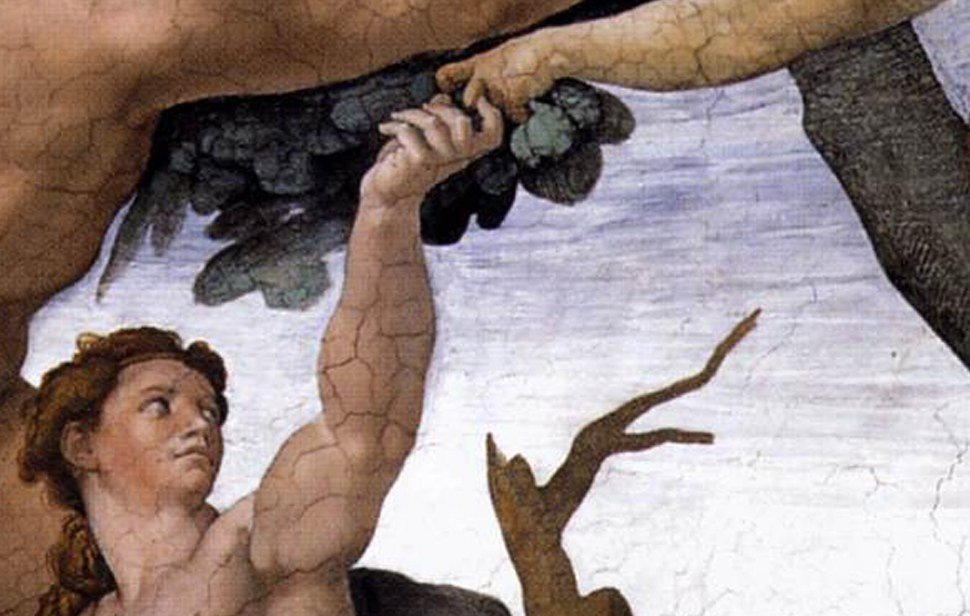
Some made wise decisions. Others made destructive choices. Eve reached for a piece of fruit— just a piece of fruit—and brought upon herself and upon all her sisters since that time the devastating consequences of the Fall. Rahab chose to hide the Israelite spies and became an ancestress of the Messiah.
Choices. Life is full of them. We have to make them. So how do we make them well? We can turn to the Word of God, the Bible, for help in wise decisionmaking. There we can learn by precept and by example.
In the pages that follow, we will watch two biblical women wrestle with problems that are sometimes different from our own, and sometimes surprisingly similar to those we face. As we watch real women fail or triumph, we can find principles that will make clearer the answers we seek.
To make wise choices we must know God’s Word and apply it well. As we do that, we can become people of worth, wise people whom God can use.
Day 2
Eve: How to See Long-Term Consequences in Little Decisions
What are the toughest decisions you have to make? Cafeterias rank high among my more difficult decisions. I hate standing in that line, unsure what is 10 feet down the display case that I’ll miss if I decide to take the food in front of me. I go to great lengths to avoid having to eat in a cafeteria.
My hang-up with cafeteria decisions doesn’t make a lot of sense. The food generally isn’t that expensive—or that good. So who cares if I could have made a better decision? There’s always tomorrow!
Maybe you have a tougher time deciding on that new pair of shoes or the menu for Saturday night’s dinner party. Whatever it is that we hate about decisions, the fact is that we all have to make them and make them and make them. In a study a few years ago at the University of Minnesota, Dr. Erich Klinger found that all of us make anywhere from 300 to 1,700 decisions every day of our lives.
We decide whether to get up in the morning. Then we decide when to get up— early, late, somewhere in between. Then we decide how to get up—both literally and figuratively on the right or the wrong side of the bed. Thereafter we really get into decision-making—what to wear, what to put on first, whether to brush our teeth or brush our hair first, what to eat for breakfast, whether or not to wash the dishes, and on and on. A lot of those decisions don’t rank high as earth-shaking choices. Often they add up, however, to a good or bad start for our days.
Think about the most important decisions you’ve made in your lifetime. What were they? For some of you, choosing your marriage partner is probably near or at the top of the list. Whatever you want to say or leave unsaid about your marriage, you’ve probably made few other decisions that rank with that one in changing the direction of your life.
What other decisions have you made that seemed momentous to you at the time? You may have agonized over them. Your first date with Mr. Right: What should you wear? Should you shop for a new dress? Should you shoot your budget for the next 6 months on the “right” outfit for this important date?
Perhaps you’re redecorating the living room and can’t decide whether to order the white brocade couch or the mauve velvet one. Whether 6 months or 6 years later, you may not even remember some of these decisions because they turned out to be not particularly important at all.
Perhaps you’ve struggled with whether to marry at all—or to remarry after a bad marriage and a heartripping divorce. Or maybe you are married and can’t decide whether to have children. These are major decisions.
Then there are the decisions we make that, 6 months or 6 years later, startle us by their importance when we look back on the results of those choices. You bought your present house for all the wrong reasons, but after moving there you discovered that your new neighborhood changed your life. Perhaps your neighbor is now your best friend. She may have brought you to a Bible study where you were introduced to Jesus Christ. You are now a different person.
Or perhaps you met your neighbor’s husband and have been enmeshed in a secret affair that has changed everything for you—the dynamics in your own marriage, your relationship with your neighbor, and your own sense of inner integrity. The casual decisions sometimes turn out to be the most dramatic and life-changing of all.
Decisions. We make them. Then they turn around and make us. And sometimes they break us. Let me tell you about a woman who faced a decision. It was probably not a decision most of us would put in the life-changing category. It was a casual decision about a piece of fruit. The fruit looked delicious. It had a nutritious smell to it as well. Someone said it would make her wise.
Decisions. We make them. Then they turn around and make us. And sometimes they break us.
What’s the big deal? The next time you stand in the produce section of your supermarket and choose the right bunch of bananas or sort through the strawberries, think about this woman and the decision she made about some fruit.
The woman’s name was Eve. Actually, we don’t find that out until the end of the story. In the story as we read it in Genesis, the first book of the Bible, she was merely “the woman.” She was the only woman. She didn’t have to be called anything else to be singled out of the crowd. She stands at the head of the female half of the human race. We can learn a lot from the decisions she made.
A lot started with Eve! She’s called “the mother of all living.” She is also “the mother of all dying.” Look at her in Genesis 1:26-28.
God said, “Let Us make man in Our image, in Our likeness, and let them rule over the fish of the sea and the birds of the air, over the livestock, over all the earth, and over all the creatures that move along the ground.” So God created man in His own image, in the image of God He created him; male and female He created them. God blessed them and said to them, “Be fruitful and increase in number; fill the earth and subdue it. Rule over the fish of the sea and the birds of the air and over every living creature that moves on the ground.”
As the climax to this splendid hymn of creation, God majestically crowned all that He had done with the creation of Man— humankind, male and female. Note that the first man and the first woman were created in the image of God.
It is on the basis of this image, this likeness, that Eve and Adam were given dominion over God’s creation. It wasn’t that the man and woman were stronger than the lions, tigers, and hippopotami around them. It was that they stood between God and His created world as His representatives. Imaging God in the world, they had a responsibility to care for everything God put under them.
In addition to ruling God’s creation, Adam and Eve were also told to be fruitful and increase in number. Have kids. As God looked over all He had accomplished, He said, “This is very good!”
So far, so good. We’ve seen creation from a distance. Now as we move into Genesis 2, God takes us back for a slow-motion rerun of what happened in Genesis 1:27. We discover that God created the man and the woman in quite different ways and the differences are significant. Read Genesis 2:7.
The Lord God formed the man from the dust of the ground and breathed into his nostrils the breath of life, and the man became a living being.
Adam was created from the dust of the ground, just as his name—Adamah in Hebrew—states. If God were making him today, He might call him “Dusty.”
If you’ve read through the next verses in Genesis 2, you’ve discovered that Adam had a wonderful life in Eden. In verse 8 we see him placed in a garden of God’s design—surely something to see! In verse 9 we learn that he had an unlimited food supply that was both nutritious and aesthetically pleasing. In the following verses we read about wonderful rivers for fishing or swimming and about mountains of fine gold and precious stones. In verse 15 we see that God gave him something to do that would keep him active and in good shape. So what was the problem? Read verse 18:
The Lord God said, “It is not good for the man to be alone. I will make a helper suitable for him.”
Adam’s problem was that as long as he was alone, he was only half the story. He needed another person like himself to define him. God created him in His image. Adam could go fishing with a rhinoceros, but he could not discuss the next day’s schedule with him. Adam could play catch with one of the newly-created cocker spaniels, but they could not admire the sunset together. Adam was created in God’s image and the animals were not. The Triune God had built a need into Adam for fellowship with another creature who also bore this image. All that was feminine in the nature of God needed human imaging as well.
Eve was no afterthought. She was indispensable.
Eve was no afterthought. She was indispensable. In God’s words in verse 18, Adam’s being without Eve was “not good.”
With that fact established, you’d think that God would get right on with the task of creating the woman. Not so. Read Genesis 2:19-20.
Now the Lord God had formed out of the ground all the beasts of the field and all the birds of the air. He brought them to the man to see what he would name them; and whatever the man called each living creature, that was its name. So the man gave names to all the livestock, the birds of the air, and all the beasts of the field. But for Adam no suitable helper was found.
God knew that the animal parade was a charade. In bringing the animals to Adam, He was setting up an object lesson. He wanted Adam to learn something. He wanted him to learn that he did not yet have any counterpart on earth. Adam had to discover his uniqueness as a human being. God was preparing Adam for the big moment when Eve would be brought to him. Adam had to understand that he and Eve would stand together in a circle of creation nothing else in the world could occupy. Created in God’s image, only they could enjoy fellowship with one another and with their Creator.
Now that Adam was set up for it, God made His next move. Read Genesis 2:21-22.
So the Lord God caused the man to fall into a deep sleep; and while he was sleeping, He took one of the man’s ribs and closed up the place with flesh. Then the Lord God made a woman from the rib He had taken out of the man, and He brought her to the man.
“The man slept through the woman’s creation,” Nancy Tischler has observed, “and has been puzzled by woman ever since.”
Have you ever wondered why God switched methods of creation when He had the other one down pat? Up to this point, God had made living organisms from the ground. In verse 9, He made the trees grow out of the ground. In verse 7, He made man from the dust of the earth. In verse 19, He formed all of the animals and birds from the ground. You’d think, once He had a good method going, He’d stick with it. No. God introduced a new method, one that would remove all shadow of doubt that the man and the woman shared an essential identity.
Adam could never say, “Eve, you were formed of the same stuff as I, but so were the animals. Maybe you’re more like them than you are like me.” No, Adam and Eve were of the same essence. They were both created in the image of God. They both had dominion. They were both to share in populating the earth.
In Genesis 2:23 we read Adam’s ecstatic recognition of this:
The man said, “This is now bone of my bones and flesh of my flesh; she shall be called ‘woman,’ for she was taken out of man!”
He knew who she was. She was “womb/man,” a part of his own being.
But who was this woman Eve? She was a flawless woman in a flawless world with a flawless relationship to her Creator and to her husband. In her we see the complete woman. She was free to be human, and free to be all that any woman could wish. Eve shows us what humanity was born to be.
Eve also shows us what humanity chose to become. Continue the story in Genesis 3. There we find a serpent slithering up to Eve to start a conversation that ended in disaster. But before we overhear the two of them talking, we need to pick up one more detail from Genesis 2:16-17.
The Lord God commanded the man, “You are free to eat from any tree in the garden; but you must not eat from the tree of the knowledge of good and evil, for when you eat of it you will surely die.”
In the midst of all the opulence of Eden stood a tree whose fruit God had told Adam and Eve they could not eat. Was God playing some kind of game with them? Was He tantalizing them, tempting them beyond their ability to withstand?
To understand that tree, we have to understand one more thing involved in our being created in the image of God. In the heart of the universe, the stars move predictably in their cycles. Springtime and harvest are fixed in the natural course of things. All nature is programmed to respond as God designed it to respond. Birds fly. Fish swim. Deer run.
But in the midst of all creation, a man and a woman were created with a difference. They could choose. They could choose to love God and obey Him. Or they could choose to turn their backs on God and go their own independent way. They were the one unprogrammed element in the universe.
God validated choice, and He validated His image in us by giving us the power to choose. The tree was there so that Eve and Adam could voluntarily choose to keep themselves in fellowship with God.
All of our loves are bound up in choice. Without the power to choose, to say that we love has no meaning. We can demand obedience. We cannot demand love. The tree gave Eve and Adam the opportunity to love God meaningfully. The tree, through its very presence, was a visible reminder to the man and woman that they were creatures, dependent on their Creator.
With that in mind, return now to the conversation in Genesis 3:1-7.
Now the serpent was more crafty than any of the wild animals the Lord God had made. He said to the woman, “Did God really say, ‘You must not eat from any tree in the garden’?” The woman said to the serpent, “We may eat fruit from the trees in the garden, but God did say, ‘You must not eat fruit from the tree that is in the middle of the garden, and you must not touch it, or you will die.’ ” “You will not surely die,” the serpent said to the woman. “For God knows that when you eat of it your eyes will be opened, and you will be like God, knowing good and evil.” When the woman saw that the fruit of the tree was good for food and pleasing to the eye, and also desirable for gaining wisdom, she took some and ate it. She also gave some to her husband, who was with her, and he ate it. Then the eyes of both of them were opened, and they realized they were naked; so they sewed fig leaves together and made coverings for themselves.
Choices. What was the choice Eve made? It was just a decision about a piece of fruit. Or was it? Behind our little decisions often lurk big decisions. For Eve it was really a decision to doubt the goodness of God. It was a way of saying that God had misrepresented Himself, that He really did not have their best interests at heart.
Eve chose to listen to Satan’s lie. She chose to believe that God had lied because He did not want His creatures becoming like Himself. Her choice—and Adam’s choice, as he took the fruit from her hand and ate it—demonstrates the paradox of being created in God’s image: We are free to put our will above God’s will. We are free to ignore our Creator. All around us are people—perhaps in our families and in our circle of friendships—who have decided that they can live without God and dispense with His Word and His will.
The paradox of being created in God’s image is that we are free to put our will above God’s will.
Out of that choice made by the first woman and the first man flow three consequences that you and I live with today. The first one we have already seen in Genesis 3:7. Their eyes were opened and they knew they were naked. The symbolism is clear: They realized what they had done. They felt guilt about disobeying God. In the following verses we see their confrontation with the One from whom they were now trying to hide:
The man and his wife heard the sound of the Lord God as He was walking in the garden in the cool of the day, and they hid from the Lord God among the trees of the garden. But the Lord God called to the man, “Where are you?” He answered, “I heard You in the garden, and I was afraid because I was naked; so I hid.” And He said, “Who told you that you were naked? Have you eaten from the tree that I commanded you not to eat from?” The man said, “The woman You put here with me—she gave me some fruit from the tree, and I ate it.” Then the Lord God said to the woman, “What is this you have done?” The woman said, “The serpent deceived me, and I ate” (3:8-13).
Fellowship with God was destroyed. Adam and Eve hid. The first alienation Adam and Eve experienced was alienation from God, their Creator.
Not only was the vertical relationship broken. Note Adam’s response to God’s question: He shifted the blame to Eve. When God turned to question Eve, she shifted the blame to the serpent.
Blame replaced trust and love. The human race was now divided. Alienation lurks at the root of every relationship. Psychologists and psychiatrists are kept busy by an entire society trying to deal with the blame, the guilt, the recriminations, and the alienation that separate us from one another. We live in a world full of problems growing out of this horizontal alienation. Our divorce courts testify to that. Our organizations to help the abused and the abusing witness to that. Women face horrendous problems in and out of marriage, in and out of the workplace, because blame and guilt have replaced love and trust.
Disobedience to God broke the vertical relationship between us and God. It also broke the horizontal relationships between men and women, between parents and children, between people bound up in every kind of human relationship.
Third, it broke the harmonious relationship God had created between nature and the first man and woman. The woman would fulfill her destiny in bearing children, but she would now do so with pain. The man would continue as a gardener, but he would have to contend with a cursed ground, ground that would produce thorns and thistles. Our relationship to God, our relationship to one another, and our relationship to the created world around us are all broken by an independent spirit.
Our relationship to God, our relationship to one another, and our relationship to the created world around us are all broken by an independent spirit.
Note that neither the woman nor the man was cursed. The serpent was cursed and the ground was cursed. To the woman and the man would come the natural consequences of living in a fallen world and dealing with hostile nature.
Note too that the prophecies God made concerning Eve and Adam were a way of turning the tables on their original condition. Eve, equal in Eden, would be ruled by her husband. Adam, taken from the ground and placed in dominion over the ground, would now be sweating in painful toil to make the ground produce food for his family. In the end he would return to the ground, “for dust you are and to dust you will return” (3:19).
As we follow the man and woman out of the garden, we meet Eve only two more times. In chapter 4 we read that she gave birth to Cain, then Abel, and in verse 25 she gave birth to a son named Seth. All of her other children remained nameless, and her own death passed without mention. Weary year followed weary year for this woman. She bore two sons whose antagonism ended in murder and exile.
Yes, she gained what she had been promised: a knowledge of both good and evil. She knew toil, pain, loss, and death. Many women have lived lives of great tragedy. But no other woman has ever known the anguish Eve must have known as she moved from Eden to alienation— alienation from God, from her husband, and from a benevolent environment. To have known the good as she knew it must have made the evil that much more stark in its awfulness.
No other woman has ever known the anguish Eve must have known as she moved from Eden to alienation.
For Eve still reflected the image of God. It was a marred image, but it was the image of God nevertheless. She was cut off from fellowship with the One she was designed to relate to. She knew the emptiness, the anguish of remembering what she was designed to be without the possibility of becoming all she was meant to be!
Within the tragic denouement of this story lay one tiny ray of hope for Eve. That tiny ray has become a life-changing beam of hope for us today. Buried in the curse on the serpent was God’s word that He would “put enmity between you and the woman, and between your offspring and hers; He will crush your head, and you will strike His heel” (3:15).
Even in the midst of meting out punishments and prophecies for the sin of Adam and Eve, God was concerned with reestablishing a relationship with those who bear His image. He warned Satan that his victory was not forever. The day would come when one would be born of the seed of the woman—an unusual statement when “seed” or semen always came from the man—who would crush the head of the serpent.
Here was the first word of promise, the first hint of a future deliverer from sin. The bad news contained good news. God had not written off His creatures. The play had not ended. The curtain had not yet gone down on the final act.
If you think back to high school or college English classes, you may remember reading plays by Shakespeare and other writers. Some plays were called comedies. Others were labeled tragedies. For many of us a comedy is a funny play with lots of great one-liners. That isn’t the way, however, that comedy differs from tragedy. Both tragedies and comedies follow the same basic plot.
In the first act, the writer gets the woman up a tree. In the second act, a bear stands at the base of the tree making growling sounds. In the third act—well, that’s where we find out whether the play is a tragedy or a comedy. The difference lies in the ending. In a tragedy, the story unwinds without hope. Once it starts, wrong decisions lead to wrong endings. A comedy, on the other hand, also includes bad decisions by the players. But somehow the crises and the hurts turn around, and in the end everything works out for the best.
God doesn’t write tragedies. Eve’s story is tragic—not only for her but for the whole human race. For you. For me. Once she made that decision about eating a piece of appealing fruit, she could not change the ending for herself, for Adam, for Cain and Abel, for Seth, or for any of her descendants.
But the Author could step into the story and change the ending. God could take all the bad decisions and the pain and sorrow and use them to make a happy ending. He gave the first hint of that in Genesis 3:15. He promised that a descendant of hers would defeat Satan and his power.
You and I live not as Eve lived, waiting for the fulfillment of God’s promise. You and I live with that promise fulfilled in our lives. Jesus Christ has come, and through Him you and I can have a relationship with God.
The apostle Paul knew that fact would make a difference in the lives of first-century Greeks living in Corinth. He wrote to them, “As in Adam all die, so in Christ all will be made alive” (1 Cor. 15:22).
In Christ I can be made alive. In Christ you can be made alive. In Him we can experience a vertical relationship with our Creator, a relationship Eve and Adam threw away in exchange for a shot at being like God. We can choose to have God write a happy ending to the drama of our lives. We can choose to have Him establish a relationship that is not broken by our independence and our bad choices. We can then watch Him bring healing to human relationships that weigh us down.
We can choose to have God write a happy ending to the drama of our lives.
We can choose. If you have not already made that choice, now is a good time to choose a vertical relationship with God through Jesus Christ.
Day 3
Rahab: How to Choose for God in Your Future
Imagine that you’re driving to the supermarket and you are approaching an intersection with a traffic light. When you are a hundred feet from the crossing, the light turns yellow. What decision are you likely to make in the next split second?
Will you hit the accelerator hard and roar through, possibly on the yellow but probably on the red? Or will you hit the brake and take no chances?
The decision you make in that split second will depend on a number of factors. For one, your schedule will have an impact on your decision. Are you running behind or do you have all morning free for grocery shopping?
Another thing affecting your decision is how you feel about obeying the law at all times. Some of us are compulsive about that. For others, skating along the rim of the law is an invigorating challenge. A third factor is the way you feel about getting a ticket, having to explain it to your family, or having to take the time to talk to a police officer.
Of course, your personality will affect the decision you make. If you’re a Type A who can’t stand waiting at red lights, you’ll probably bear down on the accelerator and barrel through the intersection.
Once you’ve made that decision, you may have more decisions ahead. Assume that you’ve finished collecting your groceries and you’re now checking out. The clerk gives you a 10- dollar bill in your change instead of the 5 you should receive. What decision will you make in the next split second? Will you call her attention to the mistake or will you pocket the 10 without saying anything?
Once again, your decision in that split second will depend on a number of factors. You may remember the times you bought produce in that store and it turned out to be rotten inside: The lettuce was rusty, the cantaloupe was tasteless, or the apples were mushy. Or perhaps the last time you bought cottage cheese there, you had to toss it out because it had already turned sour. In that split second you may decide that you are merely reimbursing yourself for all the times the store has cheated you with bad merchandise.
What you believe about the store and what you believe about honesty and justice will determine what you do when you have to make a split-second decision about the wrong change in a check-out line.
This isn’t a new problem. People have faced choices like these for thousands of years. Ever since Eve made a decision about a piece of fruit in that long-ago garden, people have had to make quick decisions in life. Those decisions are usually made on the basis of our beliefs about ourselves, about our society, and about the universe. Is there a God? If so, how does He impact what I choose to do? What do I believe about Him that influences the decisions I make every day?
When we turn to Joshua 2, we see a woman who made a split-second decision that changed her life from bottom to top. Her name was Rahab. She practiced the oldest profession on earth, prostitution. She had already made some major decisions about the worth of her body and the worth of her soul. In this passage, we meet her in as she faces another decision.
To understand that decision, however, we need to move back 40 years and set the stage for Rahab’s quick decision. God’s people, the 12 tribes of Israel, were held as slaves in Egypt. Under the leadership of a remarkable family trio—Moses, Aaron, and Miriam—God delivered His people. When through unbelief these people refused to enter the Promised Land, they wandered for 40 years in the Sinai Peninsula. During that time an entire generation died, and our scene opens with the 12 tribes now camped on the east side of the Jordan River, ready to begin the conquest of Canaan under the leadership of their new commander-in-chief, Joshua.
The first city the Israelites would have to take was Jericho, the City of Palms. It controlled a lush green valley. God had promised His people a land flowing with milk and honey, and the first city in their path was one that filled that description perfectly.
The valley was fertile and well-watered, overflowing with abundant crops and luscious fruits. The city itself was the strongest of the fortified cities in Canaan. The mud walls, about 20 feet high, seemed impregnable. Archaeologists tell us that there were actually two walls with a room-wide gap between them. If an enemy succeeded in scaling the first wall, he would be trapped in this no-man’s-land, an easy target for the defenders. Jericho was well protected.
Over the gaps in these walls were houses at intervals around the city. Strong timbers supported these houses spanning the gulf between the two sets of walls. It was in one of these houses on the walls that Rahab lived.
Our story begins in Joshua 2:1.
Joshua son of Nun secretly sent two spies from Shittim. “Go, look over the land,” he said, “especially Jericho.” So they went and entered the house of a prostitute named Rahab and stayed there.
That’s the setting: Israelite preparations for war, spies, and questions of loyalty and patriotism. The spies had come to Jericho. Where could they stay? How could they learn what they needed to know? What better place to go than to a house of prostitution? Visiting merchants frequently asked directions to such places. We need not be too surprised that the two spies from Israel ended up at Rahab’s house on the wall.
But had the spies succeeded in evading suspicion? Read Joshua 2:2-7.
The king of Jericho was told, “Look! Some of the Israelites have come here tonight to spy out the land.” So the king of Jericho sent this message to Rahab: “Bring out the men who came to you and entered your house, because they have come to spy out the whole land.” But the woman had taken the two men and hidden them. She said, “Yes, the men came to me, but I did not know where they had come from. At dusk, when it was time to close the city gate, the men left. I don’t know which way they went. Go after them quickly. You may catch up with them.” (But she had taken them up to the roof and hidden them under the stalks of flax she had laid out on the roof.) So the men set out in pursuit of the spies on the road that leads to the fords of the Jordan, and as soon as the pursuers had gone out, the gate was shut.
Clearly, the spies had aroused suspicions among some of the people of Jericho and the king soon heard about them. He sent a delegation to Rahab’s house to ask that the spies be turned over to the Jericho police force. Rahab was faced with having to make a split-second decision.
Would she do the patriotic thing and turn over the spies to the king? Or would she lie and become a traitor by sheltering the enemies of her people?
That is a big decision for anyone to make. And Rahab did not have several hours or several days to think it over or to consult with people she trusted. She had to make that decision quickly. You know from the text what decision she made. The spies, at least for the moment, were safe under the stalks of flax on her roof. The soldiers who had come to her door believed her story and went off to search for the spies on the road back to the fords of the Jordan River.
Think about Rahab’s decision. What on earth convinced her that she would do better betraying her own people and risking her own life just to save the lives of two men whom she had never seen before and didn’t know if she would ever see again?
Like many of the split-second decisions we make, Rahab’s decision came out of who she was and what she believed about herself, about her world, and about God. What she believed gave her the courage to go against her people and her government when she was faced with a split-second decision.
Go with me in your imagination to that rooftop on the Jericho wall. Listen to what Rahab said to the spies after the soldiers left on their futile search. Sit with me under the stars as she chatted with the two men from Israel. Feel the warm spring breeze. Smell the rich scents of flowers on the night air. See the river sparkling in the moonlight to the east and the mountains looming strong to the west. Read what Rahab said to those two young men in Joshua 2:8-13.
Before the spies lay down for the night, she went up on the roof and said to them, “I know that the Lord has given this land to you and that a great fear of you has fallen on us, so that all who live in this country are melting in fear because of you. We have heard how the Lord dried up the water of the Red Sea for you when you came out of Egypt, and what you did to Sihon and Og, the two kings of the Amorites east of the Jordan, whom you completely destroyed. When we heard of it, our hearts melted and everyone’s courage failed because of you, for the Lord your God is God in heaven above and on the earth below. Now then, please swear to me by the Lord that you will show kindness to my family, because I have shown kindness to you. Give me a sure sign that you will spare the lives of my father and mother, my brothers and sisters, and all who belong to them, and that you will save us from death.
What fundamental belief caused Rahab to make that decision to hide the spies and betray her city? Rahab decided to bet her life and her future on Israel’s God. She had become convinced, as she told the spies, that their God was “God in heaven above and on the earth below.”
And that is the only way you and I can confront our culture or go against the tide of society around us. We find the courage to do that only when we are convinced that “the Lord [our] God is God in heaven above and on the earth below.”
Do I really believe that God is sovereign not only in heaven above but also on the earth here below? Am I convinced that “my times are in [God’s] hands” (Ps. 31:15) and that God really does have “the whole world in His hands”? Can I be sure His hands are good hands and that He will cause justice to triumph and good to win out in the end?
The American poet James Russell Lowell wrote:
Truth foreveron the scaffold,Wrong foreveron the throne—Yet that scaffoldsways the future,And behind thedim unknownStandeth Godwithin the shadow,Keeping watchabove His own.
“Truth forever on the scaffold. Wrong forever on the throne.” It seems like that sometimes, doesn’t it? We look at our world around us and we see injustice triumph. We see the good guys lose and the bad guys win. We see a close friend having to cope with a broken marriage, not because she has been a poor wife, but because her husband has succumbed to the charms of another woman. We see an honest husband lose his job at the same time that a dishonest co-worker is promoted. It doesn’t look as if God is sovereign on the earth below. We don’t have much to go on to believe that He is even sovereign in the heavens above. Is God really standing “within the shadow, keeping watch above His own”?
Whether you believe Lowell is right or wrong depends on what else you know about God.
Rahab knew enough about God to believe He would use His great power to benefit His own. She was willing to bet her life on it. She knew how thick the Jericho walls were. She lived on them. She knew how ferocious the Jericho soldiers were. As a prostitute she probably had listened to enough of them brag about their strength and prowess when they visited her. She could see how invulnerable Jericho was to any invader. But despite all of that, she had come to believe that the God of Israel would triumph, and that the Israelites were on God’s side. She believed that so thoroughly that she was ready to bet her life on that reality. Rahab dared to stand alone against her culture because she had a strong faith in Israel’s God.
We learn something important about Rahab’s faith when we move over to the New Testament. To our surprise we find this prostitute held up as an example of outstanding faith. Look first at Hebrews 11:31.
By faith the prostitute Rahab, because she welcomed the spies, was not killed with those who were disobedient.
Here in this Hall Of Fame for heroes of faith we find only two women— Sarah, the wife of Abraham, and the prostitute Rahab. Remarkable! But the writer of this letter to the Hebrews is not the only one who used Rahab’s faith as an example. Look also at James 2:25-26.
In the same way, was not even Rahab the prostitute considered righteous for what she did when she gave lodging to the spies and sent them off in a different direction? As the body without the spirit is dead, so faith without deeds is dead.
Rahab’s faith led not only to a strong statement about Israel’s God: “Your God is God in heaven above and on the earth below.” It also led to a strong action for the people of God. Someone has said that “faith is a step, not just a statement.”
What demonstrated Rahab’s faith? The writer to the Hebrews said that the fact that she welcomed the spies demonstrated her faith. James put his finger on the same thing: “she gave lodging to the spies and sent them off in a different direction”—away from the Jericho soldiers. Rahab’s faith led her to action. Her decision to act grew out of her faith.
Rahab’s faith led her to action. Her decision to act grew out of her faith.
And what came of it? In betting her life on the reality and work of Israel’s God, did Rahab choose well? If you grew up in Sunday school, you know the story better than I can tell it.
After having sent the Jericho soldiers off on a wild-goose chase, she had that wonderful conversation with the two spies on her rooftop under a star-studded evening sky. She confessed her faith in Israel’s God. And she did one more thing. She asked that, in exchange for saving the spies’ lives, the lives of her parents, brothers, and sisters be spared when God gave Jericho to the invaders.
“Our lives for your lives!” the spies assured her. On two conditions: She must not tell their mission to the authorities in Jericho, and she must bind a red cord in the window on the wall. Only those in that house at the time of the conquest would be saved. Everyone else would be destroyed.
They all agreed on the conditions. She let them down over the wall by a heavy rope and told them to hide in the mountains until the search party had returned to Jericho empty-handed. She tied the red cord in the window. And she waited.
In Joshua 3, 4, and 5 we read the story of a huge nation of people crossing a raging river and of the things that happened as they set up camp not far from Jericho. Meanwhile, Rahab waited. Our story resumes in Joshua 6:1.
Now Jericho was tightly shut up because of the Israelites. No one went out and no one came in. Then the Lord said to Joshua, “See, I have delivered Jericho into your hands, along with its king and its fighting men.”
And with that God gave Joshua one of the strangest battle plans ever recorded. He was to organize a parade. At the head were some armed soldiers followed by seven priests carrying instruments made of rams’ horns. Then came more priests carrying the Ark of the Covenant, followed by more armed soldiers. The seven priests were to blow the horns all the way around the city, but the Israelites lining the parade route were to be quiet. Once the parade was ended, everyone returned to the Israelite camp for the night. The people assembled and marched the first day. Again on the second day. The third day. The fourth day. The fifth day. Again on the sixth day.
What in the world would you have thought was going on, had you been a citizen of Jericho standing on the wall and watching them each day? Day after day after day? Would you have begun to wonder what kind of God would give such instructions to these people?
Or would it make you just a little bit nervous to watch the processional, all the while wondering what would happen next?
On the seventh day the parade formed as usual. The Israelites watched the armed soldiers, the priests with the horns, and the priests carrying the Ark line up in the customary formation. Everyone was quiet. They were supposed to be. But I suspect that even without such a command from Joshua, a lot of them would have been silent anyway. This was the big test. Would God come through for them, or would they end up looking as silly as they had looked all week?
One time around, twice around, three times around, four times, five times, six times, seven times. And suddenly Joshua gave the signal. The trumpets sounded. The people shouted. And, as the song puts it, “The walls came a-tumblin’ down.” Those massive walls—20 feet thick—collapsed in on the city. The armed Israelite soldiers were able to run up over the rubble and engage the Jericho militia in battle. The destruction of Jericho was total. Or almost total. Left standing was a house on a section of the wall. From the window of that house dangled a red cord. People crowded around the window inside that house, watching in astonishment all that was happening.
Joshua called the two spies and gave them a good assignment: Go to Rahab’s house and bring out everyone there and keep them safe. In Joshua 6:23 we read:
The young men who had done the spying went in and brought out Rahab, her father and mother and brothers and all who belonged to her. They brought out her entire family and put them in a place outside the camp of Israel.
Safe! Rahab had bet her life on Israel’s God. God had come through for her and for all who huddled with her inside that house on the wall of Jericho.
There is more to the story. In Joshua 6:25 the writer tells us that Rahab lived among the Israelites to the day the book of Joshua was written. She became one with the people of God. The fact that she had been a prostitute was no longer relevant. By faith she was joined to the community of God.
One of the remarkable things we see when we look at Jesus’ contacts with women in the four Gospels is that He often stooped down and lifted up “fallen women.” Remember the woman with the alabaster jar of perfume in Luke 7 and the woman taken in adultery in John 8. Again and again, we see the compassion of Jesus reaching out to women who had broken the rules and had lived lives that “respectable” people looked down on.
Rahab reminds us that being joined to the family of God has nothing to do with our goodness. It has everything to do with God’s grace. Through a prostitute God teaches us that we are saved by grace, not by being good.
But our story is still not over. Turn to Matthew 1— that dry, dull genealogy— and look at verse 5: “Salmon the father of Boaz, whose mother was Rahab.”
Rahab the mother of Boaz? That means she was the great-great-grandmother of David, Israel’s greatest king. Even more amazing, she was an ancestress in the genealogy of Jesus, the Lord of glory, the God-man, the Savior of the world.
Rahab, the prostitute. Wouldn’t you think that God would be a bit more choosy about the lineage of His Son? For people for whom descent was everything, wouldn’t God take their scruples into consideration and choose a purer line for the Messiah? Apparently God wanted us to learn something else as we look at Rahab.
Rahab stands as a tribute to the possibilities within every one of us. God saw in her the possibility of an active and invigorating faith. Never mind what she was. He looked at what she could become.
Rahab stands as a tribute to the possibilities within every one of us.
It is the same for us. Our past is irrelevant. Our future alone matters to God. Faith can blossom in any environment. Roses can grow in manure piles. Whatever lies behind us is not nearly as important as what lies before us. The choices we have made in the past have brought us where we are today. The choices we make today, tomorrow, next week, or next year will determine our destiny.
Some of those choices will be split-second decisions. They will come out of who we are and what we believe about ourselves, our world, and God. Those decisions will determine the actions we take.
Rahab heard about Israel’s God. She responded to what she heard by faith. She made a split-second decision to go with God by saving the two spies. Her faith gained her life in the midst of destruction. It gained her the salvation of her entire family. It gained her a place in Israel and marriage to Salmon, who, tradition tells us, was one of the two spies. It also gained her a place in the genealogy of Israel’s greatest king and a place in the genealogy of our Savior, Jesus Christ.
What she had been was irrelevant. What she became through active faith was all that mattered.
What resources do you fall back on when you have to make split-second decisions in your life? Are your decisions grounded in your faith in a loving, compassionate God whose hand is on you for good? Do your actions show your faith as you go with God and with His people? Look up to Rahab. Look at this prostitute who modeled vibrant faith for Israel and for us today.