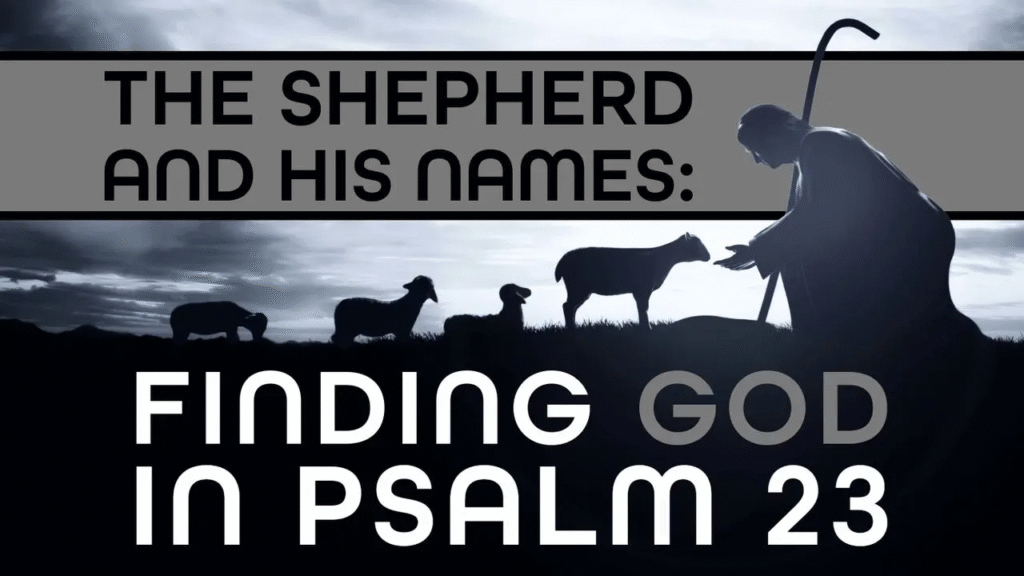
In our study of Psalm 23, we will discover how God reveals Himself through His names, each showing us His character and how He cares for us. Each of these names reveals a different aspect of God’s love. He is our Shepherd, Provider, Peace, and Healer. When we embrace who He is, we find comfort, strength, and confidence in His unchanging care. The Lord IS our Shepherd!
Colmar Manor Bible Church
Day 1
Scriptures: Exodus 3:14, Psalms 23:1, John 10:11, Colossians 1:15-20, 1 Peter 2:24-25, Revelation 11:17
Jehovah – “The Lord is my Shepherd” ( Psalm 23:1).
My Lord
When David wrote “The Lord is my Shepherd” in Psalm 23:1, he was saying something incredible about God. Picture this: David used to be a shepherd, spending his days taking care of sheep, guiding them, and protecting them. So, when he calls God his Shepherd, he’s showing us how much God cares for us—like a shepherd who’s always looking out for their flock.
The name “Jehovah” first shows up in Exodus 3:14 when God says to Moses, “I AM WHO I AM.” It’s a powerful name that means God is eternal—He’s always been around, and He’ll always be there for us. Revelation 11:17 echoes this idea, calling God “the One who is and who was and who is to come.”
But here’s the remarkable part: “Jehovah” isn’t just about God being eternal. It also tells us He’s in charge. The word “Lord” means someone who has authority, like a master or ruler. Colossians 1:15-20 describes Jesus as the Creator and Sustainer of everything, so we’re reminded that God isn’t just powerful—He’s also got everything under control.
And then there’s the Shepherd part. In John 10:11, Jesus is called the “good shepherd” who gave up His life for His sheep. That’s how much He loves us. Because of Jesus’ sacrifice, we’re brought closer to God, forgiven, and given peace (check out 1 Peter 2:24-25 for more on that).
Thinking about Jehovah as our eternal, all-powerful, and loving Shepherd is so reassuring. It reminds us that we’re not just here on our own—He’s walking with us, guiding us, and caring for us every step of the way. How amazing is it to know we belong to Him?
Day 2
Scriptures: Psalms 23:1, Isaiah 40:11, John 10:3-4, Acts 13:22
Jehovah-Rohi – “The Lord is my Shepherd” (Psalm 23:1).
My Shepherd
Let’s dive into what it means to call God “Jehovah-Rohi,” which translates to “The Lord is my Shepherd.” It’s such a beautiful way to think about how God cares for us. The word “Rohi” comes from the idea of feeding, tending, caring for, and protecting—basically, everything a shepherd does for their flock. It’s a reminder that God is always looking out for us, providing for our needs, and guiding us with love.
God leads us, His sheep, mainly through His Word. In John 10:3-4, Jesus talks about how the sheep recognize the voice of the Good Shepherd and follow Him. That’s us! We get to know His voice by spending time in the Bible, reflecting on His teachings, and just being still to listen. Following Jehovah-Rohi also means living in obedience, just like David, who was called a man after God’s own heart because he wanted to do what God asked of him (Acts 13:22).
Trust is a huge part of our relationship with Jehovah-Rohi. Even when life feels uncertain or challenging, He’s there to reassure us and meet our needs. Isaiah 40:11 paints a magnificent picture of the Shepherd gently caring for His flock, holding lambs close to His heart, and leading them with kindness. Trusting Him means letting go of the need to control every detail and instead relying on His promise to take care of us.
Spending time thinking about Jehovah-Rohi and what it means can strengthen your faith in amazing ways. It’s kind of like how sheep chew their cud—they take their time to get every bit of nourishment out of their food. We’re called to “chew” on God’s Word in the same way, reflecting on the meaning behind “The Lord is my Shepherd” and letting it sink in deeply.
Jehovah-Rohi shows us that God’s care for us is constant and personal. He feeds us, protects us, and guides us in every part of life. The more we trust His leadership, meditate on His Word, and follow Him with grateful hearts, the more we’ll experience His unchanging love.
Day 3
Scriptures: Psalms 23:1, Psalms 84:11, Luke 11:11-13, John 10:3-4, John 16:33, Romans 8:28-29, Philippians 1:6, Colossians 2:10
Jehovah-Jireh – “I shall not want” (Psalm 23:1).
He’s All That I Need
Psalm 23:1 says, “The Lord is my Shepherd; I shall not want.” What a comforting thought! The name Jehovah-Jireh means “The Lord will provide,” reminding us that God takes care of everything we truly need—physically, emotionally, and spiritually. His provision isn’t just about material things but about His perfect love, guidance, and grace.
When David wrote “I shall not want,” he wasn’t saying life would always be easy. Many faithful people in the Bible faced hardships, yet they trusted God to provide. Jesus even told us in John 16:33 that we’d have struggles in this world, but we can take heart because He has already overcome them! True peace comes not from having everything we want but from trusting that our Shepherd knows best.
One of the greatest ways God provides for us is through His Word. In John 10:3-4, Jesus explains that His sheep recognize His voice and follow Him. The more time we spend reading and reflecting on Scripture, the stronger our faith becomes. Colossians 2:10 reminds us that we are complete in Him, lacking nothing. Like sheep chewing cud, we should take time to digest and meditate on His promises.
God isn’t distant—He takes personal joy in caring for us (Psalm 84:11). He wants us to thrive, and His timing is always perfect. Luke 11:11-13 paints a beautiful picture: if human parents give good gifts to their children, how much more will our heavenly Father provide for us?
So what does “I shall not want” really mean? It means that in Christ, we are never truly lacking. Even when life feels uncertain, we can rest in His care. Romans 8:28-29 assures us that God is working everything out for our good, shaping us to be more like Christ. His provision isn’t about granting every wish but about teaching us to rely on Him completely.
Trusting Jehovah-Jireh means letting go of our fears and worries, knowing He sees us and will provide. Philippians 1:6 reminds us that He who began a good work in us will complete it. When we truly believe this, we can walk in peace, confidence, and contentment, knowing our Shepherd has already provided everything we need.
With full trust in Jehovah-Jireh, we can joyfully declare: “The Lord is my Shepherd; I lack nothing.”
Day 4
Scriptures: Genesis 22, Psalms 23:2, Romans 8:28-29, 2 Peter 1:3-4
Jehovah-Rohi & Jehovah-Jireh – “He makes me lie down in green pastures” (Psalm 23:2).
Rest in Him
The phrase “He makes me lie down in green pastures” paints such a peaceful picture, doesn’t it? It’s all about how God, as our Good Shepherd, takes care of us and provides rest, peace, and everything we need. Green pastures symbolize abundance, safety, and His care. Think about sheep—they’ll only lie down if they feel safe and free from fear, hunger, or tension. This shows us how much effort God puts into removing the barriers that keep us from resting in Him.
We learned about Jehovah-Jireh yesterday, meaning “The Lord will provide,” and this idea ties in beautifully. Back in Genesis 22, when God provided a ram for Abraham, He showed us that He’s always aware of what we need and provides at the perfect time. 2 Peter 1:3-4 reminds us that God gives us everything necessary for life and godliness, and Romans 8:28-29 reassures us that all things work together for good when we trust Him.
Trusting God as Jehovah-Rohi (our Shepherd) takes surrender and faith. When we spend time meditating on His Word—a bit like how sheep chew cud—it nourishes us spiritually. Taking the time to reflect on the names of God reminds us just how complete we are in Him. This practice strengthens our faith and helps us find peace, even in life’s chaos.
Psalm 23:2 is a much-needed reminder that God’s care goes beyond just physical needs. He wants us to have peace and confidence in His perfect timing and ways. Trusting Him as Jehovah-Rohi and Jehovah-Jireh means letting go of worries and resting in the assurance that He’s got everything under control.
“He makes me lie down in green pastures” is really an invitation to relax and trust God. He’s got us covered, providing everything we need for our spiritual journey. By spending time in His Word and trusting His promises, we can experience His care, finding peace, contentment, and completeness in Him.
Day 5
Scriptures: Judges 6:24, Psalms 23:2, Psalms 119:9-11, Psalms 119:27-31, Romans 8:14-15, Galatians 5:18, Philippians 4:4-8, Hebrews 12:14
Jehovah-Shalom – “He leads me beside the still waters” (Psalm 23:2b).
Peaceful Waters
Jehovah-Shalom, meaning “The Lord is Peace,” perfectly captures God’s role in bringing calm and rest to our lives. In Psalm 23:2b, we read, “He leads me beside the still waters.” While this verse doesn’t directly use the name Jehovah-Shalom, it reflects God’s nature as our provider of deep, lasting peace.
The word “leads” in this verse isn’t just about direction—it’s about gentle, intentional guidance. And “still waters” aren’t just calm; they represent a place of refreshment, safety, and trust. When we truly trust God, we experience His peace in a way that goes beyond just feeling good in the moment—it becomes our foundation.
We first see the name Jehovah-Shalom in Judges 6 when Gideon, full of fear and uncertainty, encounters God. His circumstances don’t immediately change, but something in him does—he learns to trust God, and through that trust, he finds peace. This is a powerful reminder that peace isn’t about having an easy life; it’s about knowing that God is in control, no matter what.
The Bible continually ties peace to trust. Isaiah 26:3 says, “You will keep him in perfect peace whose mind is stayed on You because he trusts in You.” This kind of peace isn’t temporary or surface-level—it’s deep, lasting, and unshakable. But to experience it, we have to surrender. That means letting go of our own plans, resisting distractions, and leaning into God’s Word and Spirit. When we do this, we allow Him to lead us, and in return, He fills us with His peace.
Romans 8:14 and Galatians 5:18 remind us that God’s Spirit is always leading us, just like a shepherd leads his sheep. When we follow Him, we experience the fruit of the Spirit, including peace. And even when life leads us into difficult places (just like Jesus was led into the wilderness), we can hold onto Jehovah-Shalom, knowing that His presence is enough to sustain us.
In the end, God’s peace isn’t just about feeling calm—it’s about being led away from things that drain and exhaust us and toward what truly gives life. That peace grows as we spend time in His Word, listen for His voice, and trust Him completely. When we do, we realize that no matter what’s happening around us, our Shepherd has us in His care.
Day 6
Scriptures: Exodus 15:26, 1 Kings 19:1-8, Psalms 19:7, Psalms 23:3, Psalms 42:5, Hebrews 10:24
Jehovah-Rophe – “He Restores My Soul” (Psalm 23:3a).
Restore my soul
Jehovah-Rophe, meaning “The Lord Who Heals,” reminds us of God’s ability to revive us when life feels overwhelming. Psalm 23:3 says, “He restores my soul,” and that beautifully captures God’s role as the healer of our spirits—bringing life and strength back to us when we feel worn down or defeated.
The word “restores” in Hebrew carries the idea of reviving or bringing life back, and “soul” refers to our life or inner being. Together, this paints a picture of God lovingly refreshing us from the inside out.
Think about the relationship between a shepherd and their sheep. When a sheep is “cast down”—helplessly lying on its back—it’s the shepherd who gently intervenes. The shepherd massages their legs, helps them stand, and makes sure they return safely to the flock. Isn’t that a comforting image? God does the same for us when we feel spiritually stuck or weighed down by life’s challenges.
We see this restorative care throughout Scripture. In Exodus 15, God heals the bitter waters at Marah and tells the Israelites, “I am the Lord who heals you.” Or think of Elijah after his intense confrontation with the prophets of Baal. Exhausted and discouraged, Elijah is cared for by God, who provides rest, food, and water, listens to him, and gives him renewed purpose.
Restoration often starts with basic things—like getting enough rest, nourishing your body, and staying hydrated—but true healing comes through connecting with God. Psalm 19:7 says, “The law of the Lord is perfect, restoring the soul.” Spending time in Scripture and prayer offers deep healing for our hearts. It’s in these moments with God that we find the strength to face life’s challenges.
Sometimes, the real problem isn’t the challenges we face but our tendency to rely on our own strength instead of turning to God. When we’re “cast down,” our Good Shepherd finds us, lifts us up, and helps us move forward.
In the end, Jehovah-Rophe is our healer, our restorer, and our guide. He brings us back when we feel lost, strengthens us when we’re weak, and lovingly leads us back to a place of renewal. True restoration doesn’t come from distractions or quick fixes but from trusting God and leaning into His care. As His sheep, we can rest knowing He will take us from weariness to vitality, from despair to hope.
Day 7
Scriptures: Exodus 33:19, Psalms 23:3, Isaiah 53:6, Mark 6:45-50, John 10:1-16, John 14:6
Jehovah-Rohi, Jehovah-Jireh, Jehovah-Shalom, Jehovah-Rophe – “He leads me in the paths of righteousness for His Name’s sake” (Psalm 23:3b).
The Right Path
Have you ever wondered if you’re on the right path in life? Psalm 23:3b reassures us that God, as our Shepherd (Jehovah-Rohi), is always guiding us along the right paths—ones that lead to righteousness and reflect His goodness. These are not just “correct” paths, but ones filled with His blessings and purpose. The journey isn’t always easy, but when we trust Him, we can be sure we’re headed in the best direction.
God’s leading also reveals Him as Jehovah-Jireh, “The Lord Who Provides.” Sometimes, His path takes us through situations that seem impossible—like when Jesus told His disciples to feed thousands with just five loaves and two fish (Mark 6). Their logical minds couldn’t see a way, but when they trusted Jesus’ instructions, they witnessed an incredible miracle. God’s provision often comes when we step out in faith, even when things don’t make sense.
And what about those moments when life feels chaotic? That’s where Jehovah-Shalom, “The Lord Is Peace,” comes in. In that same chapter of Mark, Jesus sent His disciples across the sea, knowing a storm was coming. When the wind and waves became overwhelming, Jesus appeared, walking on water, and said, “It is I; do not be afraid.” His presence alone was enough to bring peace. Trusting God’s path doesn’t mean there won’t be storms, but it does mean we don’t have to be afraid in the middle of them.
Then there’s Jehovah-Rophe, “The Lord Who Heals.” Just like a shepherd carefully tends to a wounded or lost sheep, God restores us when we’re weary or broken. Think about Elijah after his intense confrontation with the prophets of Baal—he was completely drained, but God didn’t leave him there. Instead, He provided food, rest, and encouragement, renewing Elijah’s strength to continue. In the same way, God heals our hearts, minds, and spirits so we can keep moving forward.
The right path isn’t always the easiest or the most obvious, but when we follow where God leads, we find His guidance, provision, peace, and healing along the way. Sometimes that means letting go of our own plans and trusting that His way is truly best. When we do, we experience a life filled with deeper faith, greater joy, and the unshakable assurance that we are exactly where we’re meant to be—with our Shepherd leading the way.
Day 8
Scriptures: Psalms 23:4, Proverbs 20:24, Jeremiah 17:9, John 8:12, Philippians 4:6-8, 2 Timothy 1:7
Jehovah-Rohi, Jehovah-Jireh, Jehovah-Shalom, Jehovah-Rophe – “Yea, though I walk through the valley of the shadow of death” (Psalm 23:4).
God’s Presence in the Valley
Life can be full of ups and downs, and sometimes, we find ourselves walking through some pretty tough valleys. Psalm 23:4 reminds us, “Yea, though I walk through the valley of the shadow of death, I will fear no evil; for You are with me.” What a powerful promise! No matter how dark or uncertain things get, we don’t have to be afraid—our Shepherd is right there with us.
The “valley” in this verse represents those hard seasons in life—times of grief, challenges, fear, or doubt. But here’s something important: the verse says we ‘walk through’ the valley. We’re not meant to stay stuck in fear or despair. These valleys are part of the journey, leading us somewhere better, shaping us, and deepening our faith.
The phrase “shadow of death” might sound scary, but think about this—shadows only exist when there’s a light source. And for us, that light is Jesus, the ‘Light of the World’ (John 8:12). Even in our darkest moments, His presence is constant, guiding us forward.
It’s completely natural to feel anxious when we don’t know what’s coming next. But God gives us the tools to replace fear with faith. Philippians 4 tells us to trade our worries for prayer, thanksgiving, and focusing on what is true and good. When we do this, God’s peace protects our hearts and minds, helping us move forward with courage.
If you think about it, stars shine the brightest in the darkest skies. It’s the same with God’s presence—it becomes even more real when we’re walking through difficult times. These valleys aren’t punishments; they’re opportunities for deeper trust and closeness with God. And as Romans 8:28 promises, He works all things together for our good.
As our Shepherd (Jehovah-Rohi), God lovingly leads and protects us. As our Provider (Jehovah-Jireh), He meets our needs, even in tough seasons. As our Peace (Jehovah-Shalom), He calms our anxious hearts. And as our Healer (Jehovah-Rophe), He restores and strengthens us.
So, if you’re walking through a valley right now, remember—you’re not alone. Keep moving forward, keep trusting, and know that your Shepherd is leading you to something beautiful on the other side.
Day 9
Scriptures: 1 Samuel 17:35, Psalms 23:4, Psalms 34:8, Psalms 137:1-4, Ezekiel 48:35, Romans 8:39, Philippians 4:8, Hebrews 13:5
Jehovah-Shammah – “Even though I walk through the valley of the shadow of death, I will fear no evil, for You are with me” (Psalm 23:4).
The Lord is There
Life can sometimes feel like a long, winding path filled with ups and downs. But Psalm 23:4 gives us this incredible reassurance: “Even though I walk through the valley of the shadow of death, I will fear no evil, for You are with me.” That’s where the name Jehovah-Shammah comes in—it means “The Lord is there.” No matter where we find ourselves, God’s presence is constant.
This name first appears in Ezekiel 48:35, when God promises to be with His people even after they’ve faced suffering and exile. It’s a powerful reminder that no matter how lost, hurt, or alone we feel, God is still with us. That’s what “You are with me” in Psalm 23:4 is all about—it’s a promise that we are never abandoned, even in life’s darkest moments.
In this verse, we also see the rod and staff, two tools a shepherd uses to take care of the sheep. The rod is a strong, sturdy tool used to protect the flock from danger and keep them safe. It also helps guide and correct them when they start to wander. Think of it as God’s way of lovingly keeping us on the right path.
Then there’s the staff—that long stick with a curved end. The shepherd uses it to gently lead the sheep, pull them back when they stray, and even lift them out of trouble. It’s a symbol of God’s tender care, guiding us step by step.
And let’s talk about comfort for a second. Originally, the word meant “together-strength”—not just making someone feel better but actually giving them the strength to keep going. That’s exactly what God does for us. He doesn’t just take away our struggles; He walks through them with us, giving us the courage and strength to press on.
At the end of the day, Psalm 23:4 reminds us that God’s presence turns fear into trust and despair into confidence. When we focus on Jehovah-Shammah, we can face any valley knowing that He’s there—protecting, guiding, and comforting us every step of the way.
So, if you’re feeling lost or overwhelmed today, take heart. You are never alone. Your Shepherd is right there with you, leading you through.
Day 10
Scriptures: Genesis 3:4-5, Psalms 23:5, Psalms 119:103, Matthew 4:1-11, John 10:1-4, 2 Corinthians 10:5, Ephesians 6:10-13, Philippians 4:8, 1 Peter 5:8
Jehovah-Rohi, Jehovah-Jireh, Jehovah-Shalom, Jehovah-Rophe, Jehovah-Shammah – “You prepare a table before me in the presence of my enemies” Psalm 23:5.
The Table is Set
Life’s challenges can feel overwhelming, but Psalm 23:5 paints a powerful picture of God’s provision: “You prepare a table before me in the presence of my enemies.” This verse reminds us that even in our struggles, God cares for us, protects us, and fills our lives with His goodness.
Imagine a shepherd leading his flock to a lush pasture, ensuring their safety and meeting their needs. That’s what Jehovah-Rohi (The Lord is My Shepherd) does for us. He goes before us, clearing obstacles and making a way.
Then there’s Jehovah-Jireh (The Lord Who Provides). God doesn’t offer just enough—He sets a feast! This provision isn’t only physical but also spiritual. Like sheep chewing their food slowly for nourishment, we should meditate on God’s Word, letting it sustain and strengthen us.
Yet, life often brings fear and worry. That’s where Jehovah-Shalom (The Lord is Peace) steps in. Notice that God doesn’t always remove our enemies; instead, He provides peace amid the battle. No matter what we face, we can find rest in His presence.
We are never alone because Jehovah-Shammah (The Lord is There) promises His constant presence. Just as a shepherd sleeps at the entrance of the sheepfold to guard his flock, God watches over us, ensuring we are never outside His care.
Beyond provision and protection, God also brings restoration. Jehovah-Rophe (The Lord Who Heals) reminds us that His table is a place of renewal. If life has left you weary, God offers healing, strength, and preparation for what’s ahead.
The phrase “in the presence of my enemies” signifies that trials will come, but victory is already ours. The greatest battles often occur in our minds—doubts, fears, anxieties—but God has equipped us. Just as Jesus used Scripture to overcome temptation, we must arm ourselves with His Word.
Ultimately, this prepared table is a symbol of God’s love and faithfulness. Instead of being consumed by our struggles, we can sit in His presence, trust in His provision, and rest in His peace. Our Shepherd has everything under control, inviting us to partake in the abundance He has prepared.
Day 11
Scriptures: Psalms 23:5, Matthew 6:26-28, John 14:26-27, John 16:12-13, John 17:17, 1 Corinthians 6:20, Galatians 5:16, Galatians 5:25
Jehovah-Shalom – “You anoint my head with oil; my cup runs over” (Psalm 23:5).
My Cup Overflows
Have you ever felt completely drained, like life is just too much? Psalm 23:5 gives us a beautiful promise: “You anoint my head with oil; my cup runs over.” This verse reminds us that God not only meets our needs—He blesses us abundantly!
In biblical times, shepherds anointed their sheep with oil to keep pests away. Flies and parasites could drive sheep crazy, distracting and irritating them. The oil soothed them, bringing peace and relief. In the same way, God anoints us with the Holy Spirit, calming our hearts and filling us with His peace.
Jesus promised this gift to His followers in John 14:26, calling the Holy Spirit our Helper—our guide, teacher, and comforter. Just like oil soothes the sheep, the Holy Spirit soothes our souls, bringing clarity in confusion, peace in chaos, and strength in weakness.
Anointing also represents being set apart for God’s purpose. In John 17:17, Jesus prayed, “Sanctify them by Your truth. Your word is truth.” The Holy Spirit uses Scripture to shape us, guiding us toward God’s best for our lives. Galatians 5:16 encourages us to walk in the Spirit, helping us overcome distractions, temptations, and worries—just like the oil protected the sheep from irritants.
Think of those little worries and anxieties as “flies” buzzing around your mind—doubts, fears, insecurities. What’s the best way to get rid of them? By filling your mind with God’s truth. Verses like Matthew 6:26-28 remind us that if God cares for the birds and flowers, how much more does He care for us? When we meditate on His Word, we replace fear with faith and worry with trust.
And what about the overflowing cup? That’s God’s way of saying, “I don’t just give you enough—I give you more than enough!” A Spirit-filled life is one of joy, peace, and purpose. When we let the Holy Spirit lead us, we don’t just survive—we thrive! His blessings spill over into every area of our lives, allowing us to bless others as well.
So today, take a deep breath and rest in this truth: Your Shepherd cares for you, He provides for you, and He fills your cup to overflowing. Let Him anoint you with His peace, and watch how He turns your worries into worship.
Day 12
Scriptures: Exodus 33:19, Psalms 23:6, Psalms 136, Romans 8:38-39
Jehovah-Rohi, Jehovah-Jireh, Jehovah-Shalom, Jehovah-Shammah – “Surely goodness and mercy shall follow me all the days of my life” (Psalm 23:6a).
The Pursuit of Goodness and Mercy
Psalm 23:6a says, “Surely goodness and mercy shall follow me all the days of my life.”What a beautiful promise! This verse reminds us that God’s love, kindness, and blessings are not just occasional but constant. His goodness and mercy are always with us, no matter where we go or what we face.
The word “surely” shows David’s absolute confidence in this truth. There’s no doubt or hesitation—God’s goodness and mercy are guaranteed! This assurance helps us trust in God’s care, even when life feels uncertain. He is our faithful Shepherd, Jehovah-Rohi, who always looks out for us.
God’s goodness is seen in the many ways He blesses us—through family, friends, daily provisions, and most importantly, eternal life. Exodus 33:19 reminds us that God’s goodness reflects His character, full of kindness and grace.
His mercy comes from the Hebrew word hesed, which speaks of steadfast love, kindness, and faithfulness. It’s not something we earn—it’s God’s gift to us, flowing freely because of His deep love. Psalm 136 repeats this truth over and over: “His mercy endures forever.” No matter our mistakes or struggles, His mercy never runs out!
The phrase “shall follow me” is so powerful. It doesn’t just mean that goodness and mercy lag behind—it means they actively pursue us! God’s love is relentless. He is always working in our lives, guiding us, protecting us, and showing us His grace. Even in tough times, His goodness and mercy are there, leading us toward hope and peace.
Romans 8:38-39 confirms this promise, reminding us that nothing—absolutely nothing—can separate us from God’s love in Christ Jesus. That means we don’t have to fear the future because His goodness and mercy will always be present, whether we’re in a season of joy or walking through a valley.
This verse invites us to rest in God’s care. As Jehovah-Jireh, He provides for our needs. As Jehovah-Shalom, He gives us peace. As Jehovah-Shammah, He is always with us. His love never fails, and His blessings never stop chasing us.
So, no matter what today brings, know this: You are never alone. God’s goodness and mercy are right there with you, every step of the way!
Day 13
Scriptures: Psalms 23:6, Titus 3:3-7
Jehovah-Rohi – “ . . and I will dwell in the house of the Lord forever” (Psalm 23:6b).
Our Shepherd Forever
Psalm 23:6b says, “And I will dwell in the house of the Lord forever.” This verse isn’t just about a physical place—it’s about the deep assurance of being part of God’s family, always under His loving care. It speaks to the comfort and peace of knowing we belong to Him, now and for eternity.
Just like a shepherd who guides his sheep through peaceful meadows, rocky valleys, and back home again, God is faithfully leading us through life’s ups and downs. No matter what we face, we can rest in His presence, knowing He’s always there, providing and protecting.
David, the writer of this Psalm, encourages us to share this confidence with others—to tell our own stories of how God has led us, provided for us, and brought us through challenges. As Titus 3:3-7 reminds us, we were once lost, but God’s kindness, mercy, and grace have saved us, making us heirs of eternal life.
But “dwelling in the house of the Lord” isn’t just about our future home in heaven—it’s something we can experience right now. When we spend time in God’s Word, pray, and reflect on His promises, we are living in His presence. This relationship fills us with joy, strength, and peace, helping us navigate life with confidence.
David’s words remind us that no matter where life takes us—whether in green pastures or through dark valleys—God’s love and faithfulness never change. That’s why we can trust Him completely. More than just a beautiful Psalm, these words are an invitation to live in the reality of God’s goodness every day.
As members of His flock, we are called to reflect His love and kindness to those around us. By doing so, we point others to the same peace and assurance we’ve found in Him. With that in mind, we can confidently say: “The Lord is my Shepherd.” Because of Him, we are forever home.
Day 14
Scriptures: Genesis 22:14, Exodus 3:14, Exodus 15:26, Judges 6:24, Psalms 23, John 10:11, John 14:27, Philippians 4:19
The Lord IS our Shepherd!
In our study of Psalm 23, we have discovered how God reveals Himself through His names, each showing us His character and how He cares for us.
Jehovah is the name God first shared with Moses in Exodus 3:14, saying, “I AM WHO I AM.” This name reminds us that God is eternal, unchanging, and always present. He is not just a distant ruler—He is personally involved in our lives, leading, providing, and sustaining us.
Jehovah-Rohi, meaning “The Lord is my Shepherd” (Psalm 23:1), paints a beautiful picture of God’s loving care. Just as a shepherd tends to his sheep—guiding, protecting, and nurturing them—God watches over us. Jesus, the Good Shepherd (John 10:11), laid down His life for us, ensuring we are never alone or without direction. Even in life’s darkest valleys, we can trust Him to lead us safely forward.
Jehovah-Jireh, “The Lord will Provide” (Genesis 22:14), reminds us that God sees our needs and meets them at the right time. When Abraham needed a sacrifice, God provided a ram, demonstrating that He always makes a way. Philippians 4:19 reassures us that He supplies all our needs, whether physical, emotional, or spiritual. His provision is always perfect, even when we don’t see it right away.
Jehovah-Shalom, “The Lord is Peace” (Judges 6:24), reveals that true peace comes not from circumstances but from knowing God is in control. When Gideon felt overwhelmed, God’s presence calmed his fears. Likewise, Jesus offers us peace that surpasses understanding (John 14:27). When we trust in Jehovah-Shalom, we can rest in His promises, even amid life’s chaos.
Jehovah-Rophe, “The Lord Who Heals” (Exodus 15:26), speaks to God’s power to restore, whether it’s physical healing, emotional renewal, or spiritual revival. Psalm 23:3 says, “He restores my soul,” reminding us that when we feel weary or broken, God brings refreshment and strength. Just as a shepherd carefully tends to an injured sheep, God gently cares for us, lifting us up when we are down.
Each of these names reveals a different aspect of God’s love. He is our Shepherd, Provider, Peace, and Healer. When we embrace who He is, we find comfort, strength, and confidence in His unchanging care. The Lord IS our Shepherd!