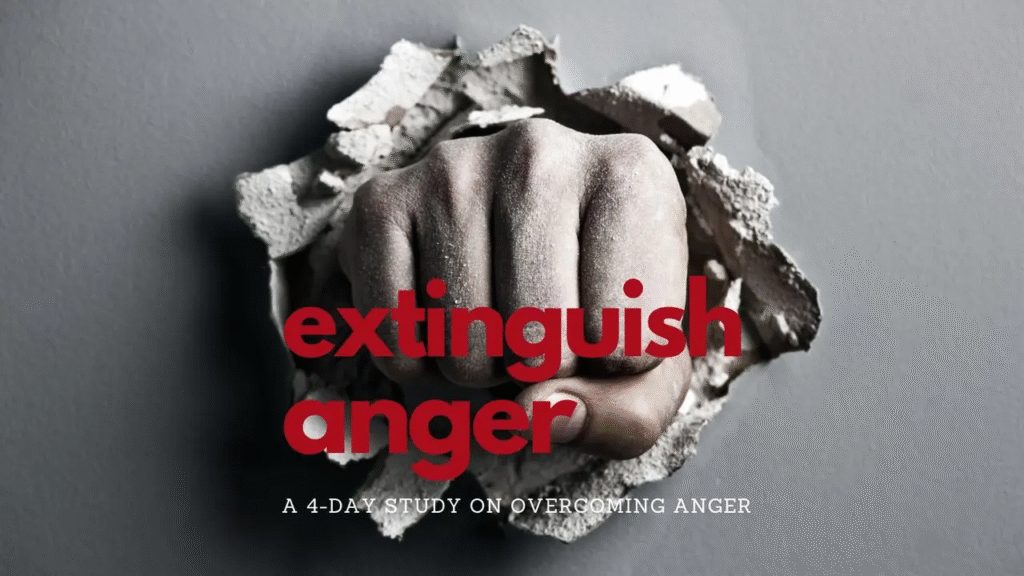
Few things spark greater anger than a betrayal. And carrying the pain and trauma with you can ignite an unquenchable resentment that leaves you hopeless and despondent. When you’re overcome with bitterness, you need to know there is a God who understands and can help reconcile your pain. This plan will help you understand your anger and how to extinguish it with peace. ABS Armed Services Ministry
Day 1
Scripture: Proverbs 25:28
Finding Restoration From Anger
As the Veteran and his wife sat down in my office, the ambiance of anger, hostility, and pent-up frustration pervaded the room even before one word was spoken. The couple had contacted me, telling me that they were looking for spiritual direction in order to address the hopelessness that they felt in their lives and their marriage. They both described the extreme anger they had for each other, and they were convinced a divorce was best for both of them. At the request of a family member, they agreed to speak with a chaplain or pastor.
Initially, the Veteran announced, “I really do not want to talk about anything, but my wife thinks my anger is becoming dangerously out of control.” When asked how he would assess his behavior, he acknowledged that at times he would be crazed, punch holes in the wall, slam doors, and be overcome with an extremely aggressive spirit. He admitted his inability to control this restless rage. He affirmed that he was deeply angry at himself, what he had done, who he had become, and what he was doing to his wife.
When I asked his wife how she was feeling, she explained, “I grew up in a household where anger was seen as a negative emotion. I really can’t remember seeing my parents fight. I feel like a failure in our marriage.”
Anger, hostility, or even rage may be emotions that you experience from time to time. These intense feelings and the behaviors associated with them can cause great destruction in the life of a person and in the lives of others. Many people may try to deny their anger and destructively self-medicate to ease the deep hurt behind the anger. Other people may take out their anger on those they love the most. And some people may have been raised with a misperception that anger is an emotion which spiritually minded people do not demonstrate. In the case of the couple in my office, he shifted back and forth between the denial of his anger and taking out his anger on his wife. Sadly, she blamed herself for having angry feelings.
So, when we feel anger… what is a spiritual response to that anger?
- Learn why we are angry: Having this particular Veteran acknowledge, accept, and address where the anger is coming from in his life was important.
- Understand that there is “righteous” anger: Having his wife recognize, believe, and allow for righteous anger in her life was needed.
- Strive and let go of anger and resentment: Having them trust and develop faith and hope that God’s Holy Spirit can empower them to let go of anger and receive peace that heals was essential.
In this study, we’ll consider why we are angry, discover what righteous anger looks like, and learn how to let go of anger and resentment.
Day 2
Scriptures: Genesis 4:3-8, Genesis 49:5, Psalms 37:7-9, Proverbs 25:28, Colossians 3:5-10, James 1:19-26
Where is the Anger Coming From?
Understanding where anger is coming from in our lives is helpful. There is usually a deep-rooted hurt that is beneath anger. In the case of the Veteran in my office, he shared traumatic events from his childhood and from his time in Iraq. When we experience a traumatic event, anger is a common feature of a survivor’s response to trauma because it is a core component of the survival response in humans. Anger helps people cope with life’s adversities by providing us with increased energy to persist in the face of obstacles.
In the lives of those who suffer from Post Traumatic Stress Disorder (PTSD), uncontrolled anger can lead to a continued sense of being out of control and can create many problems. One theory on anger and trauma suggests that high levels of anger are related to a natural survival instinct. When initially confronted with extreme threat, anger is a normal response to terror. Anger can help a person survive by mobilizing all of his or her attention, thought, brain energy, and action toward survival.
Research at the National Center for PTSD has shown that responses to extreme threat can become “stuck” in people with PTSD. This leads to a survival mode response where the individual is more likely to react to situations with “full activation,” as if the circumstances were life-threatening. This automatic response of irritability and anger in individuals with PTSD can create serious problems in their interpersonal relationships.
With counsel from our PTSD clinic, the Veteran whose anger was out of control was able to see that he was stuck in a “full activation” stage of anger due to his childhood survival of his father’s physical abuse and his military survival from his time in Iraq. As the Veteran looked closely at his childhood, he learned that his father’s intolerance of simple mistakes had accentuated his own intolerance of his and his wife’s slightest short-comings. Things like burning the toast, spilling coffee, or being a few minutes late would set him off into a rage. As he stepped back into his military experience, he realized that his training emphasized how a minuscule deviation from the plan of action meant loss of life. Thus he saw how his wife not putting something away in its exact spot might put him into a crazed mania.
If you find yourself relating to the Veteran in this story, it is important that you reach out to a trained therapist for help. You may have been through horrific experiences as a child and have thought yourself in hell during your military service.
I assure you that God passionately cares for you, and deeply desires for you to be supported as you work through these horrific memories and better understand what is behind your raging anger.
Readings from the Old Testament
A spirit of jealousy is often behind our anger.
Genesis 4:3-8
Be cautious of anger that leads to senseless violence.
Genesis 49:5
Realize how a lack of trust in God can lead us to take matters into our own hands, with anger as fuel.
Psalm 37:7-9
When we cannot control our anger, we are in a dangerous place.
Proverbs 25:28
Readings from the New Testament
Addressing our angry feelings is important since God calls us to get rid of destructive anger.
Colossians 3:5-10
Our anger can keep us from being the people God desires us to be.
James 1:19-26
Thoughts for Reflection
- What type of situations cause you to feel extremely irritable? Write or share about these situations.
- What things, people, or events trigger your tension? Why do you think these particular things, people, or events infuriate you?
- What deep-rooted hurts might lie behind your angry outbreaks? Find a trained professional with whom you can discuss these memories.
- With paint or markers, draw what you believe your anger looks like in response to those things, people, or events which set off your anger. Share and discuss your drawings as you are able.
Prayer
Dear God, at times in my life I am filled with such anger. Sometimes my own rage even scares me because it comes upon me with such surprising vengeance. I acknowledge that I need help with my anger issues.
It saddens me to think of how my anger has not only hurt me, but also those that I love. I am sorry for the way that I have allowed my anger to torture not only me, but also the people around me. Please forgive me for how my anger has wounded others.
I recognize that I need guidance on how to better understand what is behind my anger. Please help me to understand the underlying wounds in my own life, so I may address those issues in my life. My deep-rooted anger often causes me to act quite unloving. I thank you for loving me even when I act in an unloving manner.
In your loving name. Amen.
Day 3
Scriptures: Joshua 23:16, 1 Kings 22:53, 2 Samuel 22:14-16, 2 Kings 17:17, Psalms 69:24, Psalms 90:9-13, Psalms 119:53, Psalms 119:137-139, Matthew 21:12-16, John 2:14-22, Mark 3:1-5, 1 Thessalonians 5:9-10
What Does Righteous Anger Look Like?
Recognizing that anger is a natural, normal, and honorable response to injustice, mean-spiritedness, and wrongdoing is important. The Veteran’s wife, Kristina, mentioned in the introduction to this booklet had grown up in a home where anger was not openly expressed. Maybe you can relate to some of the following words of frustration expressed by this young wife in relation to her husband’s hurtful behavior.
As Kristina nervously sat down in my office, she seemed to breathe a sigh of relief as she stated, “Chaplain, thank you for meeting with me. I really need help and I do not know what to do.”
“How can I help you?”
“I simply can’t live anymore with Kevin’s unpredictable and unexplainable outbursts of rage. It is so scary. I have never lived with someone who is so angry. I grew up in a home where we did not express our anger, and I cannot remember my parents losing their temper. This is so new for me as Kevin never displayed such extreme anger prior to his deployment.”
Tears began to well-up in Kristina’s eyes and I handed her a box of tissues. “Kristina, can you tell me what is most scary about your husband’s anger?”
“Well, it is frightening to find myself married to someone who is no longer the gentle, very attentive, and sensitive man that I married. Plus, it is also distressing for me when I find myself incensed at someone that I want to love. Kevin’s anger is scary because it also stirs up angry feelings in me.”
“And it is difficult for you to express and confront this anger?”
“Oh, yes! I have believed that good people do not lose their temper and display anger. I hold my feelings inside, and try not to react when I’m hurt. Yet, I am really tired of hurting. I outwardly pretend that things are fine which only intensifies the pain inside of me.”
“It is exhausting to try and keep all those painful emotions inside of you.”
“Yes, although I feel guilty when I talk about Kevin’s behavior. I still love him. I wonder if I am to blame for his angry outbursts.”
“So, you feel guilty for Kevin’s anger? I would think that would be very burdensome.”
Kristina nodded and collapsed back into the soft cushioned chair in my office. As tears trickled down her cheeks, there was a wave of exhaustion that seemed to roll from her shoulders at trying to always appear pleasant, cheerful, and kind. As we continued to talk that day, Kristina began to see that she was in no way to blame for her husband’s uncontrolled outbursts.
Perhaps you also have struggled to express your anger. Maybe you have kept pent-up feelings of anger deep inside of you that have been eating away at you, robbing you of peace, and destroying your health. Unaddressed feelings of hurt and anger will not go unnoticed in our bodies and will negatively impact our well-being. As Kristina learned, there absolutely are unjust behaviors which should infuriate us and must not be tolerated.
God is a defender and a protector of those who are oppressed. We read in Scripture how God executes justice for those who are downtrodden. If you have been hurt or are being hurt by someone, please seek help. Like Kristina, you may need to express your anger in a manner which calls for the constructive change of another person’s aggressive behavior.
Readings from the Old Testament
When we worship anything or anyone more than we do God, we know that God becomes jealous and righteously angry. In Joshua’s farewell speech, he announced to the people of Israel:
Joshua 23.16
1 Kings 22.53
God’s righteous anger will protect people from their enemies.
2 Samuel 22.14-16
Doing evil will arouse the anger of God.
2 Kings 17.17
David asked for God’s anger to be poured out on his enemies.
Psalm 69.24
God’s anger can be quite powerful, and God’s mercy is even more powerful.
Psalm 90.9-13
We should be angered by wrongdoing.
Psalm 119.53
Disobedience to God’s commands should anger us.
Psalm 119.137-139
Readings from the New Testament
Jesus was angered when the temple of God was violated.
Matthew 21.12-16
Jesus displayed anger when the Jerusalem Temple was disgraced.
John 2.14-22
Jesus was angry at self-righteous people who did not show compassion.
Mark 3.1-5
God is angered by wrongdoing and the sacrifice of Christ satisfies God’s anger toward our sin.
1 Thessalonians 5.9,10
Thoughts for Reflection
- Anger is a natural, normal, and honorable response to injustice, mean-spiritedness, and wrongdoing. Write or share why you believe this or why you do not believe this.
- How was anger demonstrated in the home in which you grew up? Write or share how this impacts you today.
- How does the verse, “In your anger, do not sin” (Ephesians 4.26) apply to your life? This verse seems to imply that anger is to be an expected emotion at times, do you agree? Write or share your thoughts on this verse in relation to your life.
- What would be your response to an unfair or cruel act done to you or a loved one? Honestly reflect on how you would display righteous anger.
Prayer
Dear Lord, please help me to understand that there are times in my life when anger is a natural, normal, and honorable response to the injustices and wrongdoings in my life. May I not be timid or shy away from confronting wrongdoing and injustice in our world.
Help me to understand what righteous anger looks like and how I should respond to unfair and cruel acts. I’ll admit that I do not always understand how to respond with righteous anger that wisely confronts the wrongdoing.
I thank you for your wise counsel as you remind me that you have promised to give your followers a spirit of power, love, and discernment in confronting the evils in our world.
In your holy name. Amen.
Day 4
Scriptures: Joshua 20:1-6, Job 18:1-4, Psalms 30:4-5, Proverbs 15:1, Proverbs 15:4, Romans 12:17-21, Ephesians 4:26-32
How to Let Go of Anger + Resentment
Anger and resentment toward ourselves and others can destroy our health and the peace of those around us. Acknowledging the deep-rooted hurts we have experienced, realizing that we probably cannot right the wrongs that were done, and releasing the bitterness in our lives into the hands of God are essential to our well-being.
The couple mentioned throughout this booklet initially felt that a divorce was really best for them. The Veteran’s behavior was out-of-control, and he felt hopeless at being able to change his aggressive outbursts. The wife was scared not only of her husband’s anger, but also frightened by the angry feelings inside of her. When the Veteran and his wife first sought counseling, they both wanted to run away from the painful things which were causing the angry outbursts. They both learned that it would take great courage to address the hurts behind their anger.
After the Veteran and wife met separately with a marriage therapist and a chaplain over a few months for intense therapy, the following conversation occurred in the chaplain’s office.
The Veteran turned to his wife and said, “Sweetheart, I am so sorry for how I have hurt you. You are so gentle and kind. You have certainly not deserved the angry outbursts which I have thrown at you. Please forgive me.” The Veteran’s tone was contrite and yet he appeared frightened, as if he felt he was taking a very big risk.
His wife immediately looked surprised, with an unreleased glimmer of tears in her eyes. She hesitated, looking down as she responded, “You don’t know how long I have hoped you could say and really mean those words.” There was an extended pause, “But I need you to understand that your anger still scares me.”
“It scares me too. I am sorry. I don’t want to hurt you.”
“I know you don’t want to, that’s what makes it scary. You don’t want to and yet you still do. How can I trust that it will be any different?”
“I am not saying I will be perfect. Thanks to the chaplain and the therapist I now can see I need help to deal with my anger. I need your help too. Would you be willing to consider forgiving me for the hurt I have caused you?”
“That’s hard, because I am still scared. If I forgive you I feel that I would be letting my guard down, and I am just learning that it is OK for me to be angry too, to protect myself. On the other hand I don’t want to have this end in a divorce.”
Since the chaplain had often seen one member of a couple wanting to move toward asking forgiveness before his or her partner felt enough healing or enough safety to be able to forgive, the chaplain stated, “I think I hear you each saying that you care for this relationship. You both seem to want to end some of the patterns of anger and defensiveness that have you have toward each other. In my experience it takes a great deal of courage to ask for forgiveness and a great deal of trust to give forgiveness when one has been hurt. From a chaplain’s perspective, working through the hurt and pain caused by destructive expressions of anger and learning healthy ways to express anger can take some time. Different couples find that forgiveness comes in different places on that journey. I am wondering if each of you would be willing to return to my office in a few weeks to talk about what needs to be done to prepare for a discussion about forgiveness that would feel safe for each of you. If you will be willing to try that, I will give you some questions today to reflect upon until our next visit.
Readings from the Old Testament
God provided safe havens for people who might be harmed by the anger of other people.
Joshua 20.1-6
Harboring anger is destructive to us.
Job 18.1-4
It is true that God gets righteously angry but does not hold on to this anger forever.
Psalm 30.4,5
A gentle and kind spirit can calm an angry and cruel spirit.
Proverbs 15.1,4
Readings from the New Testament
When we have been harmed, it is best to not take revenge.
Romans 12.17-21a
When we are angered, we must not harbor the anger but seek to forgive.
Ephesians 4.26-32
Thoughts for Reflection
- What emotions of anger and bitter resentments make you feel trapped? Write or share about feeling trapped in a cage of hostility.
- What or who could assist you in turning over hurtful resentments of your life to God? Make a concrete plan to reach out and get the assistance and support that you need.
- What do you believe is the value of releasing the bitterness in your life to God? Write or share how letting go of resentments may improve the quality of your life.
- Consider writing a letter to a person with whom you are angry. Maybe you are angry at God and should write a letter to express your anger. In writing these letters, reflect on how you can work through this anger and then release the bitterness associated with the anger.
Prayer
Dear God, I recognize that there is anger and resentment in my life which is holding me in bondage. These harbored negative emotions are destroying me and they are also destroying the people that I most love.
Help me see how these feelings of bitterness prevent me from being the person you desire me to be. I believe that you desire to set me free from the deep-rooted hurts that anger me and cause me to lash out at others with mean-spiritedness.
Please help me to release the hurtful memories in my life and allow you to heal my broken spirit. I need your loving-kindness and mercy in my life. Thank you for not giving up on me. How I thank you for encouraging me to believe that your grace can help me to change.
In your precious name. Amen.
A Blessing for You
May the LORD bless you and take care of you;May the LORD be kind and gracious to you;May the LORD look on you with favor and give you peace.Numbers 6.24-26