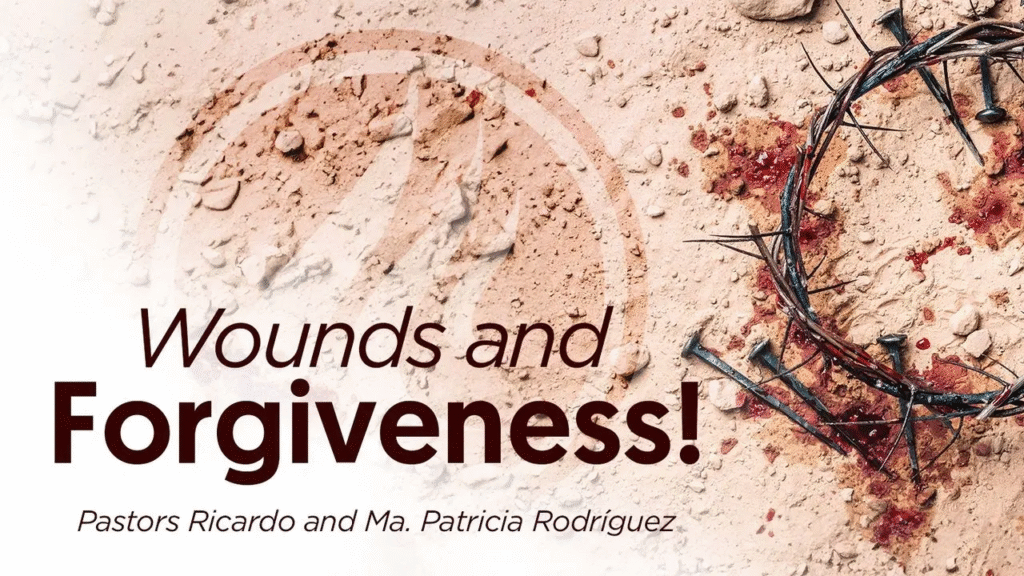
Offenses are one of Satan’s weapons to create in you arguments of destruction that fill you with hate, bitterness, and resentment, blocking you from receiving the overabundant blessings that God has already decreed for you. That’s why, in this reading plan, we want to show you the weapon with which you can be free: “forgiveness.” God wants you to have a healed heart!
Pastores Ricardo y María Patricia Rodríguez
Day 1
Scriptures: Matthew 5:38-48, Luke 17:1-4
Offenses are a weapon of destruction
Offense is one of Satan’s weapons to create arguments of destruction—parental abandonment, injustice, or treason, that creates arguments in us that produce bitterness, resentment, and unforgiveness.
But what you need to know is that God is giving you a weapon that your enemy doesn’t know how to fight against. When someone hurts you, Satan gives you arguments to seek revenge, for resentment, to hurt your family, putting you in affliction, and closing the heavens because if you don’t forgive, you won’t be forgiven by God.
So, this great wave of destruction comes against you, but when you take out the shield that Jesus gave you, and you say: “I forgive,” the devil is left without arguments; he doesn’t have a way to fight against that, and it is right there where God can come and work in your life, giving you overabundant blessings.
Day 2
Scriptures: Ephesians 4:26-27, Ephesians 4:32
The double victim
There is something that happens in the middle of an offense. It’s something that I call: “the double victim.” It is the person that was wounded. Let’s see the case of a couple that gets divorced because of infidelity; the victim starts looking back, nothing goes well for them, even illnesses start to come, and other problems start adding up. While the offender seems to prosper, progress, and move forward.
At this point, it’s when you ask yourself: if this is the victim, why doesn’t God make justice for them? Well, the answer, even though it isn’t evident, is clear: this happens because the person who was offended ignored a biblical principle: there is a way out of offense, and it is called forgiveness!
When the person forgives, God changes the effect, and the person who did them wrong starts going downward, while the one who decides to forgive and bless those who hurt them starts going up.
Day 3
Scriptures: Luke 11:4, Matthew 18:21-35
Who should we forgive?
Let’s include three types of persons: the person who recognizes their mistakes, the person who doesn’t recognize their mistakes, and the person who continues to hurt you. If you want to see deliverance in your life, this is the moment to leave behind what happened because God will take you to a new land of blessing, forgive while you’re praying; forgive the one who asked for forgiveness and those who will never ask for forgiveness.
If we read the parable of the two debtors in Matthew 18, we see how the servant who has forgiven much, when leaving the presence of his lord, met his fellow servant who owed him a small debt and he refused to forgive him but instead sent him to prison until he could pay all his debt. Then, the lord, after finding out what happened, delivered him to the tormentors.
These tormentors are types of demons, and just like in this parable, many times we leave the presence of God, feeling forgiven and happy, but when we leave, we find our brothers who have offended us. We are unable to extend mercy and forgiveness; we feel that we have the legal right to collect that debt, even though Christ has already paid for us.
It’s important to understand that forgiveness is not the answer that you give to your offender, but it is the answer that you give God: forgive as He forgives you. We are all like this servant who didn’t deserve forgiveness, but even so, we obtain mercy. Forgiveness is our answer to God!
Day 4
Scriptures: Hebrews 12:15, Proverbs 4:23, Jeremiah 31:34
Keeping a forgiving heart
God says in His Word that we should guard our hearts. The reason Jesus gives us this commandment is for our own good. If we let our hearts become dirty with hate, we will bring disgrace to our lives.
Forgiveness does not imply forgetting, so when God tells us in Jeremiah 31 that He will no longer remember our sin, it’s not that God forgets what we did, but He voluntarily decided not to remind us of it. Some offenses are very difficult to forget, but you decide to voluntarily renounce this feeling of hate and persevere in forgiveness. You must reaffirm and keep your decision to forgive, once and once again, day by day, until it stops hurting. A healthy heart is a forgiving heart!
The other thing you must do is destroy your records, the evidence of what has been done against you. Forgive as Christ has forgiven you. It’s time to be free and break those chains so that God’s promised blessing will come like a tornado to your life!
Congratulations! You are finished with this reading plan. We hope that this plan has been a blessing for your life, and while you feel the freedom that God gives you through forgiveness, make a decision today to keep a healthy heart, a forgiving heart.